

 shrimp paste
A vegetable soup in central Thai home cooking
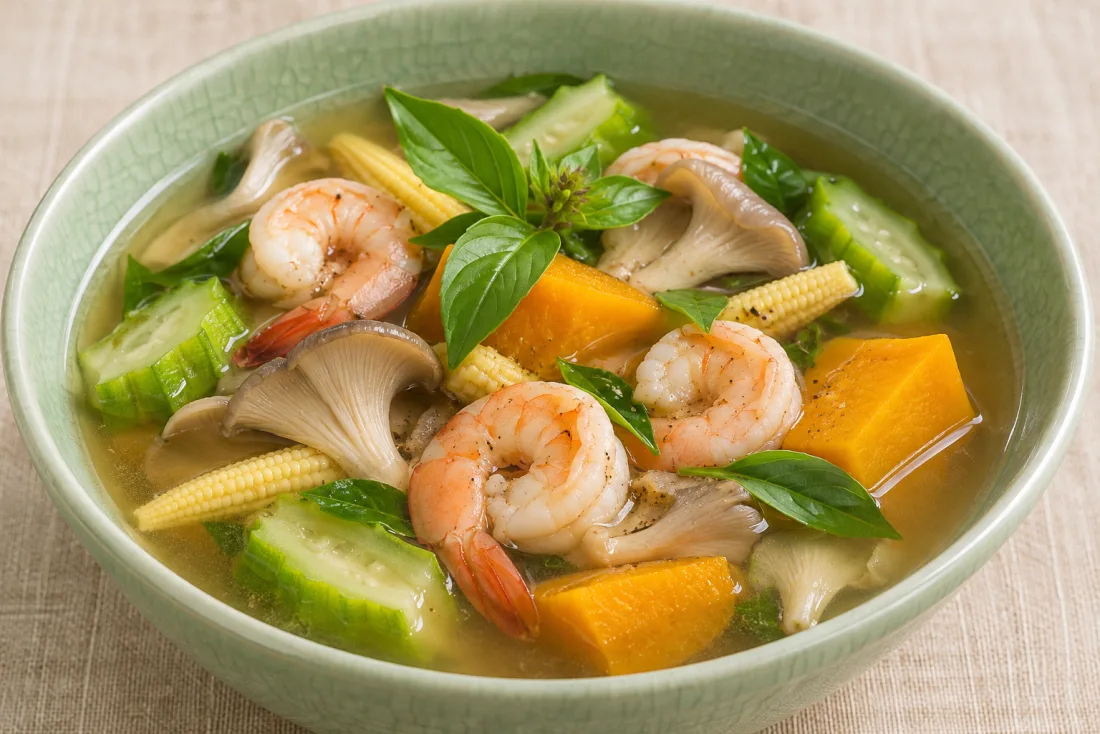
Mahidol University’s Institute of Nutrition includes gaeng liang in its central Thai recipe collection. Vegetables take up most of the bowl. The liquid is a little cloudy and light enough to drink, with colour from pumpkin and ground seasonings. Households can choose vegetables that are in season.
A second Mahidol account records an author’s family method. Pepper and lemon basil are part of its recognisable flavour. The sources show its place in Thai cooking while leaving its first kitchen open.
Pumpkin, angled luffa, gourd and lemon basil
Mahidol uses pumpkin, angled luffa, bottle gourd, straw mushrooms, ivy gourd leaves and lemon basil. Pumpkin gives sweetness, luffa is tender and juicy, and gourd and mushrooms hold their shape.
Peppercorns, shallot, shrimp paste and dried shrimp are pounded, with fish sauce for seasoning. Bai maenglak means lemon basil and gives a fresh citrus note. It has a different aroma from holy basil or Thai sweet basil.
From pounded seasonings to the lightly cloudy broth
Mahidol pounds peppercorns, shallot and shrimp paste and mixes in ground dried shrimp. It blanches the vegetables separately and dissolves the seasoning in part of the cooking water. Fish sauce seasons the broth. The vegetables and leaves go back in at the end. A home version cooks pumpkin first and adds quicker-cooking vegetables later.
Lemon basil goes in close to serving to keep its aroma. Pumpkin and ground shrimp can make the broth slightly cloudy. A long boil can make the leaves less fragrant and the vegetables lose their texture.
Pepper warmth, natural sweetness and a side of rice
Lemon basil and pepper carry the first aromas. The broth tastes savoury, followed by the mild sweetness of pumpkin and gourd. Pepper gives a slow warmth. How hot it tastes depends on the kitchen.
Try a little broth and then a spoonful with pumpkin and a leaf. Eat it hot with steamed rice or a drier dish in a shared meal. The contrast between the straw mushroom and the soft luffa is easiest to notice when the vegetables still hold their shape.
Reading the menu for fresh shrimp or different vegetables
Gaeng liang alone names the vegetable soup. Its paste may still contain dried shrimp, shrimp paste or fish sauce. Kung sot indicates a version with fresh shrimp. A Mahidol family account also uses grilled fish or dried shrimp for the seasoning. Some cooks add banana blossom or use other seasonal vegetables.
Ask what vegetables and herbs are in the soup that day. For a plant-based version, ask how the kitchen replaces shrimp paste, dried shrimp, fish sauce and any fish-based broth.
Allergens to ask about: crustaceans, fish and the broth
Fresh or dried shrimp and shrimp paste are sources of crustacean shellfish. Grilled fish and fish sauce contain fish. A bowl that appears to contain only vegetables can have these ingredients pounded into the broth. Removing fresh shrimp leaves other shrimp ingredients in the liquid.
Ask about the paste, stock, seasonings and shared mortars or ladles. If your dish needs different ingredients, ask whether the kitchen can prepare a separate base before cooking.
If you have a food allergy, tell the restaurant before ordering and ask about ingredients, sauces and shared cooking equipment.