

 chicken leg
 shrimp paste
 fish sauce
Chicken in the Thai sour curry family
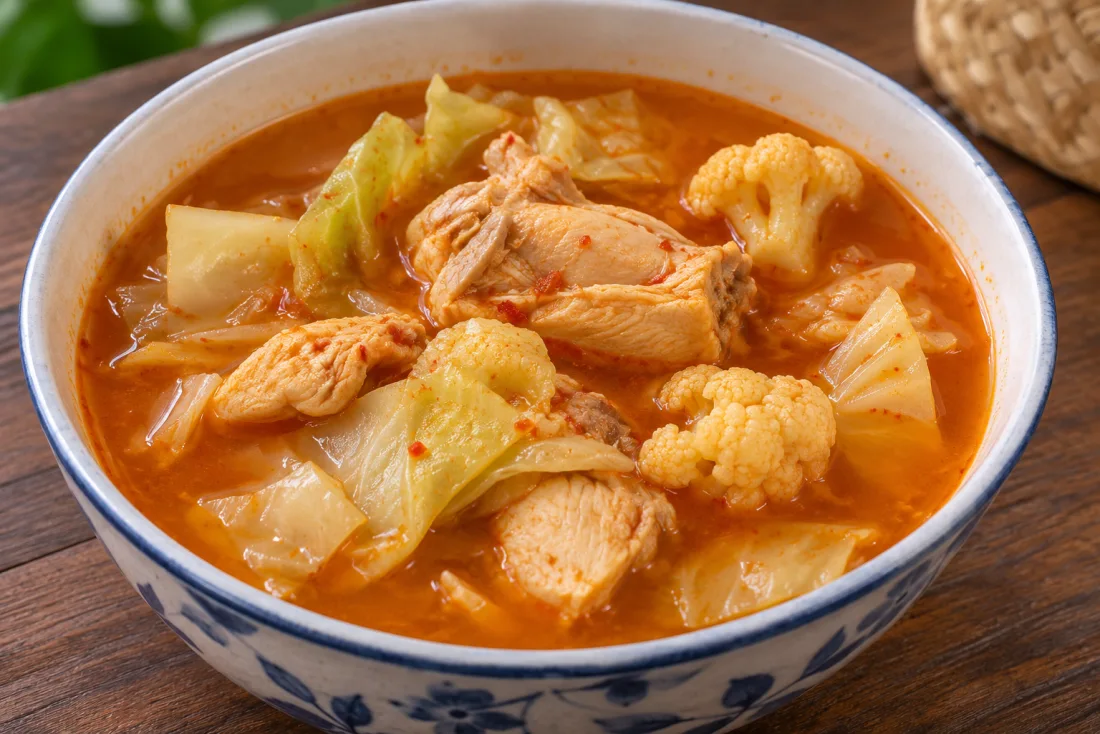
Central-style sour curry often combines tamarind with a chili paste. The chicken can be leg pieces or balls of minced breast. Some southern styles are yellow from turmeric. The featured cabbage and cauliflower version uses a water-based tamarind broth.
Order of chicken, vegetables and sour broth
A home recipe strains softened tamarind into hot water and adds sour curry paste and shrimp paste, followed by chicken, cabbage and cauliflower. Fish sauce and sugar season it. Firm vegetable stems can cook ahead of tender leaves. Other cooks use minced breast or different vegetables.
Tamarind tang, sweet vegetables and savory chicken
Tamarind has a rounded fruity tartness, chili brings heat, and fish sauce and shrimp paste add savor. Cabbage can stay slightly crisp, and cauliflower catches the broth. Sugar can soften the sour edge. Broth color changes with the chili paste and dilution.
Serving sour curry with rice
Portion chicken and vegetables and spoon a little broth over rice. An omelette or vegetables can be served alongside. Ask about bones and whether the dish was prepared as one batch if a different spice level is important.
Chicken sour curry, southern yellow sour curry and coconut soup
This bowl highlights tamarind, chili and vegetables. Southern-style sour curry can use turmeric. Chicken tom kha has the aroma of galangal, coconut milk and lemongrass. The visible chicken pieces do not rule out seafood in the paste.
Allergens in shrimp paste, fish sauce and shared equipment
This recipe contains crustaceans from shrimp paste and fish from fish sauce. Check commercial sauces or seasoning powders for soy and wheat and add-on eggs if used. Ask about shared utensils and prepared stock. Removing solids does not remove allergens from broth.
If you have a food allergy, tell the restaurant before ordering and ask about ingredients, sauces and shared cooking equipment.