

 chicken
Reading the name and recognising regional examples
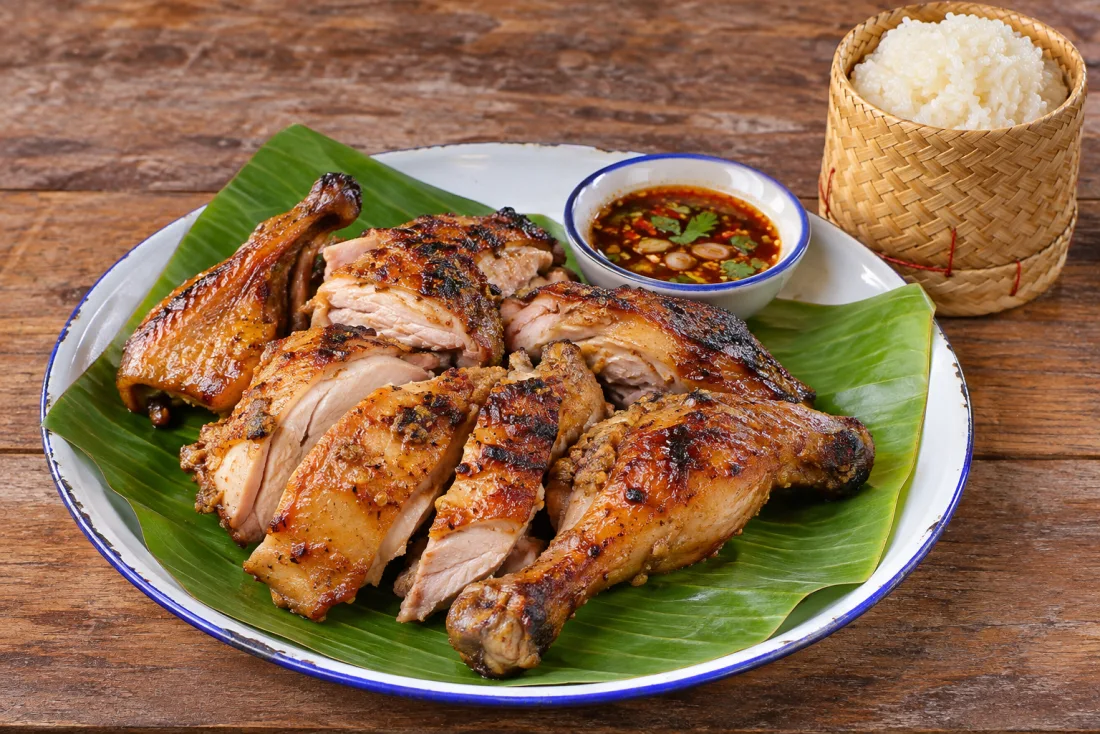
Gai means chicken and yang means grilled. The name tells you the method, while the cut, marinade and sauce depend on the kitchen. The Tourism Authority of Thailand describes Khao Suan Kwang grilled chicken in Khon Kaen and recommends grilled chicken with papaya salad and sticky rice in Nakhon Nayok.
The Khon Kaen restaurant listing describes slightly crisp skin, tender meat and a house dipping sauce. It is a useful example of a northeastern preparation, without describing every version in Thailand.
Chicken, aromatics and the marinade
The Thai SELECT recipe pounds coriander root, garlic and pepper, then adds coconut cream, a little liquor, light soy sauce, seasoning sauce and oyster sauce. The aromatics perfume the chicken, the sauces season it, and the coconut cream gives the marinade body. The papaya salad that accompanies it has a separate dressing and may add fish sauce, peanuts and dried shrimp.
Pailin Chongchitnant’s version uses fish sauce, soy sauce, lemongrass and coriander seeds. Comparing the recipes shows how cooks change the aromatic ingredients while keeping a savoury marinade.
How grilling changes the skin and meat
Pounded aromatics spread through the marinade before the chicken goes on the grill. Direct heat browns and dries the surface first, concentrating the aroma. Skin can turn crisp while the meat remains tender, and different parts of a whole chicken have different textures.
One reference recipe brushes marinade onto the chicken during grilling. The grill, the size of the pieces and the marinade all influence colour and texture. A bone-in piece and sliced boneless thigh are two different ways to serve it.
Flavour, dip and the role of rice
Garlic, pepper, the grilled skin and savoury seasoning may be the first flavours you notice. The chilli may come mainly from the sauce or the accompanying salad. A tamarind dip from Pailin’s recipe combines tamarind, fish sauce, lime, chilli and toasted rice powder with other seasonings.
Try the chicken by itself, follow it with sticky rice, then take a bite of the crunchy, tart papaya salad. The rice, salad and dipping sauce bring separate textures and may differ in heat.
Serving styles in restaurants and simple meals
Tourism references describe both a specialist grilled chicken restaurant in Khon Kaen and a meal with papaya salad in Nakhon Nayok. Chicken can be cut up for the table to share or sliced with rice for one diner. Whether it comes whole, as half a chicken, or as a leg or thigh will change the experience.
If the menu names Khao Suan Kwang, ask about the restaurant’s marinade and dip. If it just says Thai grilled chicken, check the cut, whether it is bone-in and whether rice comes with it.
Allergens in marinade, dip and side dishes
Soy sauce and some seasoning sauces contain soy and may contain wheat. Oyster sauce made with oysters adds a mollusc ingredient; fish sauce usually contains fish. Coconut cream contains coconut. The salad may separately contain dried shrimp and peanuts, and the dip may contain fish sauce. Ask about each component, including chicken that has already been marinated.
Ask about shared grills, brushes, tongs and boards. Removing a dip or side does not remove the marinade on the meat. If the restaurant uses prepared sauces, staff may be able to check their ingredient labels.
If you have a food allergy, tell the restaurant before ordering and ask about ingredients, sauces and shared cooking equipment.