
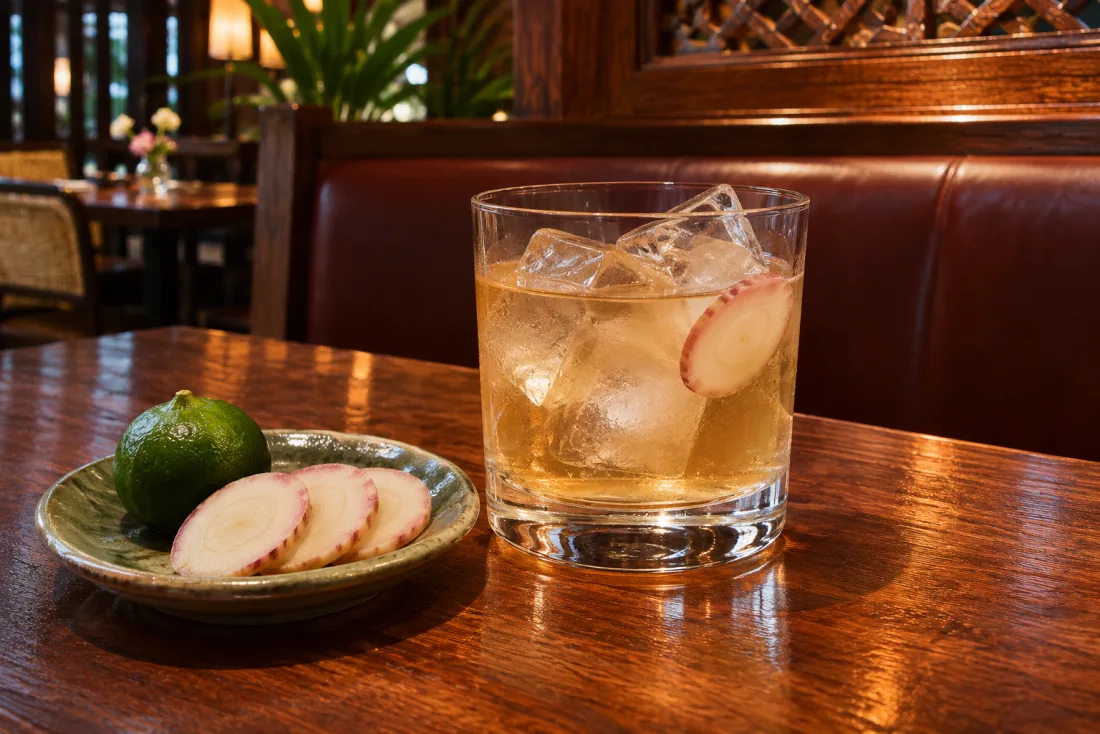

Galangal and vermouth on Thai menus
Kha is galangal. A historic Bangkok venue menu pairs it with white vermouth, spiced rum and lime wedges. A Phuket bar lists vodka and white vermouth with galangal, makrut lime, lime, lemongrass and chilli. These are distinct bar recipes.
Root spice and wine-based vermouth
Galangal gives a woody, mildly pungent aroma. White vermouth is based on white wines and brings botanical flavour and sweetness. Lime supplies acidity while spiced rum brings a rounder base. Galangal and turmeric are different rhizomes.
Aromatic flavour and a cool finish
Vermouth and lime can arrive first, then galangal. The rum version can feel warmer and rounder, and the vodka version can bring out lemongrass, makrut and chilli. Clear gold to pale amber is possible, depending on the spirits.
Rocks and stemmed glasses
A short glass over ice can show galangal and citrus. A chilled version can be strained into a stemmed glass with herbs on top. Galangal garnish is mainly for aroma. Ice and glass size do not identify the spirit amount.
Vermouth and plain white wine
White vermouth uses a white wine base and botanicals. Plain white wine has a different flavour. A classic Martini can use gin and dry vermouth, whereas the examples here use spiced rum or vodka with local aromatics.
Allergens, sulphites and alcohol
Vermouth, rum and vodka contain alcohol. Wine-based vermouth can contain sulphites. The simple recipes need no dairy or egg. Ask about additional foams, clarified mixers, specific spices and shared tools if relevant.
If you have a food allergy, tell the restaurant before ordering and ask about ingredients, sauces and shared cooking equipment.