
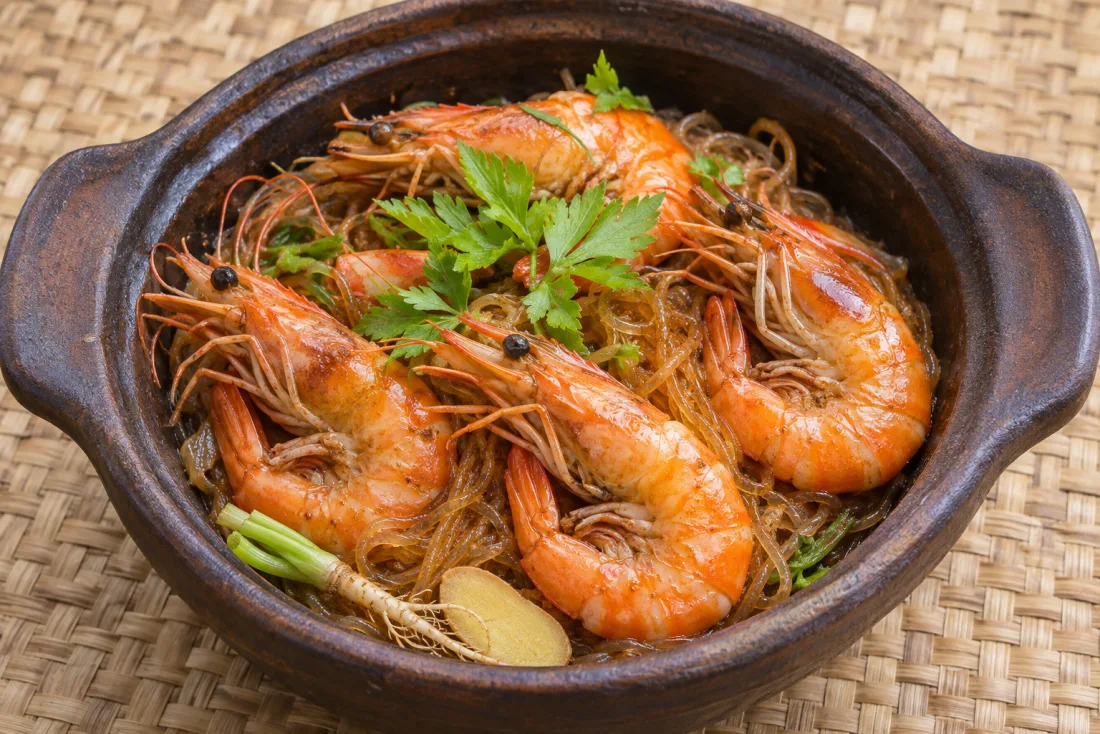

 prawn
A pot of prawns and noodles on the Thai seafood table
Goong means prawn, woon sen means glass noodles and ob refers to covered cooking here. You may see baked prawns with glass noodles or prawn and glass noodle hot pot on English menus. The cooking vessel can be clay or metal. Some restaurants transfer it to a serving plate or bowl.
Pailin Chongchitnant describes it as familiar in Thai seafood restaurants. A cooking school in Phuket teaches it and restaurant menus offer it with large prawns. The place of invention remains open.
What glass noodles, prawns, ginger and sauce contribute
Chef Pui’s mixture uses dry glass noodles, whole prawns, ginger, garlic, pepper and coriander or Chinese celery root. Glass noodles turn translucent and may be made of mung bean, tapioca or other starch. A little stock carries the prawn and aromatic flavours into them.
Light and dark soy sauce give different colour and aroma. Oyster sauce and sugar round out the seasoning, with optional toasted sesame oil. Pui uses vegetable oil and prawn stock, chicken stock or water. A KRUA version adds bacon.
Soaking the noodles and covering the prawns and sauce
Soak and drain the noodles. Heat ginger, garlic, pepper and root aromatics, add the noodles with their sauce and place the prawns above. Under the lid the liquid warms the noodles while steam cooks the prawns. A quick stir can distribute the remaining liquid.
Prawns should cook through and the noodles should stay supple, with very little sauce pooling below. Too much liquid can make the noodles soft. Very little can leave them uneven. Add Chinese celery leaves late for a fresher scent.
Ginger, pepper, savoury noodles and sweet prawn
The lid traps the smell of ginger, garlic and pepper. The noodles take up the salty savouriness of soy and oyster sauce. Prawns are tender and springy. Peel a shell-on prawn and try it with a bite of noodles. The dish often has warming pepper rather than a strong fresh-chilli burn.
A separate seafood dip may have more chilli, acidity and raw garlic than the pot itself. Taste the noodles first. Thicker noodles can feel springier, while thinner ones pick up sauce quickly.
Whole prawns, river prawns, bacon and restaurant variations
Restaurants use river prawns, other whole prawns or peeled ones. Whole prawns have a different presentation, and peeled prawns are easier to eat. Some cooks add pork belly or bacon, while others use vegetable oil and seafood stock. Ask about the base if you avoid pork.
The crab version uses pu in place of goong. Ask what prawns are used, whether they are peeled and what comes on the side. The colour of the noodles alone does not reveal the sauce’s strength.
Allergens to ask about: crustaceans, oyster, soy, wheat and sesame
Prawns and prawn stock contain crustaceans. Oyster sauce can contain oyster, a mollusc. Soy sauce contains soy and may contain wheat. Sesame oil adds sesame when used. Ask about the noodle ingredient list and sauces if avoiding wheat.
Check the noodles, stock, sauce, dip and shared pots or utensils separately. Prepared sauce may already contain an ingredient you need to avoid. Ask about bacon, lard or chicken stock if your diet excludes them.
If you have a food allergy, tell the restaurant before ordering and ask about ingredients, sauces and shared cooking equipment.