
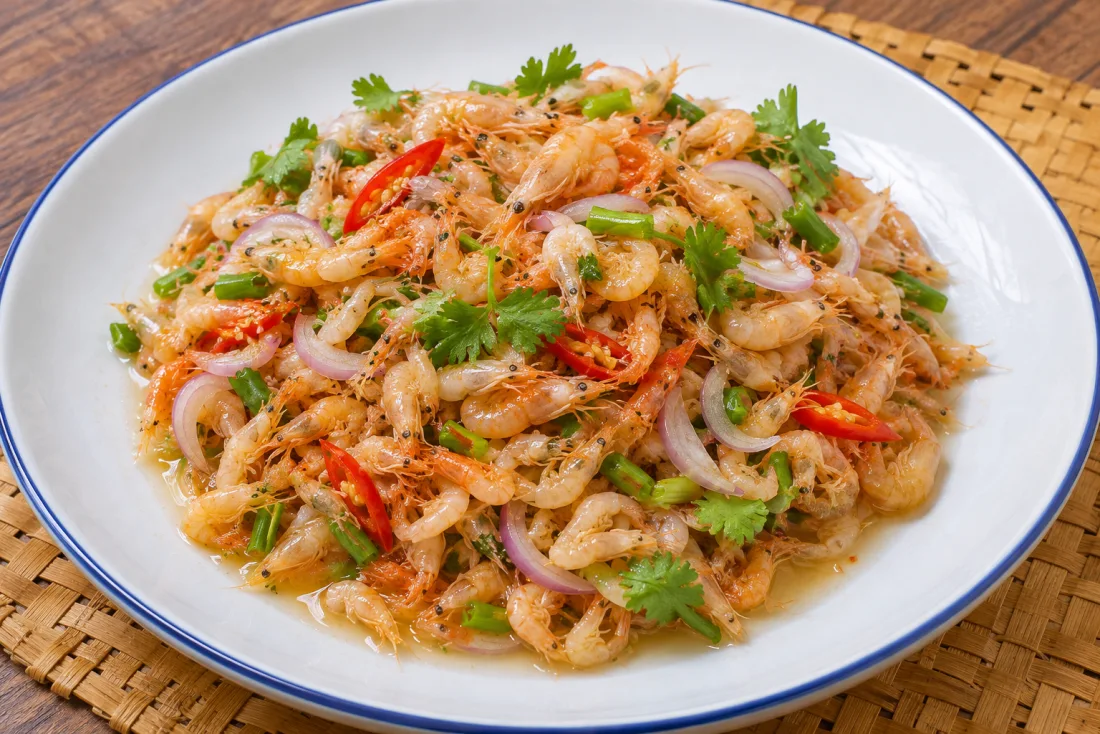

 tiny freshwater shrimp
 fish sauce
What suk tells you
Goong ten is a regional dish name associated with Isan communities. Suk specifies a cooked version. Restaurants in Ubon, Yasothon and elsewhere offer it as a named dish. Ask for the full name if you want cooked shrimp. Lime and seasonings give it flavour without an alcohol-based marinade.
Tiny freshwater shrimp
The shrimp commonly called goong foi are very small. Cooks may blanch them or heat them through in a pan, then toss with seasonings. Some are served with delicate shells. The finished bite is sweet and lightly springy. Ask the cook to confirm that the entire serving is cooked.
Lime, fish sauce and herbs
Lime gives bright acidity. Fish sauce or optional cooked fermented fish seasoning brings saltiness and savoury depth. Shallot, spring onion, mint, lemongrass or makrut leaves can add fragrance. Fresh chilli and toasted chilli have different aromas.
Moist and toasted-rice versions
A light dressing can leave a small pool with the shrimp and shallot. A drier version may add toasted rice powder and roasted chilli. The rice adds grain texture and nuttiness. Chilli strength and herbs vary by kitchen.
Choosing and serving it
Small shrimp throughout the plate help distinguish it from some larger prawn salads. Sticky rice, cabbage or cucumber can go alongside. Clarify the amount of chilli and whether the shrimp is fully cooked. Lime supplies flavour and does not replace cooking.
Allergens in shrimp and sauces
Shrimp contains crustaceans even after cooking. Fish sauce and fermented fish contain fish. Oyster sauce may add molluscs. Prepared seasonings may contain soy, wheat or peanuts. Ask about sauces and shared mixing bowls, knives and cooking water as relevant.
If you have a food allergy, tell the restaurant before ordering and ask about ingredients, sauces and shared cooking equipment.