
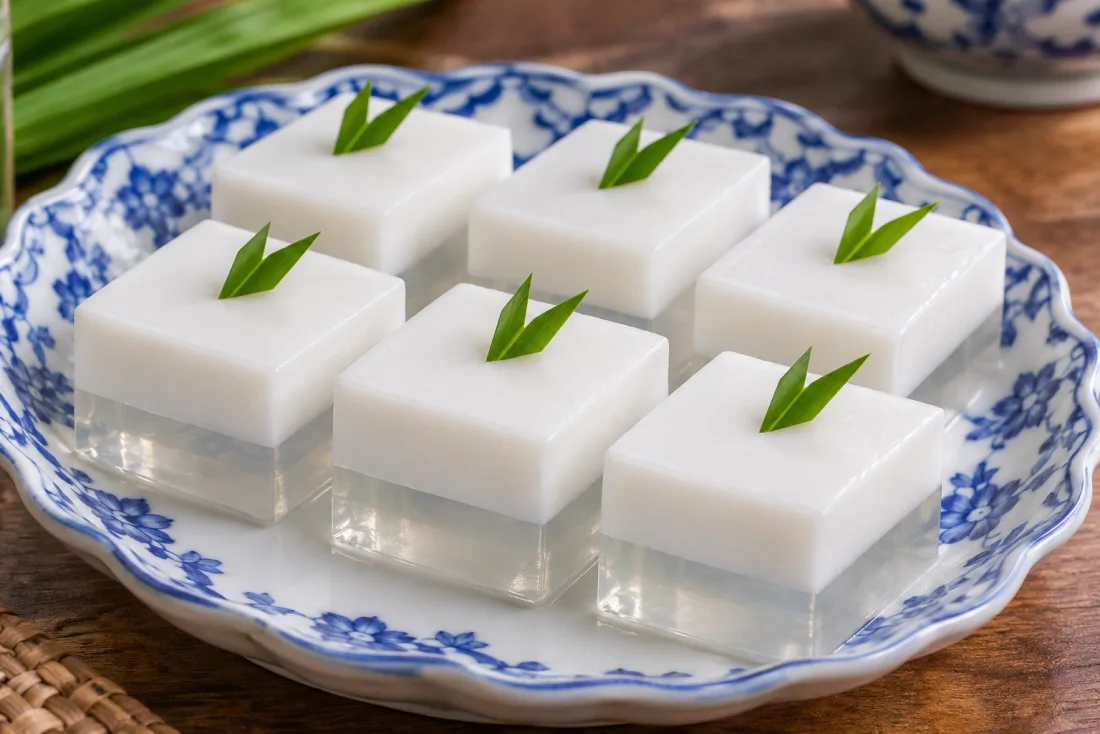

White coconut jelly and a clear layer
Wun kathi is coconut milk jelly. Small moulds can give it rounded petals, while tray versions may have a translucent coconut-water layer and an opaque coconut-milk layer. Pandan can add green colour, but plain coconut jelly is often white. Shape depends on the mould and assembly.
Thai sweets in trays and small moulds
Thai recipes describe single-layer, layered and flower-shaped versions. Dessert shops can pack individual shapes or cut large trays into squares. Other versions contain young coconut or pandan. The documented recipes do not identify a single province of origin.
Agar, coconut milk and young coconut
A representative recipe uses coconut milk, coconut water, agar and sugar. Salt can give a lightly savoury edge and strips of young coconut add chew. Some layers use sweetened coconut water for clarity. Prepared jelly powders should be checked for their other ingredients.
Dissolve agar and pour into moulds
Mix and heat the agar until it dissolves, then add the other ingredients according to the recipe. For a layered version, let the first layer begin to set before adding the next. Small flower moulds can be filled directly. Chill before turning out or slicing.
Chilled, lightly crisp and softly sweet
Agar gives a clean break with a light crunch. Coconut milk adds richness and the clear layer can taste more like coconut water. Young coconut strips feel springy. Pandan may add fragrance. Plain agar jelly has a different texture from chewy coconut jelly cubes.
Coconut, dairy and packaged mixtures
Both layers can contain coconut. Some recipes may use milk, creamer or a mixed gelling powder. Ask about dairy, egg, soy, sesame or nuts in shared moulds, knives and utensils. Removing the white layer does not remove coconut water from the clear layer.
If you have a food allergy, tell the restaurant before ordering and ask about ingredients, sauces and shared cooking equipment.