

 fish sauce
Which mackerel is pla thu?
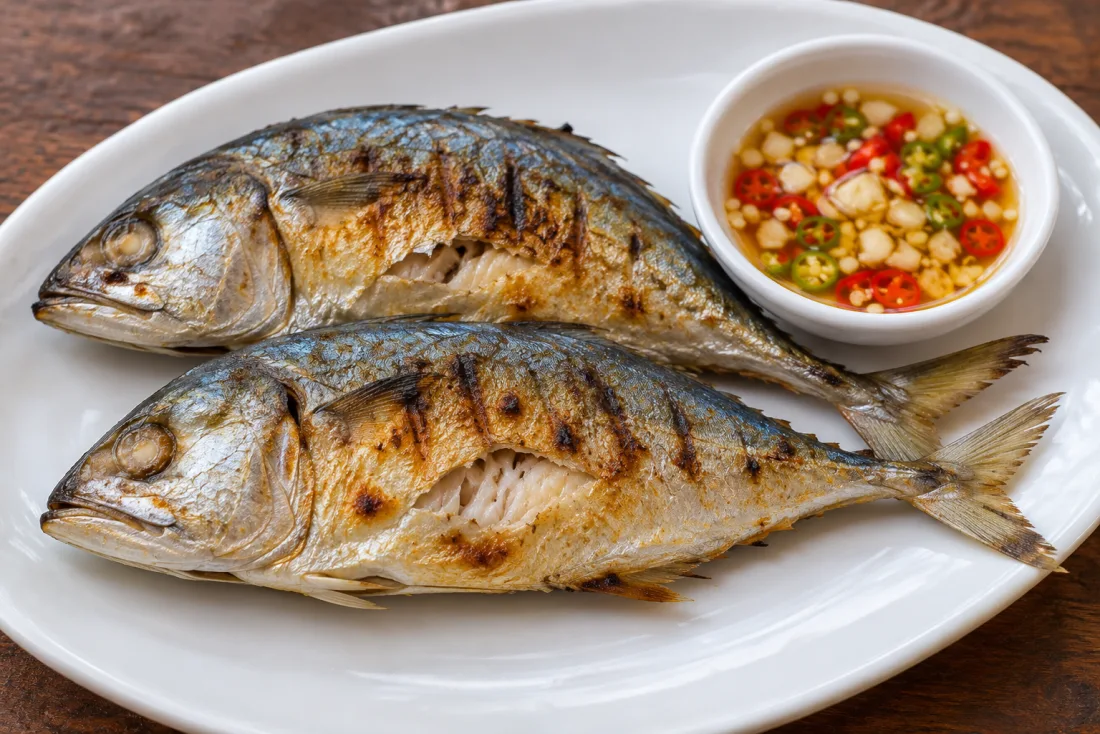
Thai fisheries records identify pla thu as short mackerel, Rastrelliger brachysoma, found in the Gulf of Thailand and around the Andaman coast. Market names can overlap with related mackerel. Yang means grilled and describes how the fish is cooked.
Whole fish, sweet fish sauce and vegetables
One documented version pairs a charcoal-grilled fish with a sweet sauce made from fish sauce, sugar and tamarind, sometimes scented with ginger. A lime, garlic and chilli dip is sharper and thinner. Raw vegetables and plain rice make familiar accompaniments.
Grilling the skin without drying the flesh
Clean and dry the fish, then grill both sides. Direct charcoal gives a smoky finish and bronze patches on the skin. A pan can brown the surface with less smoke. Split along the backbone and look for small bones before lifting portions off the fish.
Smoke, rich flesh and different dips
The skin is thin and fragrant and the belly can be especially rich. A thick sweet-sour fish sauce sits on the fish, while a lime and chilli dip has a brighter heat. Taste a piece without sauce first and add the dip and chilli to suit.
Serving the fish as part of a meal
A whole fish with vegetables or rice makes a simple meal. Grilled pla thu can also be flaked into a chilli relish. Pan-fried mackerel has a different crust and aroma. A fish first steamed and then reheated on a grill may be softer than one grilled from fresh.
Allergens in fish and dipping sauces
The fish and fish sauce both contain fish. Some condiments contain shrimp paste, dried shrimp, oyster sauce or soy sauce, which may add crustaceans, molluscs, soy or wheat. Ask about shared grills, tongs and marinades. Small fish bones need attention even in some separated portions.
If you have a food allergy, tell the restaurant before ordering and ask about ingredients, sauces and shared cooking equipment.