
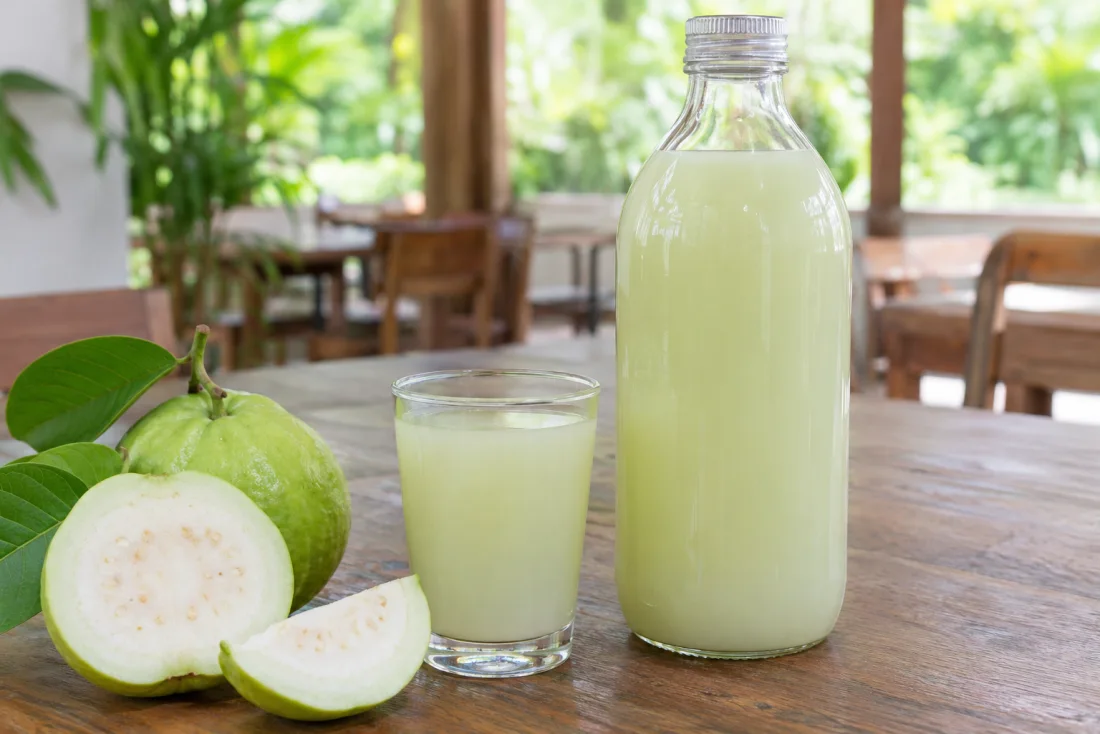

Large bottles on Thai menus
Nam farang means guava juice in the drinks section, and khuat yai means large bottle. A fresh juice vendor lists a one-litre bottle. A Chiang Mai dessert shop lists large and small formats separately, with no universal size implied.
How guava is pressed
A press or juicer separates liquid from coarser solids and seeds. One Thai producer describes cold-pressed Kimju guava. Fine pulp may stay in the juice, whereas blending the diced fruit with ice gives a thick shake.
Fresh aroma and colour
White guava can yield pale creamy or light green juice with soft sweetness and a trace of astringency. Pink varieties can colour it pink without added dye. Ripe fruit, filtering and cooling all alter what you taste. Sugar or ice can change the balance.
Serving and storing a larger bottle
A large bottle can be poured into several glasses. If fine fruit solids have settled, gently shake the closed bottle. Follow the maker’s temperature and storage advice. Chilled fresh juice and shelf-stable products have different instructions.
Single juice and blends
Some sellers add syrup and some bottled drinks blend guava with other fruits. Ask whether a fresh drink has added sugar, water or other juice, or read the ingredient list. Bottled juice remains pourable and does not require ice blending.
Allergens and the ingredient list
Guava-only juice requires no dairy. Mixed juices and shared equipment may introduce other ingredients, including dairy or other fruit depending on the shop. Read the label for the exact bottle and avoid fruit to which you are allergic. No added sugar still allows for naturally occurring fruit sugar.
If you have a food allergy, tell the restaurant before ordering and ask about ingredients, sauces and shared cooking equipment.