
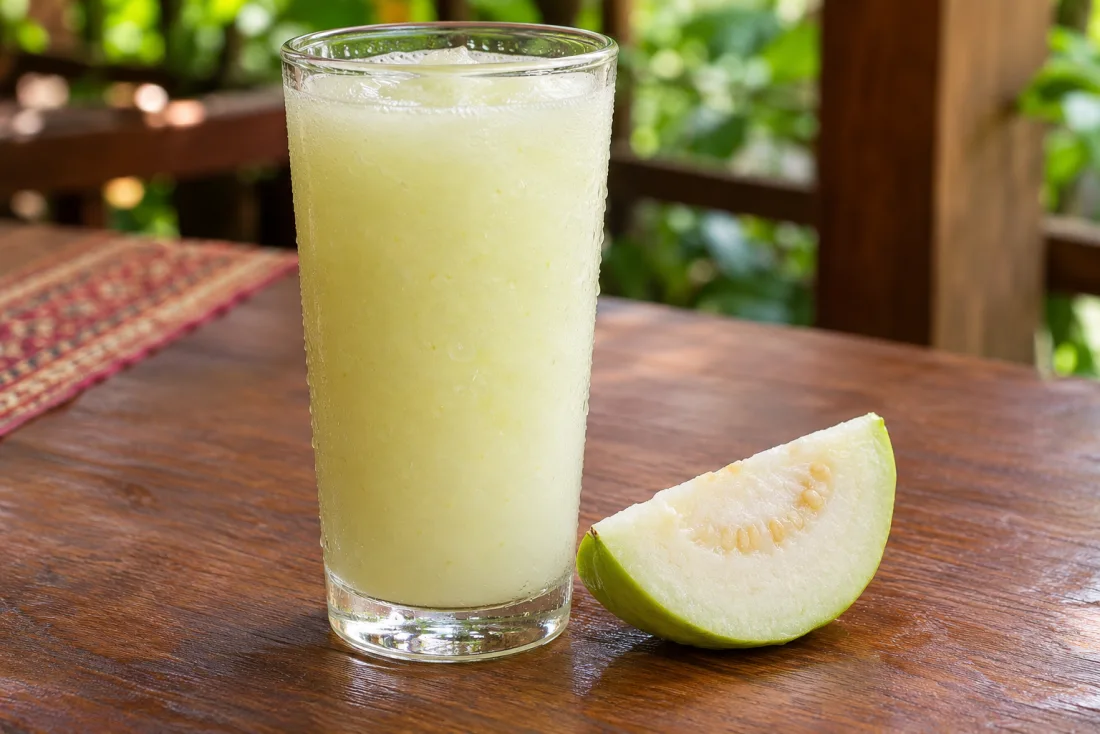

Pale juice from guava flesh
Nam farang is guava juice. Pale-fleshed guava has firm flesh and hard seeds, and its juice can look lightly cloudy. Pink guava gives a different colour. Regular size describes volume. Ask whether the drink is strained, pulpy or blended with ice.
Juice and blended versions at Thai stalls
Thai recipes describe juice separated from pulp, blended fruit strained through cloth, or guava blended with ice. Natural pulp can settle in a transparent glass. These methods are found in Thai drink recipes without evidence of a single local origin for the basic drink.
Guava, lime, syrup and salt
A representative recipe extracts guava and a little lime, and adds syrup and salt. Ripe fruit can give a stronger aroma while crisp fruit is milder. Water or ice changes the body. Some shops blend other fruit, so ask whether guava is the main ingredient.
Separate the larger seeds and fibres
Cut the washed fruit and press or blend it. A fine strainer removes hard seeds and coarse fibre. Stir in lime, syrup or salt as desired. Some pulp can settle or foam after pouring. Ice dilutes the juice. Blending the ice creates a thicker texture.
Mild sweetness and a leafy fruit aroma
Pale guava has a clean, gently herbal fragrance. Lime sharpens the first sip and the guava remains subtle. Fine pulp adds light texture, while filtered juice feels smoother. Ice amount and sweetness can usually be discussed separately.
Allergens and shared drink equipment
Guava and lime may both be present. Ask about milk, yogurt, soy or mixed fruit in a premixed base. Blenders and filters may touch nut drinks or biscuit shakes. Removing seeds or pulp does not remove fruit or other dissolved ingredients.
If you have a food allergy, tell the restaurant before ordering and ask about ingredients, sauces and shared cooking equipment.