

What Thai herbal tea means here
Cha samunphrai Thai is a category. A Thai producer blends lemongrass and pandan. A technical example and local product record include the same pair with mulberry leaf. Formulas vary according to the tea and maker.
Stalk, leaf and optional mulberry
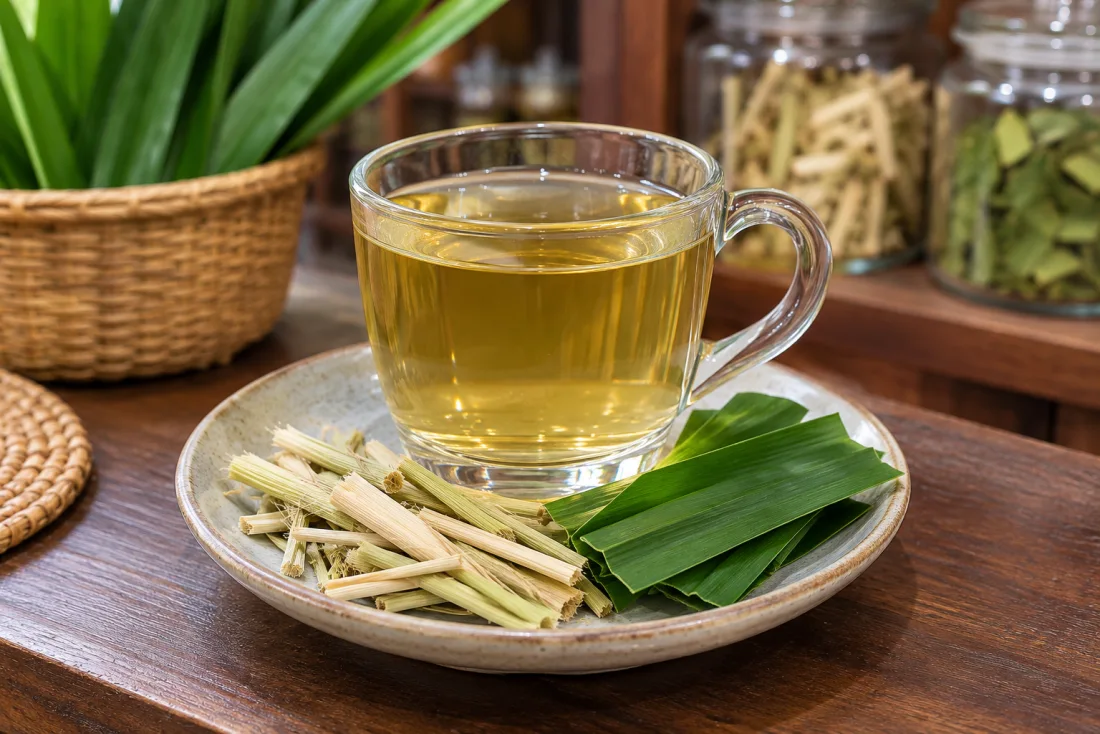
Lemongrass stalk gives a citrus-like aroma. Long pandan leaves bring a softer, sweet-smelling grassy note. Mulberry leaf is an optional green note, distinct from mulberry fruit. The plants may be dried and cut for tea bags.
Infusion colour and aroma
The infusion can be pale straw or amber and sometimes lightly green. Lemongrass gives a brisk opening and pandan a softer finish. Long steeping can increase herbal flavour. A sweet aroma does not establish added sugar.
Serving hot tea
Steep a bag or loose herbs according to the product and remove the solids. A glass shows the colour, and a porcelain cup emphasises aroma. A pot can be shared. A second infusion will usually be lighter.
Herbal blends and true tea
Both plants can be used alone. Ginger changes the finish while mulberry adds a leaf taste. Blends with Camellia tea leaves can have caffeine and astringency. Iced or sparkling herbal preparations are served differently.
Allergens and blend details
The plain examples need no dairy, egg, wheat or nuts. Check other herbs, creamers, honey and tea leaves on the label. Ask about a shared pot, strainer or utensils if a specific ingredient needs to be avoided.
If you have a food allergy, tell the restaurant before ordering and ask about ingredients, sauces and shared cooking equipment.