

 chicken
 optional fish sauce
Recognising the noodles and broth
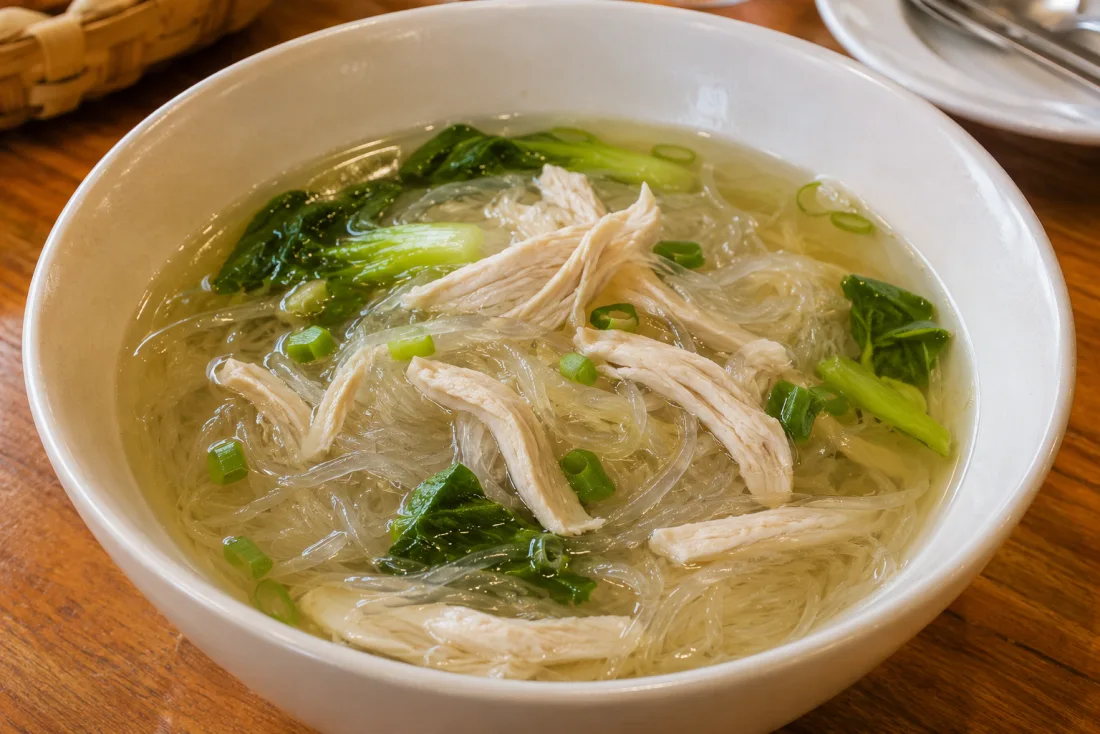
Wun sen means glass noodles. Cooked strands are thin and translucent. Rice noodles are usually more opaque, and egg noodles can look yellow. The soup can be pale and clear or slightly red from chile seasoning. Greens or shredded chicken sit beside the noodles.
Thai home and shop versions
A Thai Department of Health recipe shows glass noodles with shredded chicken and greens in broth. One Thai shop lists clear and tom yum chicken glass noodles separately. Other shops may sell combinations with minced pork or fish balls. Ask which toppings are included.
Chicken and starch noodles
Glass noodles can be made from mung bean or other starches. They soften and absorb broth. Chicken stock and cooked chicken make the base. Salt, fish sauce or soy can season it. Greens and herbs may be added near serving.
Light stock and spicy-tart broth
The clear broth is gentle and savory. Glass noodles have a slippery bite. A tom yum version adds tang and chile heat while the broth may stay clear. Taste the soup before adding more seasoning. Actual spice and garnishes vary.
Reading the menu and choosing a photo
Use a photo that shows transparent strands for each broth. Clearly list any extra meat, egg or condiments. A takeaway order can keep the broth separate from the noodles. Ask which noodles are used if the menu is unclear.
Allergens in broth and shared pots
Ask about the noodles and chicken stock. Soy sauce may contain soy and wheat, fish sauce contains fish, and some seasoned pastes contain crustaceans. Check added proteins and shared cooking water, ladles or boards.
If you have a food allergy, tell the restaurant before ordering and ask about ingredients, sauces and shared cooking equipment.