
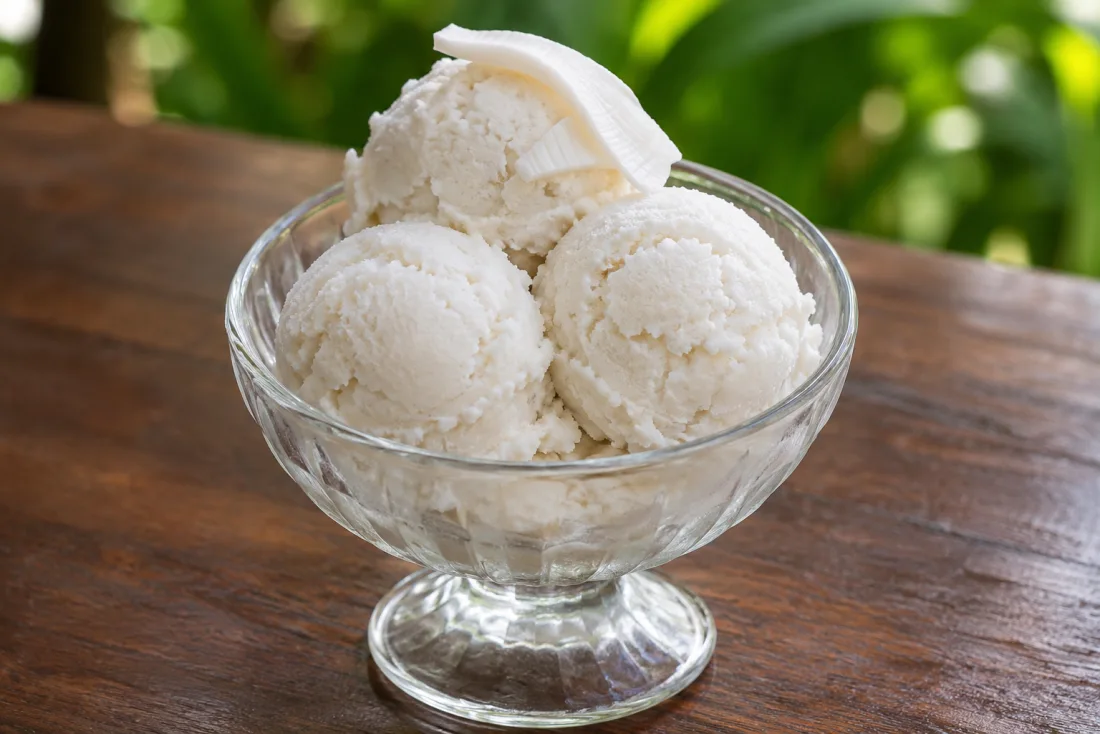

Coconut ice cream at a Thai market
Called ice cream kati or i tim kati, it is a scooped coconut dessert. Sellers may use a cup, bun or coconut shell. Sticky rice, cooked corn and peanuts are familiar accompaniments, with individual recipes varying by shop.
Coconut milk, coconut water and sugar
Coconut milk contains fat, while coconut water lightens the base. White or palm sugar provides sweetness and affects how hard the ice cream freezes. Some recipes add starch, milk powder or other dairy. A custard-style version may use egg yolks. Young coconut flesh can be folded in or added as a topping.
Dissolving, cooling and churning
Dissolve the sugar in the coconut mixture, cool it and churn it while it freezes. This helps distribute the ice crystals and gives a more uniform scoop. Ice cream with less sugar or fat may freeze firmer.
Coconut fragrance and frozen texture
The coconut aroma is easier to notice as a scoop softens. Coconut milk gives richness, and palm sugar may add a gentle caramel note. Sticky rice, corn and roasted peanuts bring chewy, juicy and crunchy contrasts.
Cups, coconut shells and buns
In a bun, vendors can layer sticky rice under the ice cream so the bread catches the melting coconut. A shell may have coconut flesh left to scrape. Ask whether a serving includes bread or toppings. Ice pops and coconut water ices are different dessert styles.
Allergens in the base and toppings
Coconut is part of the dessert. Some versions contain dairy or egg, and buns may contain wheat, milk, egg or soy. Roasted peanuts, other nuts and toppings vary. Ask about the ingredients in the base and about shared scoops or topping spoons.
If you have a food allergy, tell the restaurant before ordering and ask about ingredients, sauces and shared cooking equipment.