
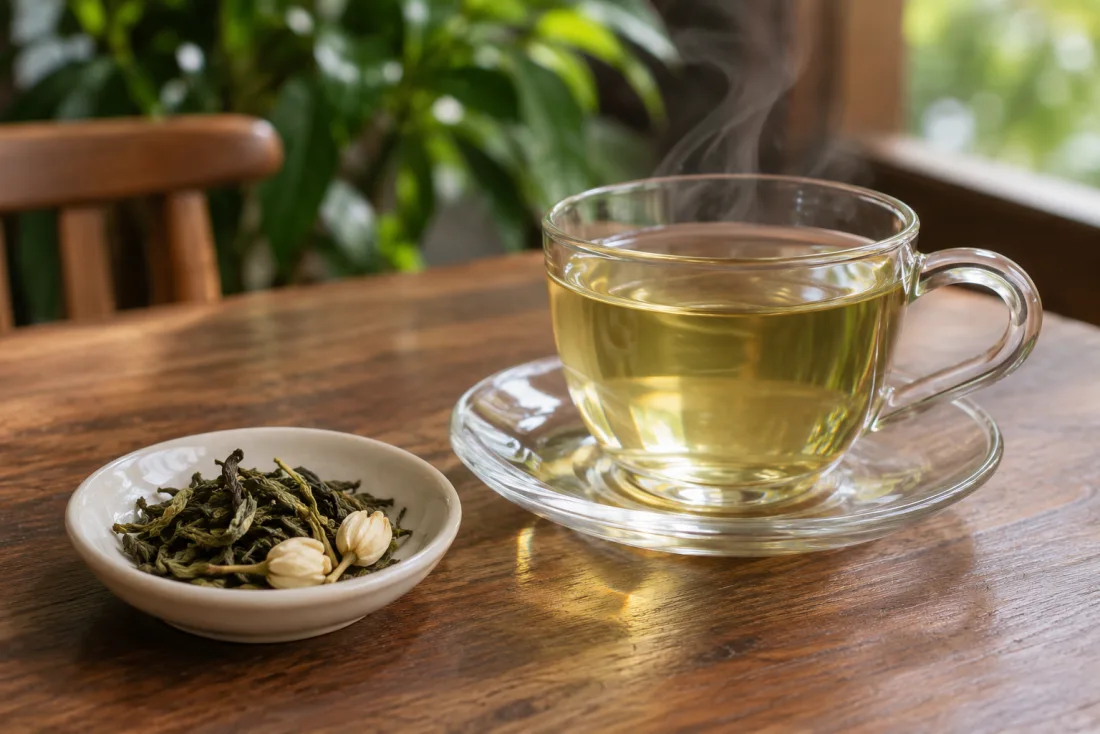

Cha mali ron is hot jasmine-scented tea
The Thai name identifies jasmine and hot service. Here the base is green tea that carries jasmine aroma. It gives the cup both tea flavor and flowers. An infusion of edible jasmine flowers alone has a different base and caffeine profile. Ask whether the name describes jasmine-scented green tea or a flower-only brew. A visible flower is unnecessary, even if a picture uses blossoms beside the cup. Water, leaves and time can change the color.
Jasmine flavor in Thai tea shops and cafés
A Thai tea maker sells a jasmine green tea bag for hot or cold service. One Thai café lists hot jasmine green tea as its own flavor. It can be served after a meal or with a pastry, with sweetener offered separately. Experimental research on Chinese jasmine tea also documents using tea leaves to take up flower aroma. These examples do not establish an origin in any particular Thai province. Look for an actual statement of origin if you want to know where the tea was grown.
Scented tea leaves, jasmine fragrance and water
Green tea can absorb the aroma of fresh jasmine flowers during scenting. Tea makers may remove the blossoms after scenting and dry the finished leaves. Other products retain some flowers or add flavoring. Read the product description if you want to know how a blend gets its aroma. Steep the tea in water and remove the solids before drinking. Honey, sugar, lime and milk are optional additions, each changing the balance of tea and flowers.
Brew to taste and remove the tea base
A clean strainer works for loose leaves, and a tea bag can be brewed according to the package. Suitable temperature and time depend on the leaf and its preparation. Try the suggested brew before making it longer or shorter. Remove the leaves once the strength suits you. A pot kept on the leaves can become more astringent. Wait for a comfortable drinking temperature, and taste the tea before adding any syrup.
Floral aroma first, green tea underneath
The first impression is a gentle jasmine fragrance, carried from the cup by the steam. The tea has a light leafy quality and can be faintly sweet or astringent at the finish. A floral aroma can feel sweet even when there is no added sugar. Honey introduces another aroma and citrus shifts the cup toward tartness. Try a clear serving with toast or a small pastry. The strength of fragrance does not tell you how much caffeine the tea contains or where it grew.
Allergens in tea, sweeteners and milk
A plain jasmine green tea uses scented tea and water. Flavored powders and syrups can have additional ingredients. Jasmine milk tea may contain dairy through milk, powdered milk or creamer. A plant milk can add soy or nut ingredients. Someone with a known sensitivity should ask what kind of flower, leaf or flavoring is used and whether teaware is shared. The green tea base typically contains caffeine, unlike an infusion made only from flowers.
If you have a food allergy, tell the restaurant before ordering and ask about ingredients, sauces and shared cooking equipment.