
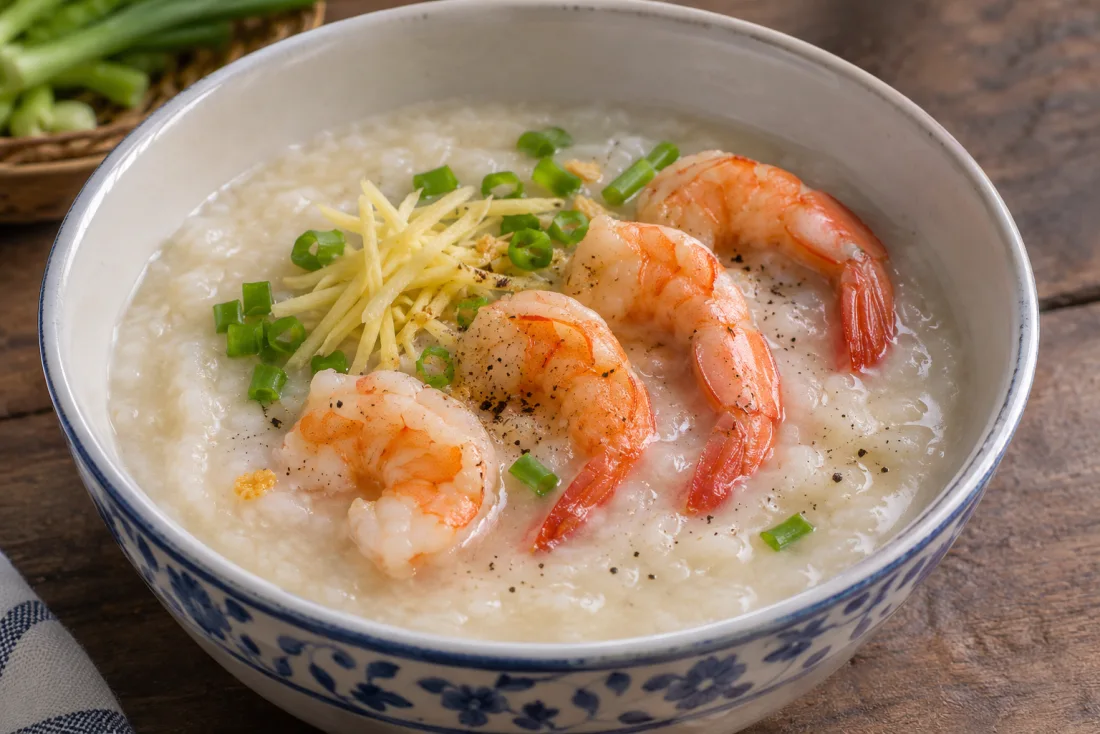

 fully cooked shrimp
 fish sauce
Jok with cooked shrimp
Jok is a thick Thai rice porridge and kung specifies shrimp. The rice cooks down until smooth. Cooked shrimp can be served tail-on or peeled. A pale porridge does not establish the stock or any dairy content.
A Thai home breakfast
One Thai cook makes shrimp congee from softened cooked rice and adds fried garlic, fish sauce and scallion. Another preparation uses cooked shrimp with sliced ginger and scallion over prepared porridge. Both show ways of making a mild breakfast or light meal.
Rice, fresh shrimp and toppings
A Thai recipe uses rice, shrimp, fried garlic, salt, seasoning sauce, fish sauce, sugar, pepper and scallions. Another adds ginger and can use the shrimp cooking liquid. Ask whether the kitchen uses rice water, stock or a prepared mix.
Cook the rice and shrimp fully
Cook rice until it breaks down and the porridge thickens. Cook shrimp separately until firm and opaque through the center. Keep raw shrimp tools separate. Add with clean ginger and scallions near serving and store cooked rice and seafood appropriately.
Soft rice, sweet shrimp and fresh ginger
Porridge is smooth, while shrimp gives a sweet springy bite. Ginger tastes sharp and warm and scallion adds fresh aroma. Fried garlic can add crunch. Taste before adding pepper, fish sauce or chili.
Allergens in seafood and stock
Shrimp and its cooking liquid contain crustaceans. Fish sauce contains fish. Prepared broth and garnishes can contain soy, wheat, egg, milk or oyster. Ask about the stock, seasonings and shared tools. Removing shrimp does not remove it from the broth.
If you have a food allergy, tell the restaurant before ordering and ask about ingredients, sauces and shared cooking equipment.