
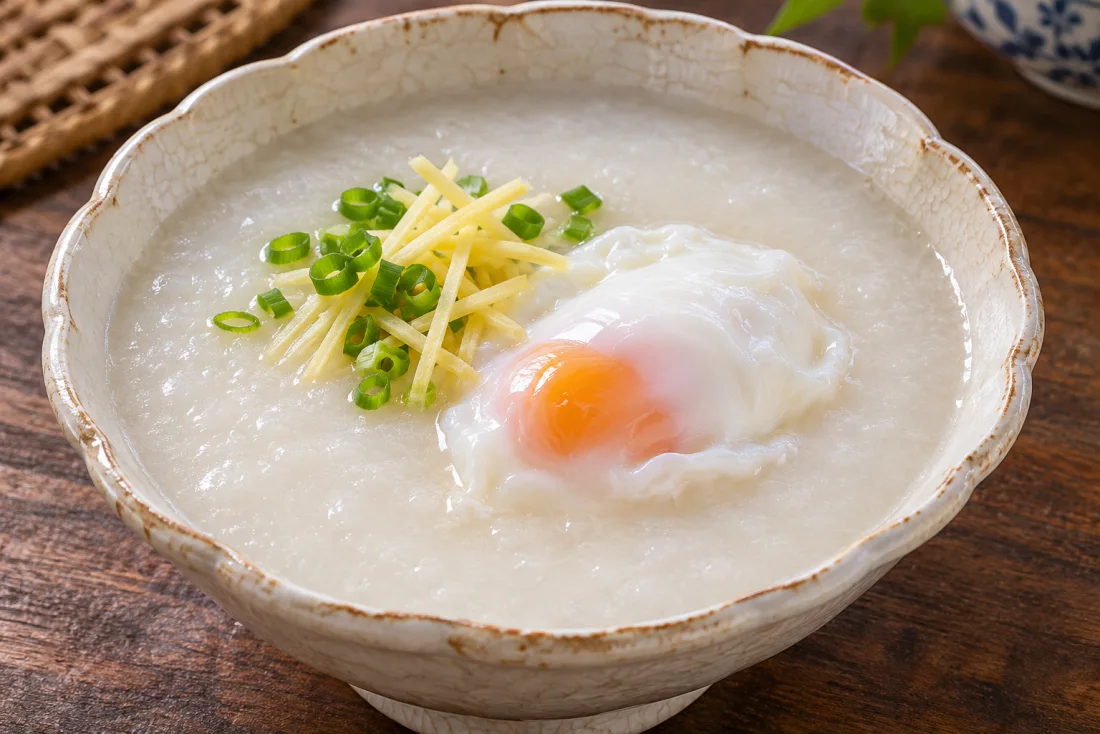

Rice congee and egg
The Thai name here uses the word for egg. Thai shops sell plain congee alongside added egg, sometimes with ginger or scallions as options. Other bowls include meat or a meat stock.
Making thick congee and adding egg
Cook broken jasmine rice until the grains largely break down. Serve over a prepared egg or add cooked scrambled egg. A boiled, seasoned egg can be halved on top, and stock and meat vary by recipe.
Silky rice, soft egg and ginger
The congee is more cohesive than rice soup. Egg yolk can give a richer taste and scrambled egg spreads through the rice. Ginger, scallions and pepper add aroma; seasoned or salted eggs alter saltiness.
Eating and dividing a hot bowl
Try the congee before adding sauces and portion out the egg. Ask for fully cooked egg if desired and keep garnishes separate for sharing or takeaway.
Egg congee, chicken congee and egg rice soup
Chicken congee emphasizes chicken and can add egg. Egg rice soup has more distinct rice grains and thinner broth. Check the Thai name, egg style and any meat stock.
Allergens in egg, sauce and stock
The dish contains egg. Soy sauces may contain soy and wheat, fish sauce contains fish and stocks and sides can add other allergens. Ask about shared pans and ladles. Removing egg does not undo contact.
If you have a food allergy, tell the restaurant before ordering and ask about ingredients, sauces and shared cooking equipment.