

 pork stock
Thick congee at Thai breakfast stalls
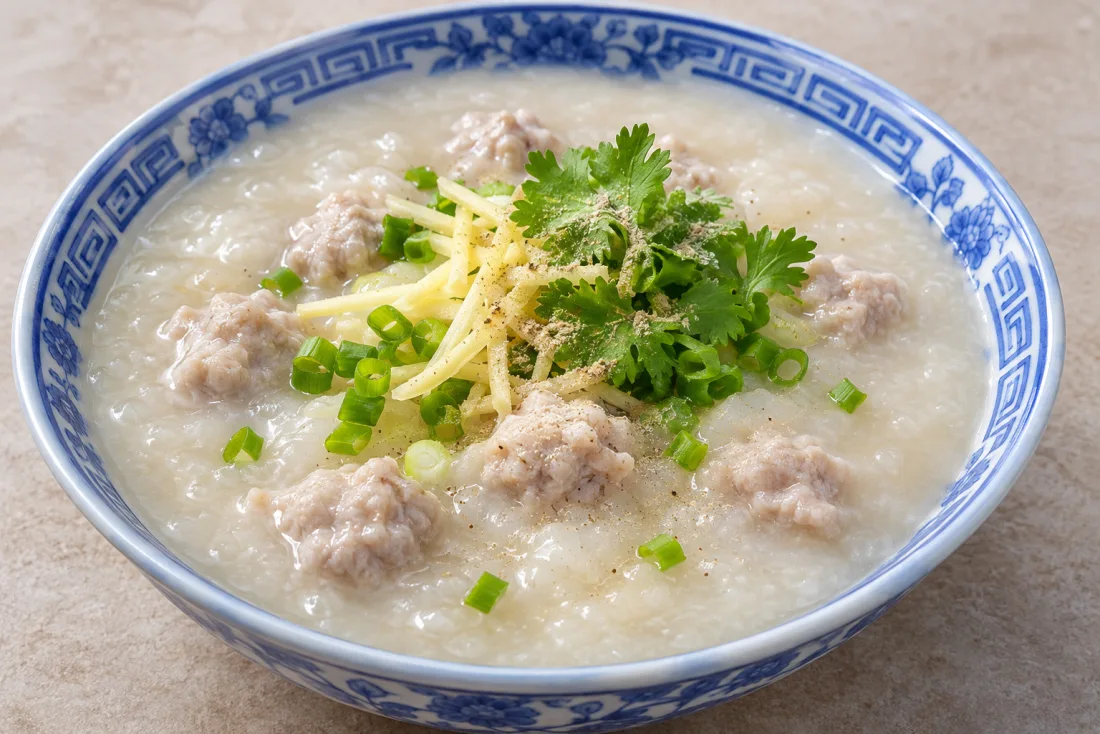
Jok is rice cooked down to a thick porridge, and moo identifies pork. A bowl commonly arrives with pork balls, ginger and spring onion. It is familiar at Thai breakfasts, including Bangkok shops where diners can add egg or pork offal. Individual shops document local serving traditions.
Broken jasmine rice, pork stock and meatballs
Broken jasmine rice breaks down to give the congee its smooth body. Pork bones can provide stock, and minced pork is seasoned with garlic, coriander root, pepper and sometimes soy sauce. Some recipes bind the pork with egg white. Ginger, fried garlic and spring onions can be added at the end.
Cooking rice and pork separately
A cook can simmer rice until the grains break down and make pork stock separately. The meatballs are cooked through in hot broth, then combined with the rice and stock. A quick version can blend cooked rice and stock before simmering. Egg and toppings are added during assembly.
Silky rice, tender pork and fresh ginger
The congee is thick and soft, with savoury stock and tender, slightly springy pork. Ginger, garlic, scallions and white pepper add brightness and gentle heat. A soft egg can enrich the bowl, and crisp fried dough is sometimes served for dipping.
Egg, offal and the difference from rice soup
Ask for egg or for pork offal if you want them. Liver or kidney can appear in the offal version. Khao tom, also translated as rice porridge, usually keeps clearer grains in a thinner broth. Jok breaks the rice down into a thicker base.
Allergens in stock, meatballs and toppings
Soy sauce may contribute soy and wheat. Egg can be used in the meatballs or added to the bowl. Fish sauce and prepared seasoning vary by shop. Fried dough has its own ingredient list. Ask about stock, pork mixture, garnishes and shared equipment if you need to avoid an ingredient.
If you have a food allergy, tell the restaurant before ordering and ask about ingredients, sauces and shared cooking equipment.