
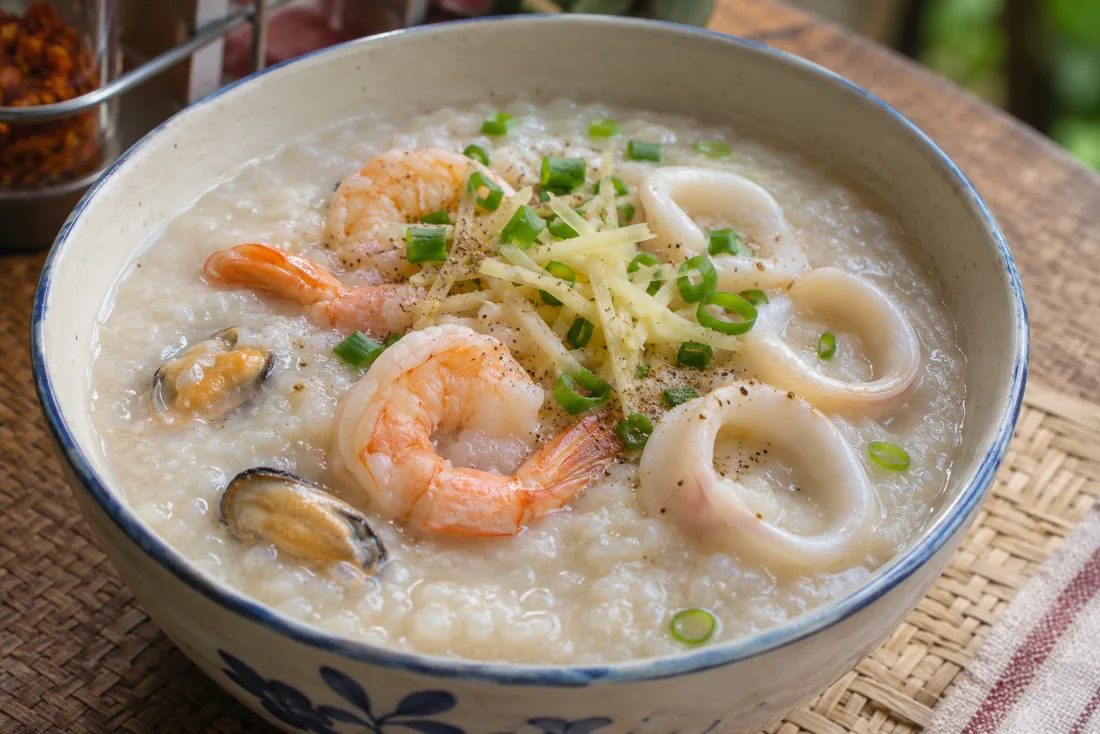

 shrimp
 squid
Jok indicates congee, and talay indicates seafood
Jok talay is seafood congee. The rice softens and breaks down until it thickens the liquid enough to coat a spoon. Some kitchens use broken grains for a finer texture. Khao tom talay is a separate Thai seafood rice soup with an appreciably thinner broth and individual grains. Both can contain shrimp, squid, scallions and ginger. Look for jok when you want the rice and liquid to arrive as a single creamy base. The type of rice and the amount of liquid affect the thickness.
A Thai breakfast-shop dish and light meal
Thai breakfast menus can offer seafood alongside pork and chicken options. One congee shop serves shrimp, squid and imitation crab with egg on request. A Thai chef’s version with shrimp, crab and shell stock can be breakfast or a light meal later in the day. These recipes show differing preparations without establishing one province as the origin. Small fried dough may come separately. If a menu says mixed seafood, ask which species the kitchen plans to use and whether the ginger comes in the bowl.
Shrimp, squid and choices for the rice base
A shop may combine shrimp and squid with imitation crab. The chef’s seafood congee uses shrimp and blue swimming crab with shrimp-shell stock, ginger, salt and pepper, then scallions and cilantro. The images show shrimp and squid as the main seafood, with mussels in one bowl. Crab, mussels and imitation crab are separate choices. White rice can make a smooth base, and blended brown-rice congee has more grain flavor. Shell stock gives a fuller seafood flavor. Other stock gives a different savory base.
Cook the rice and seafood with separate timing
Simmer the rice in water or stock until the grains break down, stirring to prevent sticking. Thin a prepared base with hot stock to the consistency you want. Keep raw seafood and its utensils apart from ready-to-eat garnishes. Strain out shrimp shells when using them for stock. Thoroughly cook the seafood in the hot porridge. Cooked shrimp should be firm, pearly and opaque, and mussels that do not open during cooking should be discarded. Add the scallions and ginger near serving to preserve their fresh fragrance.
Mild rice, sweet shrimp and ginger
The first spoonful brings soft rice and a modest salty broth. Shrimp is lightly sweet, squid provides a springy bite, and mussels add a more pronounced marine taste. Crab meat is sweet and flaky, while imitation crab tastes of seasoned fish paste. Thin ginger adds brief pungency and scallions give the bowl a fresh edge. White pepper gives warmth. Fried dough softens quickly in the bowl, so keep it beside the porridge for a crisp bite. Taste before adding extra pepper or soy sauce.
Allergens in seafood, imitation crab, stock and toppings
Shrimp and real crab are crustaceans. Squid and mussels are molluscs. Ask about them separately. Imitation crab often uses fish paste and may contain egg, wheat, soy or crustacean ingredients. Fish sauce contains fish and soy sauce contains soy and can contain wheat. A shop may add egg on request and serve wheat-based fried dough. Taking out visible seafood leaves ingredients in stock made with shells or fish. Ask about stock, ingredients and sauces, and when necessary ask whether the shop can prevent contact through shared strainers, cookware and prep surfaces.
If you have a food allergy, tell the restaurant before ordering and ask about ingredients, sauces and shared cooking equipment.