
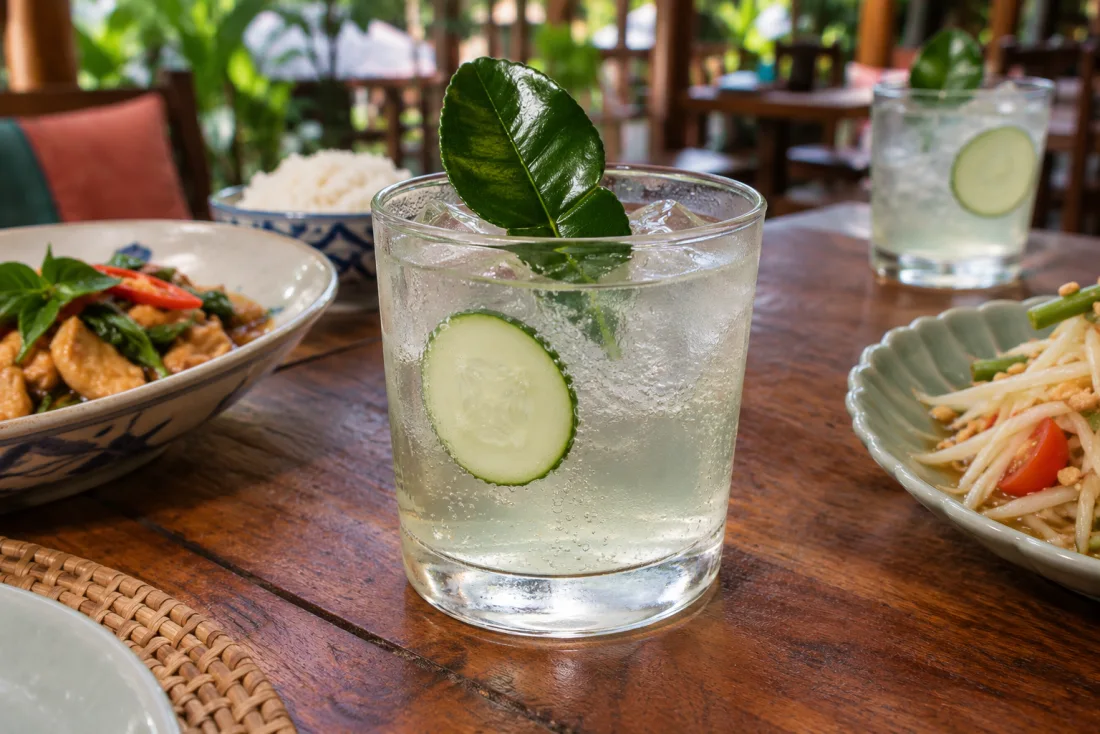

Recognising makrut on a Thai menu
Bai makrut denotes a strongly aromatic citrus leaf. Manao is the lime commonly squeezed for juice. A Koh Tao bar uses makrut-infused vodka, cucumber, mint, lemon and ginger ale. A Phuket hotel pairs the leaf with Thai vodka, pineapple and lychee.
Leaf aroma and the other ingredients
The leaf can flavour the spirit, a cordial or the garnish. Cucumber and mint bring cool green notes. Ginger ale gives bubbles and a ginger accent. Pineapple and lychee give a different fruity balance. Leaf and citrus juice fill different roles.
Herbal and fruity flavours
The cucumber drink is lighter and fizzy, with leaf aroma and ginger. A pineapple lychee version brings sweeter, fuller fruit and a citrus leaf finish. A folded leaf helps bring its aroma near the nose. Tint does not identify alcohol or ingredients.
Highball and fruit presentations
Serve the fizzy version over ice with cucumber and a leaf. A chilled fruit version can be presented in a stemmed glass with peeled lychee. Stir carbonation gently. Fruit and ice affect the volume without revealing the spirit measure.
Similar citrus-leaf drinks
Makrut also appears in gin fizz, gin and tonic and tom yum-style cocktails. The reference recipes here use vodka. Juniper, tonic bitterness or lemongrass would shift the identity. A separate alcohol-free recipe can use citrus leaf and soda.
Allergens and alcohol
The reference cocktails contain vodka. Basic recipes need no milk or egg, but check prepared mixers, foams and fruit additions. Ask about specific allergies and shared equipment. A high proportion of fizzy mixer does not make a cocktail alcohol-free.
If you have a food allergy, tell the restaurant before ordering and ask about ingredients, sauces and shared cooking equipment.