
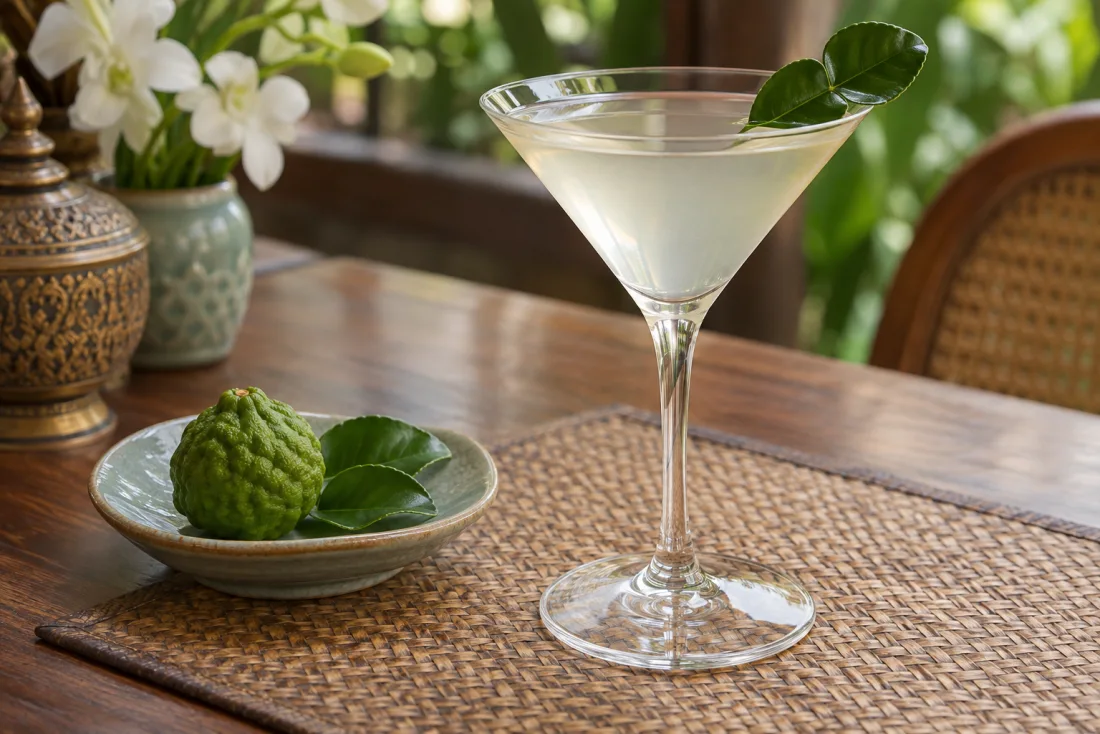

Bai makrut means the fragrant makrut lime leaf
The Thai name refers specifically to adding makrut lime leaf. Makrut usually has a tapered two-part leaf and a bumpy fruit. Leaf aroma can come from an infusion, syrup or a fresh garnish, while ordinary lime juice can supply most of the acidity. Lemongrass is a separate ingredient. The drink often looks clear or pale and is served cold. Color and the choice of glass cannot tell you its base or alcohol content.
From a dry martini to a citrus-leaf bar variation
The industry reference for a dry martini uses gin and dry vermouth stirred with ice. A hotel signature version uses gin, citrus and makrut lime leaves. A different original recipe combines gin and vermouth with makrut-lime syrup and soda. Makrut leaf is widely associated with Thai culinary aroma, but these cocktail recipes establish no particular Thai province of origin. One separate alcohol-free creation uses a botanical base and a rhubarb-makrut sour syrup. Ask for an explicitly labeled alcohol-free drink when needed.
Makrut leaves, gin and different acid sources
Gin's juniper can complement the citrus-leaf aroma. Dry vermouth, if used, adds wine and herbs. Some menus use gin and citrus without listing vermouth. Use food-grade leaves in a strained infusion or syrup. Lime, lemon or yuzu can supply acidity. A little soda lightens some recipes, while drier versions feature the spirit and leaf. A bar may use vodka, changing the base aroma. A garnish does not tell you how sweet the liquid is.
Prepare the aroma, chill and strain
For a syrup, steep the leaves in a sweetened lime mixture and strain when cool. A spirit-forward version can be stirred with ice in a mixing glass and strained into a chilled stemmed glass. A recipe with juice may use a different mix and balance. A leaf on the rim releases fragrance and can be left there. The finished drink is normally chilled without ice left in the serving glass. An alcohol-free recipe can use identical glassware.
Citron aroma with either a dry or tart finish
The first impression is fragrant green citrus. A dry preparation leaves juniper, vermouth herbs and some spirit warmth. Juice and syrup give a brighter sweet-tart sip if the recipe uses them. Vodka makes the leaf aroma easier to notice on its own. Ask whether the drink is dry or sweet-tart and which base is used. A citrus wedge can simply be a garnish, so it does not indicate how much juice is in the glass.
Allergens, vermouth and alcohol
A gin version contains alcohol. Vermouth can also contain sulfites, so consult its label if you avoid them. The basic cocktail needs no dairy or egg, but syrups, premixed juices, garnishes and any egg foam add their own ingredients. Ask about citrus, spice infusions and shared equipment as appropriate. If you want an alcohol-free drink, check that the bar can provide a separately confirmed recipe and check its mixers and flavorings.
If you have a food allergy, tell the restaurant before ordering and ask about ingredients, sauces and shared cooking equipment.