
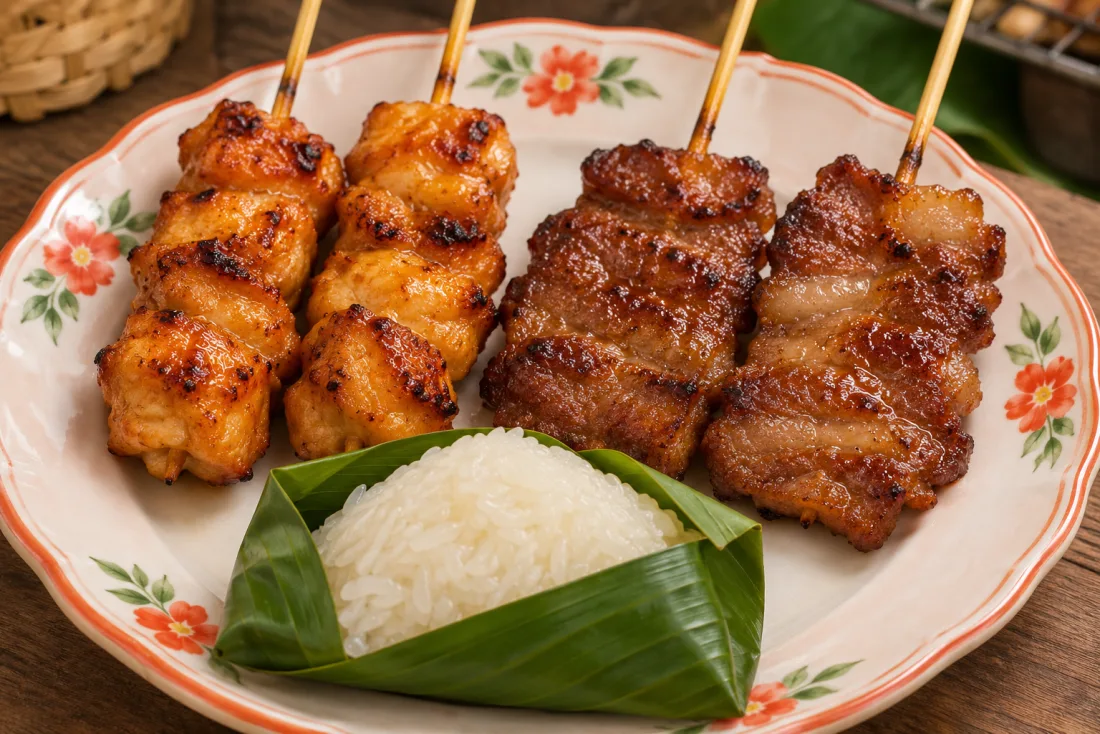

 chicken skewers
 pork skewers
Recognising chicken, pork and rice
Chicken bites can be golden with lighter cooked flesh, while folded pork slices can have darker crisp edges. Arrange them in separate groups when possible. Sticky rice is usually wrapped or packed apart. Check the actual menu to distinguish the meats.
Mixed portions in Thai markets
Kai ping and mu ping mean grilled chicken and pork. A Thai Tops Flavour menu lists two skewers of each and a portion of sticky rice. A Bangkok shop lists a larger sharing order with both meats and two rice packets. Shops may also sell individual skewers, so check the actual pairing.
Cooking each kind through
Chicken pieces and thinner pork slices can be cooked separately. Pepper, garlic, salt, sugar or soy may season them. Both meats should be fully cooked. Sticky rice is steamed separately, then wrapped to serve with the skewers.
Grill flavour and sticky rice
Chicken can stay moist, while thinner pork develops browned edges. A light glaze can add sweetness. Sticky rice gives a mild chewy mouthful between seasoned pieces. Sweet or tangy dips vary by the stall.
How to order and choose photos
Ask how many skewers of each meat, whether rice is included and whether the dip is separate. A smaller meal and a larger sharing tray can show the two serving formats. List actual counts and sides on the menu. The meats can be packed apart for sharing.
Marinades and shared grilling tools
The set contains pork and chicken. Soy, wheat, fish, mollusc ingredients, milk or sesame may occur in sauces. Some kitchens also handle peanut dipping sauces. Ask about pre-marinated meats and shared grills, brushes, tongs and containers.
If you have a food allergy, tell the restaurant before ordering and ask about ingredients, sauces and shared cooking equipment.