

The name, occasions and nine layers
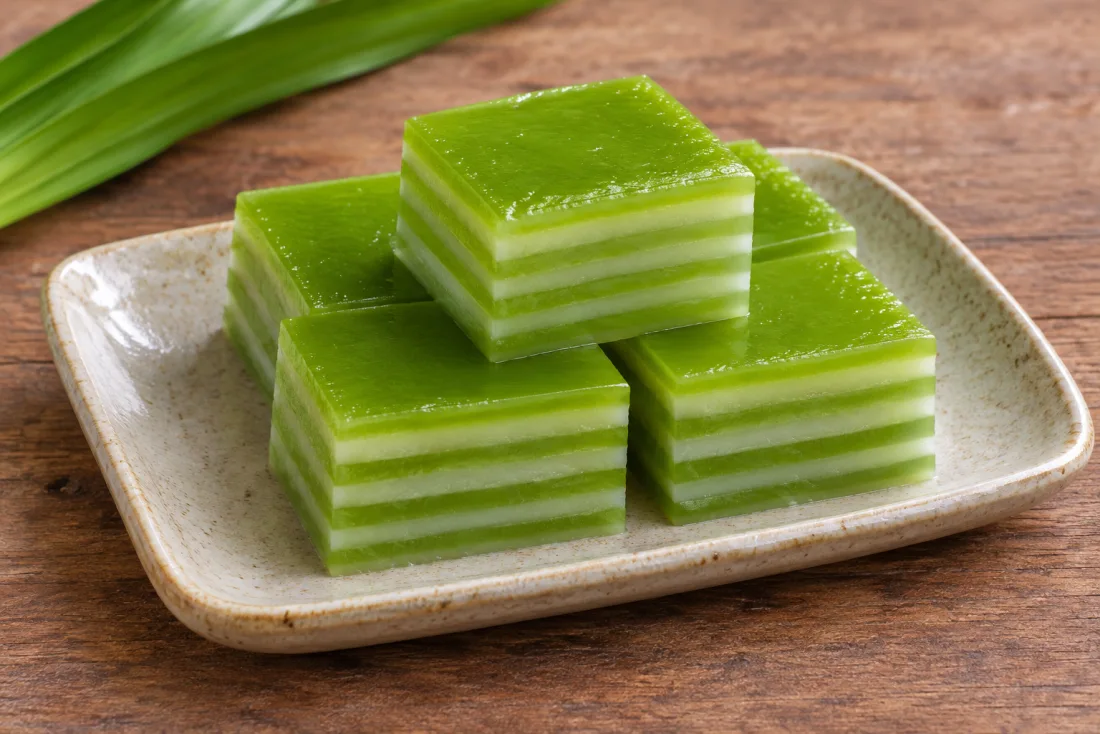
Chan means layer. Suan Dusit University and KRUA.CO describe nine layers in auspicious settings. This is a documented custom, and the number of layers can vary in retail portions and individual moulds.
Pandan, coconut and starches
Phol’s recipe combines rice flour, tapioca starch, a Thai root starch, coconut milk and sugar. Pandan colours part of the batter green. Butterfly pea can bring blue or violet to another version. Different starch ratios affect softness and chew.
Why the layers are steamed separately
A thin layer sets before the cook pours on the next one. That keeps the colours distinct while the sheets adhere. Cooling the cake before cutting makes the edges easier to see. A small mould can shape each portion individually.
Sweetness, coconut and a gentle chew
The dessert can smell of coconut, sugar and fresh pandan. Tapioca helps give the soft cake a little pull. Portion thickness changes the bite, and cold cake can feel firmer. The shade of green alone cannot tell you how much it tastes of pandan.
Slab, mould and other pandan desserts
It may be cut from a large slab or steamed in a flower-shaped or round mould. The identifying feature is the sheets formed by repeated steaming. Coconut is mixed into the layers, even when there is no visible coconut topping.
Allergens and premixed starches
The example contains coconut. Ask about premixes, milk or flour substitutions if you have allergies, and about shared moulds or knives used for egg, wheat or dairy desserts. Removing one layer does not remove ingredients mixed into the batter.
If you have a food allergy, tell the restaurant before ordering and ask about ingredients, sauces and shared cooking equipment.