
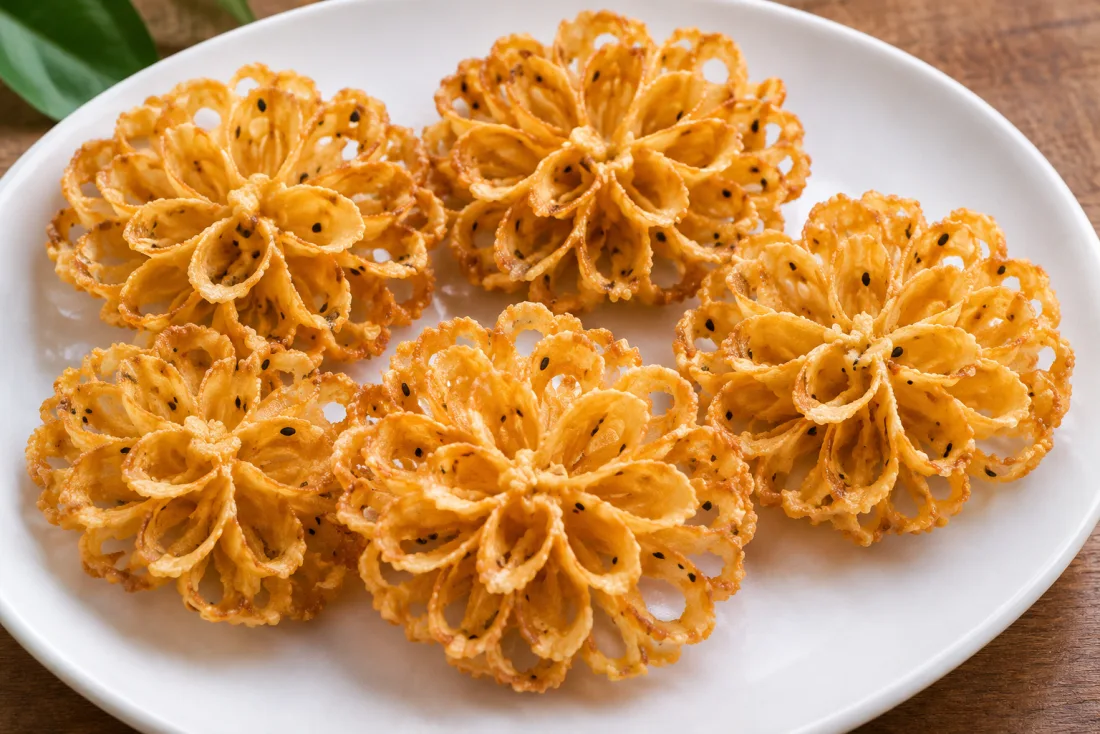

A flower-shaped sweet with southern festival ties
Khanom dok jok is a fried snack with petals shaped by a metal rosette mould. A cultural record from Khok Yang in Krabi describes the flower or floating-plant resemblance and records its use in southern Thailand’s tenth-month tradition of remembering ancestors. Other Thai dessert sources document its preparation. Look for an open lattice and a slightly curved flower.
Flours, coconut milk and sesame
The Thai Rice Department’s recipe uses rice flour, wheat flour and tapioca starch with coconut milk, sugar, egg, clear limewater and white and black sesame. KRUA uses egg yolk and a little salt. A community recipe in Krabi uses rice flour and tapioca starch without listing wheat. The flour blend and the amount of sesame can vary.
How the rosette is fried
The cook heats the metal mould in oil before dipping it in batter, leaving the upper edge uncovered. The thin coating sets as it goes back into the oil and releases as it fries. The cookie cooks to an even gold and drains. KRUA rests warm rosettes on small cups to give their petals a curve before they cool.
A light snap and toasted sesame
The thin outer petals break quickly, with a slightly firmer bite toward the centre. Sesame has a toasted aroma and a subtle grainy texture. Coconut milk rounds out the sweetness, and a little salt can balance it. Keeping the cooled flowers sealed helps preserve their crispness. Humid display conditions can soften them.
Plain sesame flowers and coated versions
The lines and curves of each flower depend on the mould and how the just-fried cookie is shaped. The Krabi cultural record also describes innovations such as chocolate or strawberry coatings. English menus sometimes say honeycomb cookie, referring to the open shape. Check the recipe if honey or any coating ingredient matters.
Allergens, frying oil and shared moulds
The reference batters contain sesame, egg and coconut. The Thai Rice Department and KRUA recipes also contain wheat, while the published Krabi ingredient list uses rice flour and tapioca starch. Ask about the actual flour blend, shared oil and moulds, or additional ingredients in coated versions. For packaged snacks, consult the label for that product.
If you have a food allergy, tell the restaurant before ordering and ask about ingredients, sauces and shared cooking equipment.