
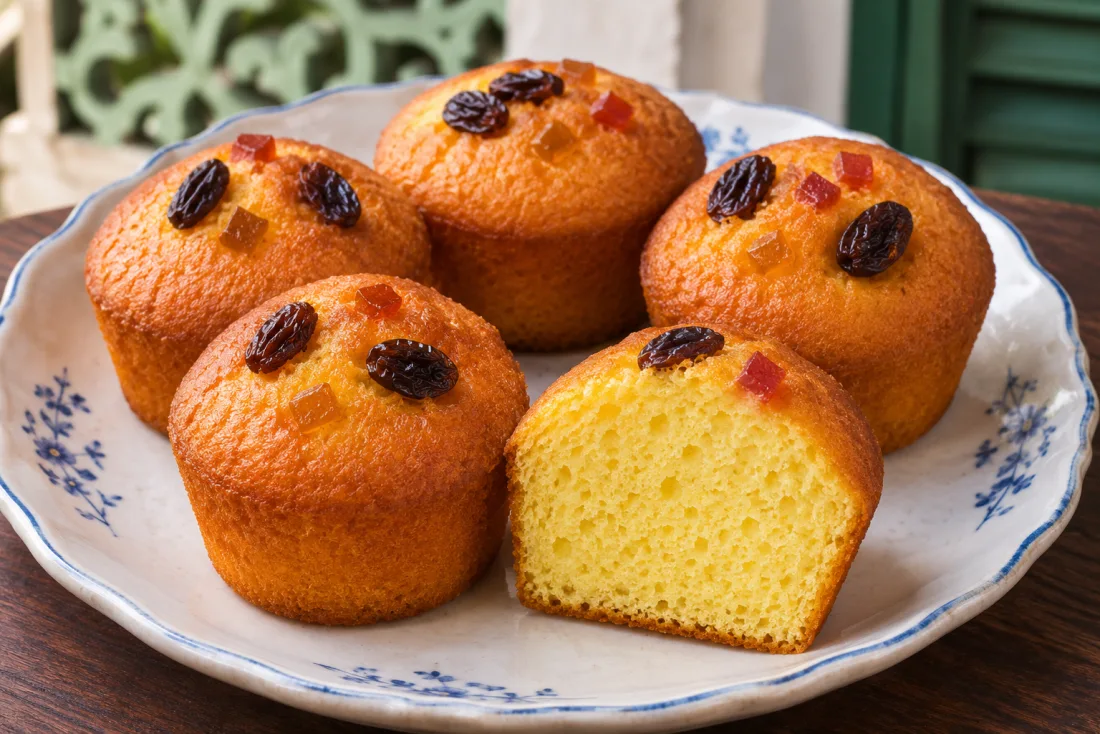

A small cake from Bangkok’s Kudi Chin community
Kudi Chin is a riverside neighbourhood on the Thonburi side of the Chao Phraya. Thai tourism records link the cake with the local Thai-Portuguese community and Santa Cruz Church. A bakery keeper recalls cakes being given at Christmas and New Year before becoming a snack visitors could buy. The local baking method and fruit toppings developed together in the neighbourhood.
Three ingredients support the sponge
The traditional batter uses duck eggs, sugar and wheat flour. Whipping traps air, while the flour sets the sponge in the oven. Some bakers use raisins, dried persimmon, candied winter melon or a dusting of sugar. Interviews describe early cakes without toppings. Both plain and decorated versions keep the aroma of egg and baked flour.
Whip the batter and bake it in small moulds
Field research documents whipping eggs with sugar, folding in flour and pouring the batter into small moulds. Heat makes the batter rise and set. Local records document charcoal baking as well as changes in the cakes over time. Moulds and ovens can change the colour. A freshly baked edge is lightly crisp and the cooled crumb shows its fine air pockets.
Egg aroma, a thin crust and dried fruit
A plain piece gives a toasted sugary crust and a soft, fragrant centre. Raisins add gentle acidity; persimmon or candied winter melon adds a different sweetness and chew. Some bakeries add a trace of sugar on top. Taste a plain and topped piece to compare the egg aroma and the fruit.
Recognising the cake in Kudi Chin
Look for small individual cakes sold plain or with fruit. Khanom farang can refer more broadly to foreign-style baking, so adding Kudi Chin identifies this local version. Other Thai towns, including Chanthaburi, have their own egg cakes with different ingredients and community stories. Ask the bakery which version it made that day.
Allergens in the sponge and toppings
Traditional recipes contain wheat and duck egg. Leaving off fruit does not remove either ingredient. Preserved fruit can also contain additives that vary by supplier. Moulds, racks and tongs may be shared with dairy, nuts or sesame. Ask separately about the batter, toppings and shared equipment if an ingredient matters to you.
If you have a food allergy, tell the restaurant before ordering and ask about ingredients, sauces and shared cooking equipment.