

 shrimp paste
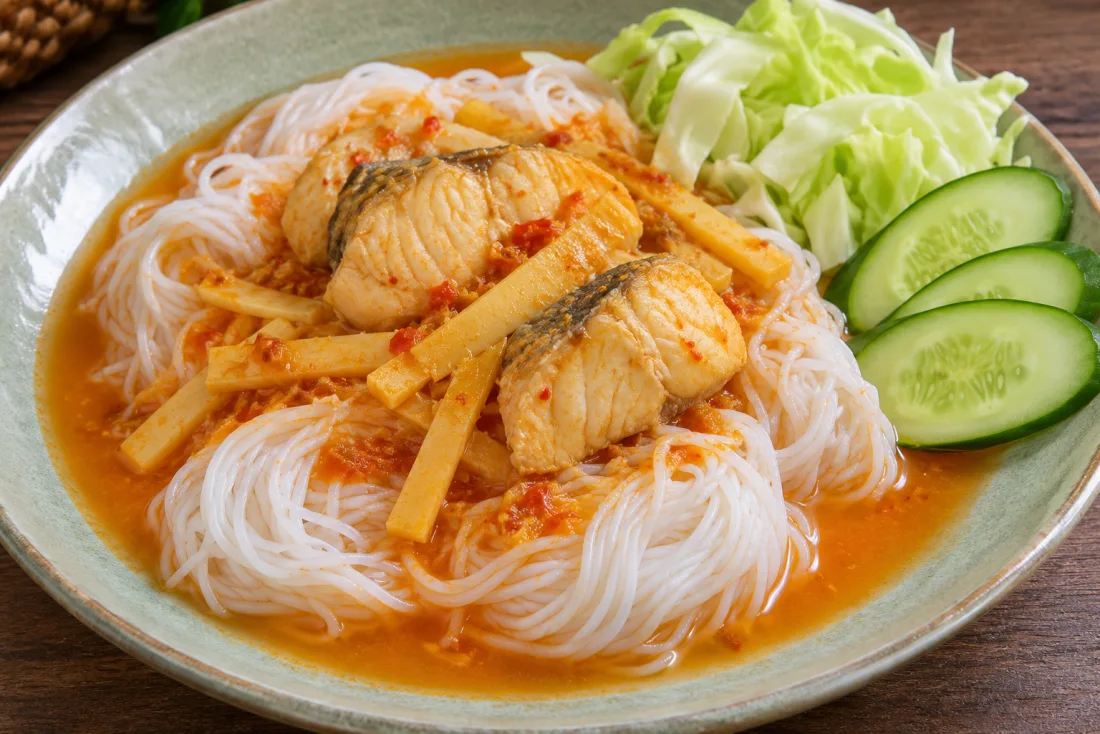
A sour curry serving at a southern noodle shop
Khanom chin are thin rice noodles. Gaeng som is sour curry. Thai PBS documents a serving from Satun with fish, garcinia and herbs. A La-ngu vendor also prepares sour fish curry for rice noodles. Serve it separately or ladled over the bundles.
Rice noodles, fish, dried chillies and sour fruit
A Satun recipe uses fish broth, dried chillies, galangal, lemongrass, shallots and dried garcinia. Another local preparation uses both garcinia and tamarind. Vietnamese coriander and raw vegetables may provide herbal notes. Shrimp paste can be in the seasoning.
Preparing the noodles and the curry separately
Drain and portion the rice noodles. Simmer fish and the curry aromatics, then season with the souring fruit. Flaked fish gives a different texture from chunks. Ladle the curry on at the table or bring it in a separate bowl.
Fruit acidity with fish savour and soft noodles
The broth tastes distinctly tart, with dried chilli warmth and fish savour. Tamarind can add a rounded fruit note. The rice noodles absorb the broth and raw vegetables leave a cooler bite. Add broth a little at a time to taste.
Coconut sauces and regional sour curries
Khanom chin can take several sauces. A coconut fish curry is creamier, while the Satun sour curry uses a water-based stock. A central Thai tamarind sour curry may use fish and papaya. Ask about the local recipe and whether broth can be served separately.
Allergens in fish stock, shrimp paste and toppings
The curry and stock contain fish. Shrimp paste adds crustaceans when used. Curries and sides can contain soy, wheat or other seafood by recipe. Ask about shared pots and noodle strainers. Also check fish portions for bones.
If you have a food allergy, tell the restaurant before ordering and ask about ingredients, sauces and shared cooking equipment.