

 dried shrimp
 fish sauce
A bean-thickened sauce from Central Thailand
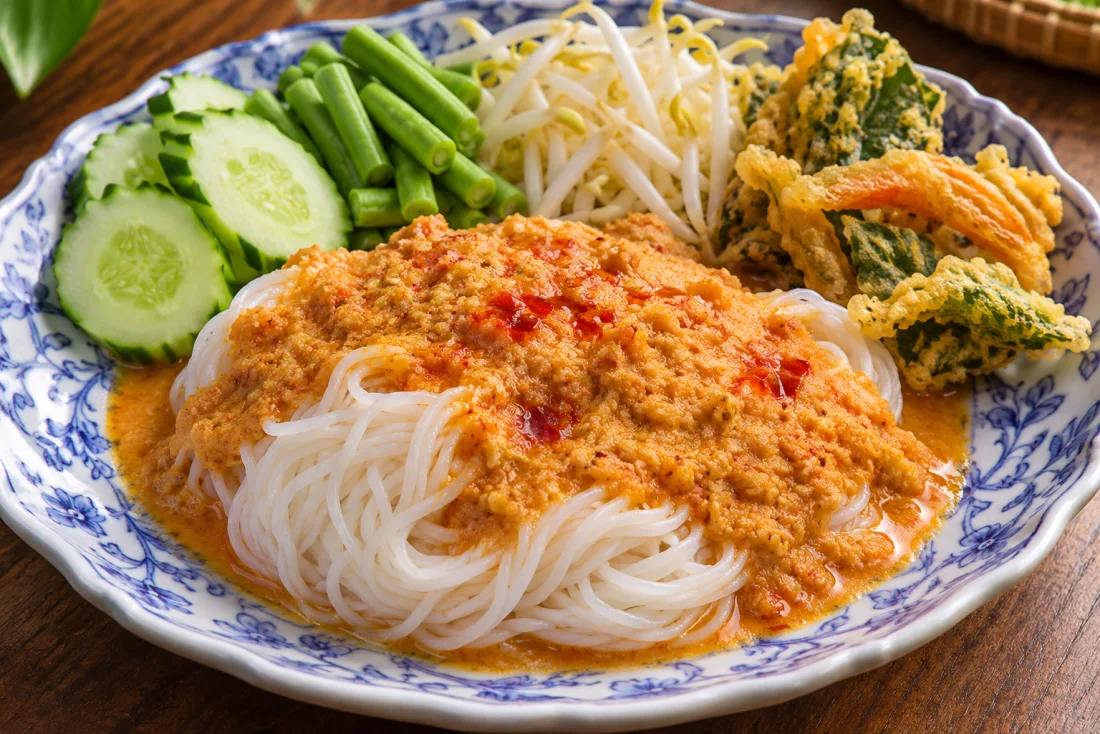
Khanom chin means the thin rice noodles often served in little coils. Nam phrik, in this full dish name, means the bean-thickened sauce spooned over them. Thailand has several regional rice noodle traditions. Thai culinary sources associate this preparation with Central Thailand and document a fresh prawn version at ceremonial meals. A modest plate with a few accompaniments can also be served as a single portion.
What the noodles, beans, coconut and shrimp contribute
The mild, tender noodles carry the sauce between their strands. Peeled mung beans soften when cooked and can be mashed while leaving a few fine grains. Coconut milk adds richness. Shrimp can be pounded dried shrimp or chopped or pounded fresh prawns. Tamarind gives a round acidity, palm sugar adds sweetness, and fish sauce or salt seasons it. Some recipes add roasted peanuts. The choice of beans affects the texture, appearance and allergens.
Simmer the sauce and serve the vegetables alongside
One recipe pounds cooked mung beans and dried shrimp with seasoning, then simmers them in thin coconut milk. A fresh prawn version makes a stock from the shells and returns the cooked prawn meat to the pot. The sauce may be finished with a little chilli oil, fried shallots or fried garlic. Raw, cooked or battered vegetables may be plated with the noodles or served separately, so each diner can choose how much sauce and how much crunch to add.
Sweet-sour first, followed by coconut and shrimp
Sugar and tamarind give a sweet-sour opening. Coconut milk and beans make the sauce rounded, while shrimp and fish sauce make it savoury. Makrut lime, ordinary lime or another aromatic sour juice may scent it. A red surface can come from finishing oil and does not tell you exactly how hot the sauce is. A small spoonful is enough to gauge the heat before dressing the noodles. Crisp vegetables and fritters contrast with the soft strands and rich sauce.
Common accompaniments and other rice noodle dishes
A simple plate might include raw vegetables, fried morning glory or dried chillies. Older published preparations also mention banana blossom, hard-boiled egg and shrimp or bean fritters. Khanom chin nam ya is another rice noodle dish, commonly made with a fish and aromatic sauce. Rice noodles with green curry make a different blend of herbs and curry spices. When several pots are on offer, ask which one is the sweet-sour bean and coconut sauce.
Allergens in both the sauce and the sides
Both reference sauces contain crustaceans, whether from dried shrimp, fresh prawns or shell stock. Fish sauce adds fish. Some versions use roasted peanuts, and the coconut and legumes should be considered if relevant to you. Side dishes can add egg, fish, shrimp or wheat batter, and the frying oil may be shared. Ask about the sauce, toppings, side dishes and shared ladles or oil. Powdered shrimp or ground peanuts may no longer be visible in the sauce.
If you have a food allergy, tell the restaurant before ordering and ask about ingredients, sauces and shared cooking equipment.