

 white fish
 shrimp paste
The name and regional versions
Khanom jeen names the rice noodles, and nam ya is one curry served with them. Mahidol University compares a central version based on dried chillies with a southern version that uses turmeric and tends to be thicker and hotter. The regional methods describe how people make it today.
What goes on the plate and into the sauce
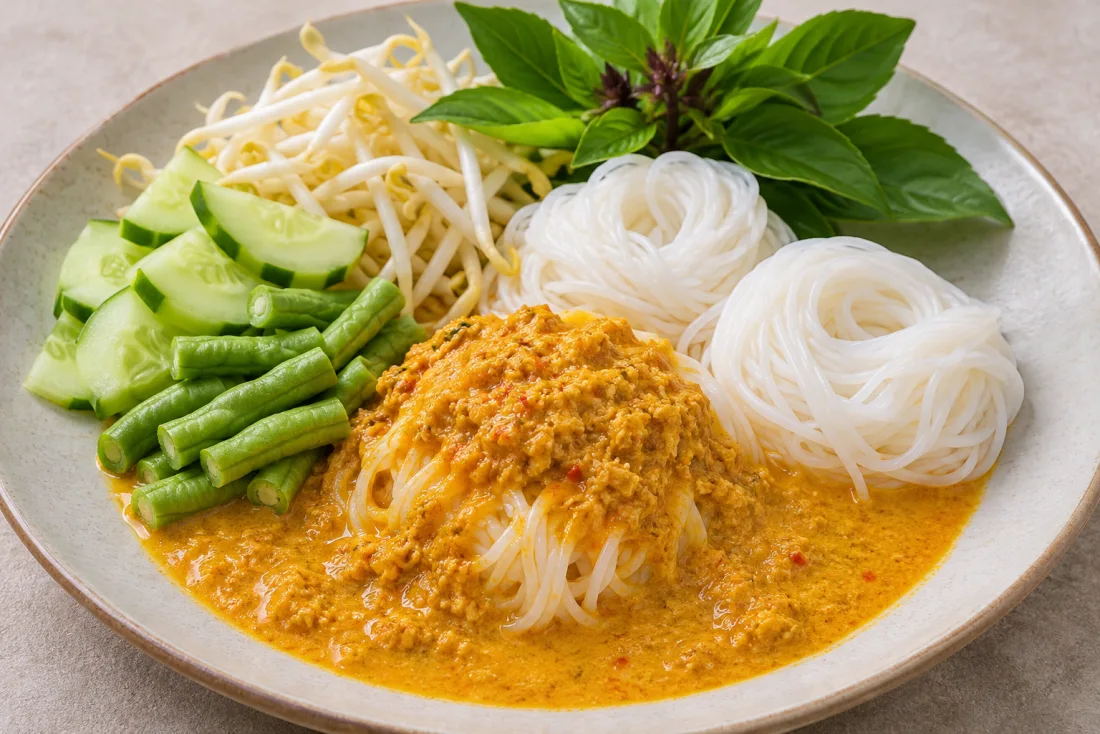
Cooked rice noodles often come in small bundles. The curry contains cooked fish, coconut milk and aromatics. Pailin Chongchitnant identifies fingerroot as a characteristic flavour. Mahidol’s examples include snakehead or mackerel. Some cooks also add fish balls.
Why the curry clings to the noodles
One method cooks the fish and aromatics, blends some of the fish into the curry and heats it with coconut milk. The finely broken-down fish gives the sauce body. A spoonful of concentrated southern curry may coat a small bundle, while a looser curry can be ladled over a larger portion.
How fish, coconut and vegetables taste together
The fish brings savoury depth, coconut milk gives body and chillies supply heat. Fingerroot can come through under the coconut, while turmeric is noticeable in many southern versions. Vegetables such as bean sprouts, cucumber or blanched greens provide a cool or crisp contrast.
How to tell the sauces apart
Noodles and vegetables may be shared with a bowl of curry or served as an individual plate. Mahidol also describes a distinct sweeter nam phrik served with the same noodles that contains shrimp and peanuts. When several sauces are offered, check the full menu name and taste them separately.
Allergens in the curry and serving utensils
Fish is part of fish curry even when pieces are invisible. Ask about shrimp paste, fish sauce, premixed curry paste and other sauces containing peanuts or shrimp. Check shared pots and serving spoons. If avoiding coconut, egg, wheat or soy, ask about the coconut base, fish balls, noodle label and toppings.
If you have a food allergy, tell the restaurant before ordering and ask about ingredients, sauces and shared cooking equipment.