

The Name and Thai Food Context
Paeng means flour or batter. Ji refers to cooking against a hot surface. A Thai chef describes spooning a coconut, palm-sugar and glutinous-rice batter onto a griddle. Cultural records also document a market version from Bang Krachet, Chachoengsao, with local additions such as banana and taro. The forms share the griddled shape and texture, but their ingredient proportions differ. A Thai shop lists paeng ji separately from ba bin, showing that the names can refer to distinct coconut snacks.
Browning Outside, Chew Inside
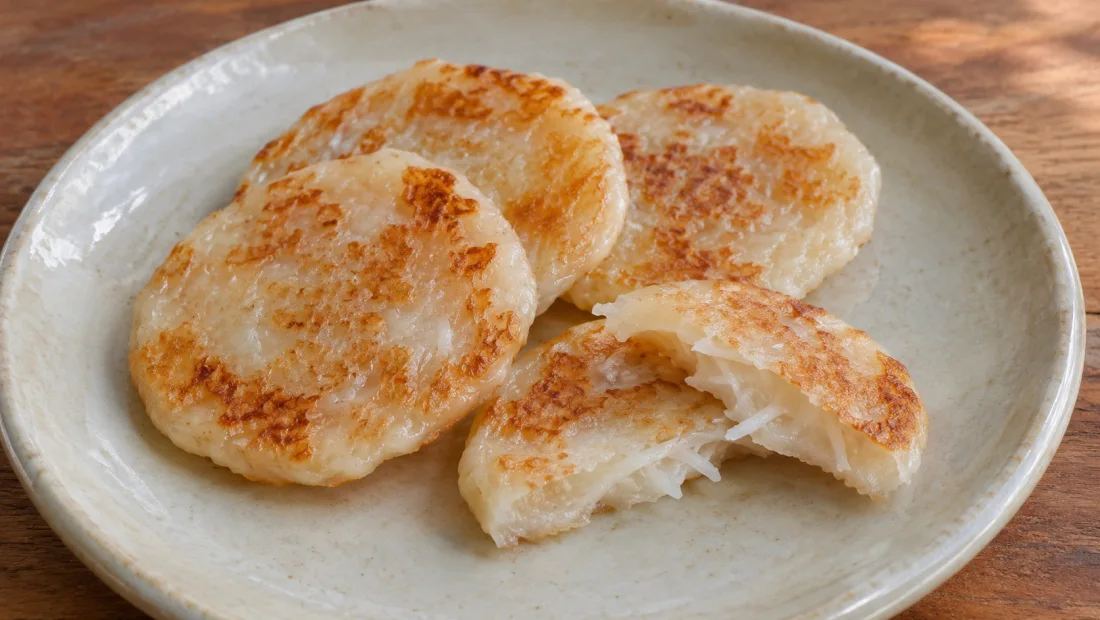
The hot surface marks the glutinous-rice cakes with golden-brown patches and gives some edges a slightly toasty bite. The center stays soft and chewy. Grated coconut may be visible through the pale body. Palm sugar and coconut milk give a rounded sweetness without a syrup topping, and salt lifts the aroma. Pandan gives a greener center and a more pronounced leaf aroma. Tiny pockets of cooked corn add juicy sweetness to the otherwise chewy cake.
The Plain Coconut Round
A plain version uses glutinous rice flour, coconut milk, grated coconut, palm sugar and salt. The coconut goes into the batter. In one chef's version the pan is brushed with a little oil, and small portions are spread and lightly flattened with the back of a spoon. They are turned to brown both sides. The result is a thin cohesive cake with a pale interior, made to share in a few bites. Dark patches can come from pan contact without an added caramel coating.
A Pandan and Corn Version
A Thai home cook adds pandan juice for color and flavor, then folds cooked corn kernels into the glutinous-rice and coconut batter. Golden kernels remain visible in the green cake, alongside light toasted spots from the pan. The change affects both flavor and texture. Other makers may add banana, taro or darker rice flour. A photograph shows one set of ingredients, not the composition of every green or dark rice cake.
Serving and Recognizing the Cakes
Serve a few as individual bites at snack time, warm rather than hot, or alongside other sweets. Plain cakes can be arranged on a small plate. Some pandan cakes rest on a piece of banana leaf used as a liner. Other Thai coconut pastries are closely related, including some versions cooked in a mold. Ask the maker about the griddle process, the use of oil and the ingredients if the item is unfamiliar. The outside loses some toastiness as it cools, while the center stays chewy.
Allergens and Dietary Details
The documented cakes contain coconut milk and grated coconut. The pandan version also contains corn. Other vendors may use different flours, egg, milk or blended oil. Griddles, utensils and trays can be shared with other snacks. Ask about the exact ingredients and equipment if you need to avoid an allergen. Palm sugar and corn may both contribute sweetness; coconut flavor alone does not establish how much sugar the serving contains.
If you have a food allergy, tell the restaurant before ordering and ask about ingredients, sauces and shared cooking equipment.