

Why shops sell a mixed portion
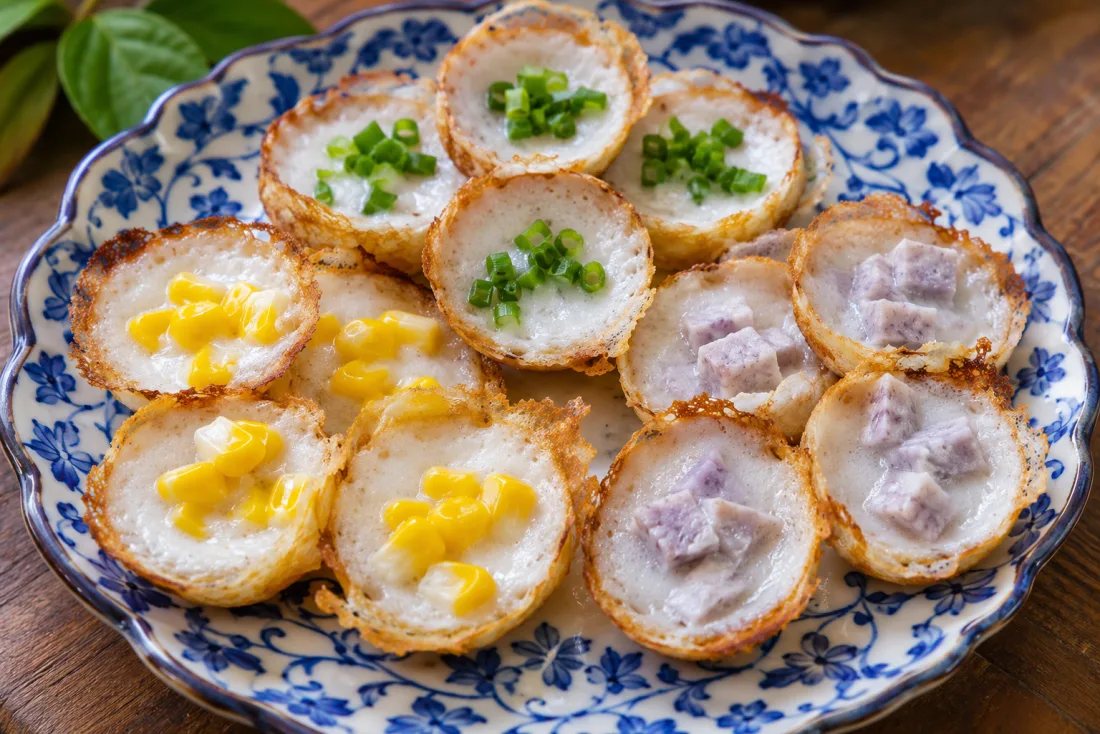
Na ruam describes a mixed-topping selection. Thai sellers document a three-topping combination of taro, corn and scallion, and a four-way box with butterfly-pea coconut. Toppings are distributed among individual bites and vary by shop.
A shared coconut base with separate toppings
Rice flour, coconut milk, sugar and salt form the common base. Sweet corn provides crunch, scallion gives savoury fragrance, and little taro pieces are soft. Butterfly-pea-coloured coconut can keep a pale blue or violet shade.
Griddle shape and crisp rims
A little round griddle well makes thinner edges and a soft coconut middle. The cook can add toppings before the cups set. Letting finished pancakes release some heat before boxing helps keep the edges from softening in condensation.
Sweet and savoury bites
The coconut centre stays soft. Corn tastes sweet, taro is gently earthy, and scallion smells more savoury. Coloured coconut mainly adds a new appearance and a little fibrous texture. A freshly served rim is at its crispiest.
Three toppings on a plate or four in a box
A plate can show separate scallion, corn and taro cups. Another box adds pale blue coconut. Serving sizes vary. Look for the individual topping shapes or ask staff about ambiguous pale toppings. A little space in a takeaway box gives the pancake edges air and keeps neighbouring toppings from sticking together as the portions travel.
Allergens and shared griddle wells
Coconut is present. Prepared mixes or toppings can contain wheat or dairy, and egg-based toppings can add egg. Ask about the batter and each topping, plus shared griddles, utensils and packaging if avoiding an allergen.
If you have a food allergy, tell the restaurant before ordering and ask about ingredients, sauces and shared cooking equipment.