

Recognising the little cake
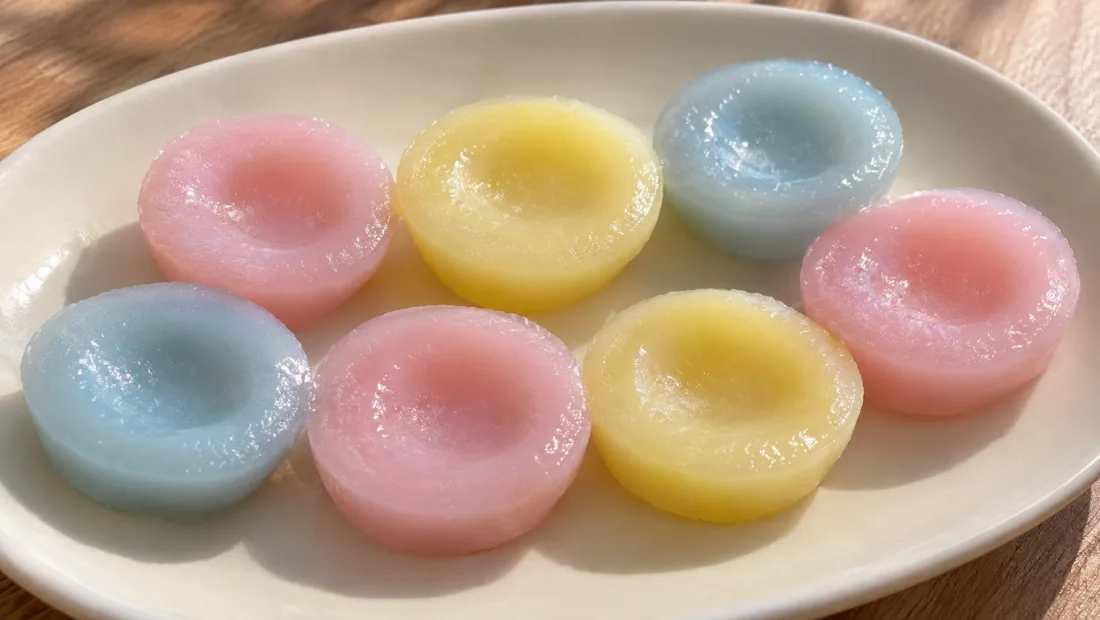
A cake is small and round with a shiny surface and a slight depression. It is taken out of its steaming cup before serving. Cakes can appear in pale pink, blue or green. Color and jasmine flavor are separate choices.
A Thai steamed sweet
Thai cooks document this sweet as khanom nam dok mai, also called khanom chak na for the dimple. It can be made at home or served as a selection of small sweets. The documented recipes vary by cook and do not identify a single birthplace.
Flour, starch and jasmine water
Rice flour forms the body. Cooks use a little arrowroot-type or tapioca starch. Sugar dissolves into jasmine-scented water before mixing. Butterfly pea, pandan and roselle can supply different colors. Some cooks use food-grade jasmine flavor.
Steaming, cooling and texture
Heat the small cups before pouring in the batter. Steam until set and cool before lifting the cakes out. The finished cake is tender and springy. Jasmine gives a mild floral note, and the amount of plant extract affects taste and color.
Serving and photographs
A serving photo can show the dimple, smooth edge and several colors. Choose a picture that matches the colors actually offered, and list which plant ingredients or coloring are used. State the number in a portion.
Allergens and shared equipment
Ask which flour, starch, coloring and flavoring are used. A dessert shop may share cups, steamers or tools with cakes containing egg, milk or coconut. Ask about the actual preparation and each item in a mixed platter.
If you have a food allergy, tell the restaurant before ordering and ask about ingredients, sauces and shared cooking equipment.