

Names and Isan context
Local records use both names. Municipal sources record production in northeastern communities, and a cultural study includes the wafer among foods prepared for local Buddhist celebrations. This documents examples, not a single festival rule. Toasted thin sheets also appear as a snack.
Sticky rice and recipe variants
Steam the rice before pounding it into a uniform mass. Cane sugar can be added. An archival method also records egg yolk and lard, so check the specific recipe. Thin pressed sheets are first dried and then toasted, rather than sold as the uncooked wafer shown in the same process.
Bubbles and a delicate crunch
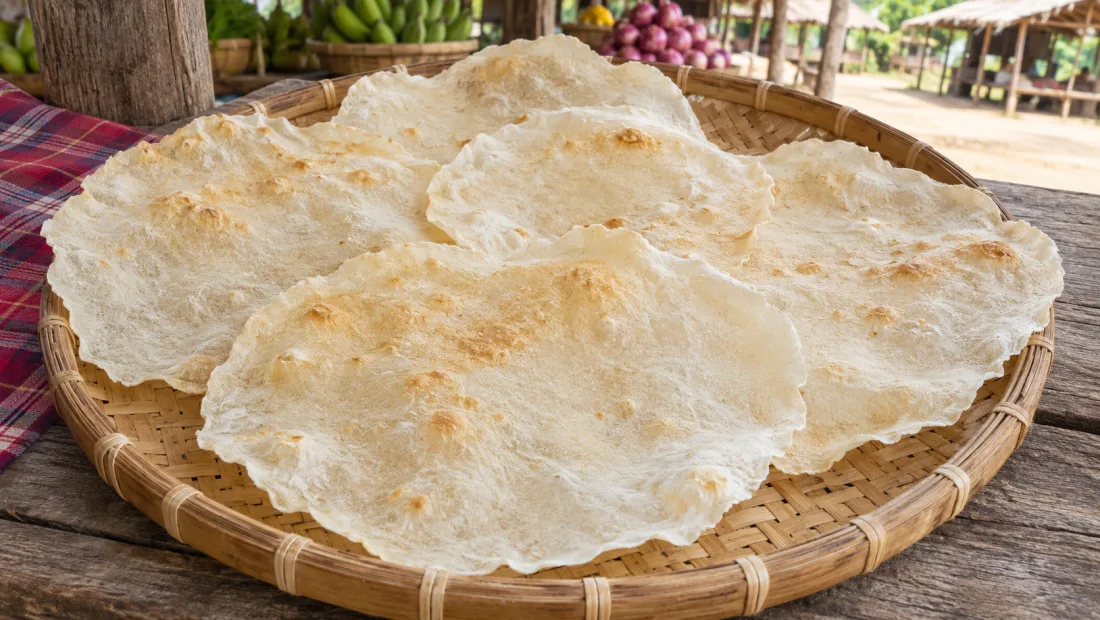
The toasted sheet can be ivory, light tan or lightly blistered brown. Small puffs add irregular texture. A wafer cracks rather than showing thick intact rice grains. Cane sugar can add gentle sweetness, and toasted rice remains the main aroma.
Whole sheets or shared pieces
One image layers several pale sheets in a shallow basket. The other shows one broad oval and broken pieces with a very thin edge. A market may sell it by sheet or a packaged amount. A browned ready-to-eat wafer differs from a dried sheet awaiting toasting.
Distinguishing other rice snacks
Some Thai rice crackers preserve visible grains and are deep-fried with syrup. Other glutinous rice is grilled as a thicker patty. Here the rice is pounded fine and pressed into a wafer. The illustrations keep it plain without a thick sauce or topping.
Allergens and equipment
The rice is not wheat. Some versions use egg and lard, and shared ovens, utensils or packaging can matter. Ask whether other flours, milk, soy, sesame or nuts enter the recipe or equipment. Use the label if it is sold in a bag.
If you have a food allergy, tell the restaurant before ordering and ask about ingredients, sauces and shared cooking equipment.