
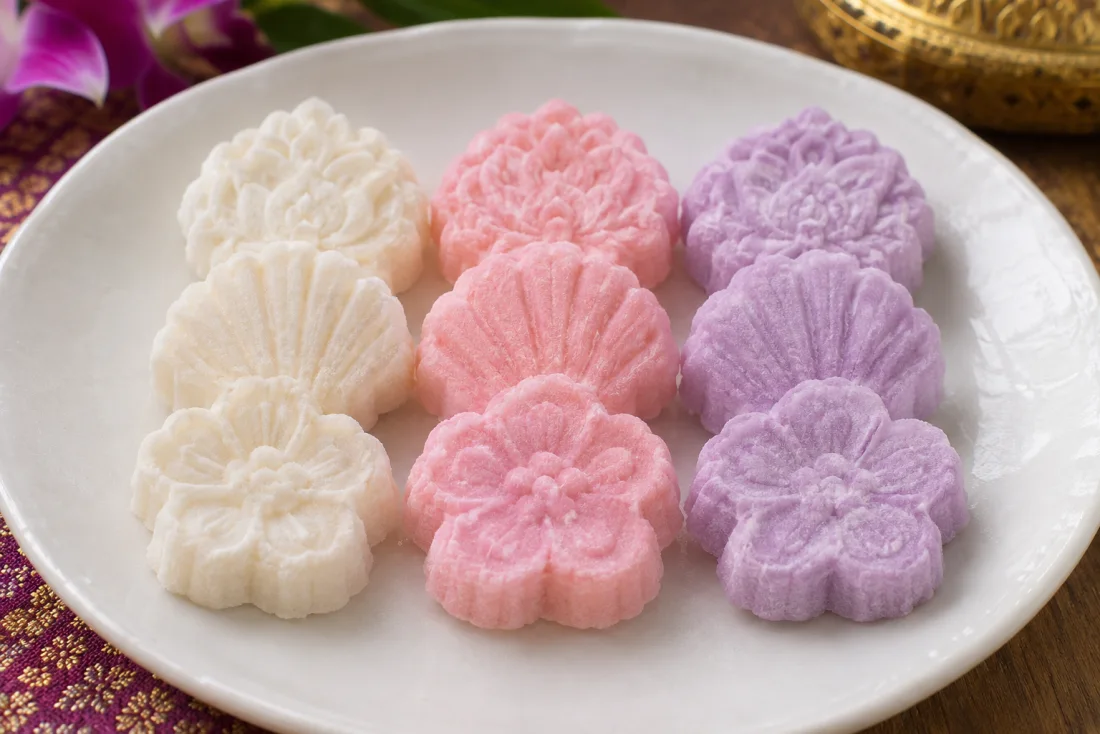

Moulded pieces in the Thai dessert tradition
Thai university sources place sampanni among finely shaped traditional and ceremonial sweets. It may be served at celebrations such as weddings. Floral and other moulds give it a recognisable shape. Some accounts also mention earlier diamond shapes. The preparation is identifiable by toasted starch, sweetened coconut and the pressed shape.
How tapioca starch, coconut milk and sugar set
A university recipe uses tapioca starch, coconut milk and sugar. Other formulas combine rice flour and tapioca starch; research also describes purple rice flour alternatives. Sugar and coconut milk give enough cohesion to mould the toasted starch. Colour may be added, and a culinary candle can scent the starch or the shaped sweets.
Toast the starch and press the dough
Toast the starch gently and let it cool. Separately simmer coconut milk and sugar until it has some body, then mix them. Portion the warm dough and press it into a small mould. Very dry dough can crumble at the edges and very wet dough may not release cleanly. Let the shapes set. A culinary candle is one optional source of aroma.
Gentle sweetness and a crumbly coconut finish
The surface should show the moulded detail and feel drier than a coconut pudding. It breaks and softens on the tongue. Coconut and sugar are forward, and a scented version can have a more aromatic finish. Colours need not indicate different flavours. Rice flour proportions can make the bite firmer.
Distinguishing sampanni from similar moulded sweets
Thong ek also has a moulded shape but is commonly softer and uses egg yolk, with gold leaf sometimes placed on top. Sampanni is more crumbly from toasted starch. Thai sources also use the spelling สำปันนี. Ask how the seller prepares the starch and whether the pieces are candle-scented.
Allergens, substitutions and shared moulds
The reference contains coconut. Variations can use soy milk, dairy or other flours, including wheat in some preparations. Moulds and trays may be shared with sweets containing egg, sesame or nuts. Ask about the blend of flours, coconut substitutions and equipment. If flavourings matter to you, ask about the scent or other ingredients added to the batch.
If you have a food allergy, tell the restaurant before ordering and ask about ingredients, sauces and shared cooking equipment.