
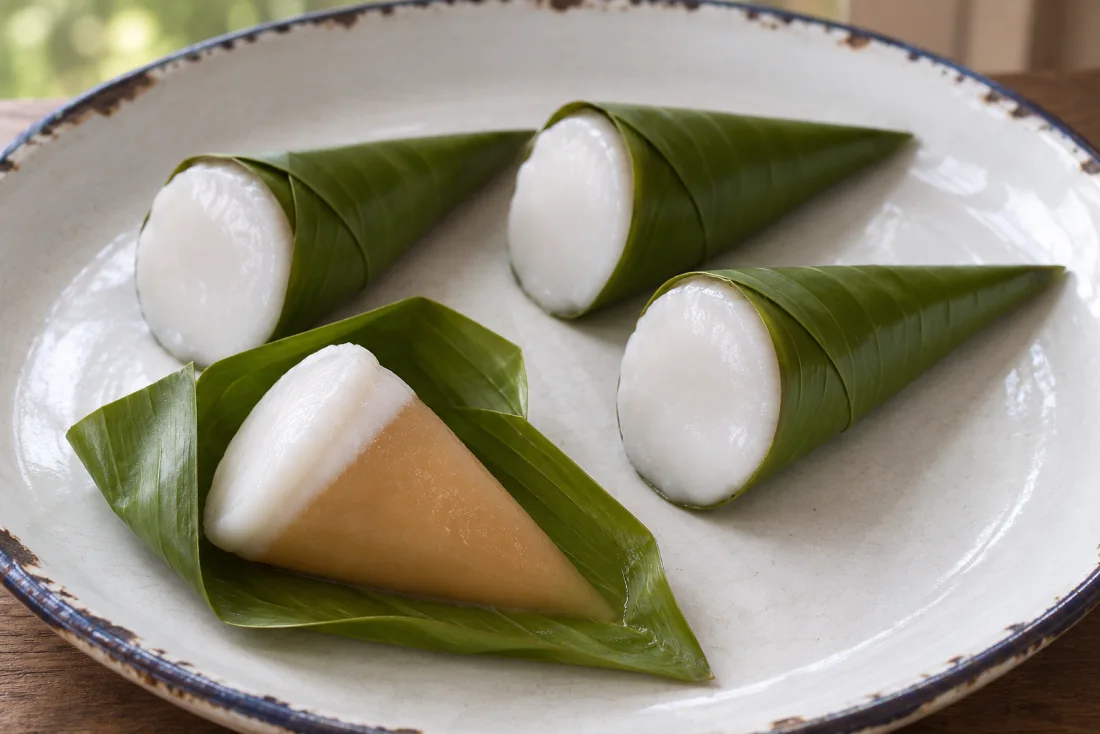

The Cone and Local Accounts
Kruai means cone. A Narathiwat local curriculum documents the sweet body, coconut topping and finished green leaf cones. A published Thai recipe also gives local nicknames that evoke the pointed shape. The record shows the sweet being taught and recognized locally, while other Thai cooks document it in slightly different forms. These accounts establish a regional practice rather than one inventor, date of invention or universal name.
Sweet Rice and Salted Coconut
The white coconut cap tastes rich, with enough salt to make the sweet lower layer stand out. Rice flour and some additional starch give the steamed base a soft, slightly elastic bite and a smooth cut surface. Palm sugar can warm the base to beige and bring a mild caramel aroma. Using pandan juice directly gives a muted green color and a brighter leaf fragrance. The banana leaf holds the shape and can add a little fragrance. The tip is thinner than the broad, coconut-capped mouth.
How the Two Layers Take Shape
The local curriculum and an original Thai recipe use rice flour with some mung-bean starch in a coconut base flavored with palm sugar, pandan and salt. The coconut cap uses rice flour, coconut milk and salt. The sweet base is steamed to begin setting in a small banana-leaf cone. The coconut layer is added at the broad end and steamed until set. A cool, set cone can then be peeled. The white layer comes from coconut milk, and the banana leaf and any pin are removed before eating.
Palm Sugar and Green Pandan
A traditional palm-sugar example can show a warm beige base, especially if it is scented with pandan without much juice. One directly documented home version uses green pandan juice and rice flour with tapioca starch, beneath the same kind of separate white coconut layer. Some finished cones can be served intact so the shape remains clear; peeling one or two shows the color of the sweet body. The depth of natural green can vary. Color alone cannot establish which ingredients a seller used.
Recognizing the Finished Sweet
Small cones suit snack and dessert spreads with several pieces to share. Peel from the wide end toward the tip. A light plate shows the contrast of palm-sugar beige against the leaf, and a shallow dark plate can display peeled pandan cones. Related coconut-topped desserts may be cooked in small ceramic cups. This one tapers. It also differs from a long-tail packet of whole sticky rice, because its base is a smooth batter with no distinct cooked grains. The coconut topping is already part of the steamed cake.
Allergens and Dietary Details
The documented examples use coconut milk. Some contain mung-bean starch, while another uses tapioca; ask what starch and equipment were used if you have an allergy. Milk, eggs and wheat are not required for the examples described, but other shops can use different ingredients or shared steamers and serving tools. Peel off the banana leaf and remove any slender pin. The sweetness depends on the amount and type of sugar used.
If you have a food allergy, tell the restaurant before ordering and ask about ingredients, sauces and shared cooking equipment.