

Filling or a layer of beans
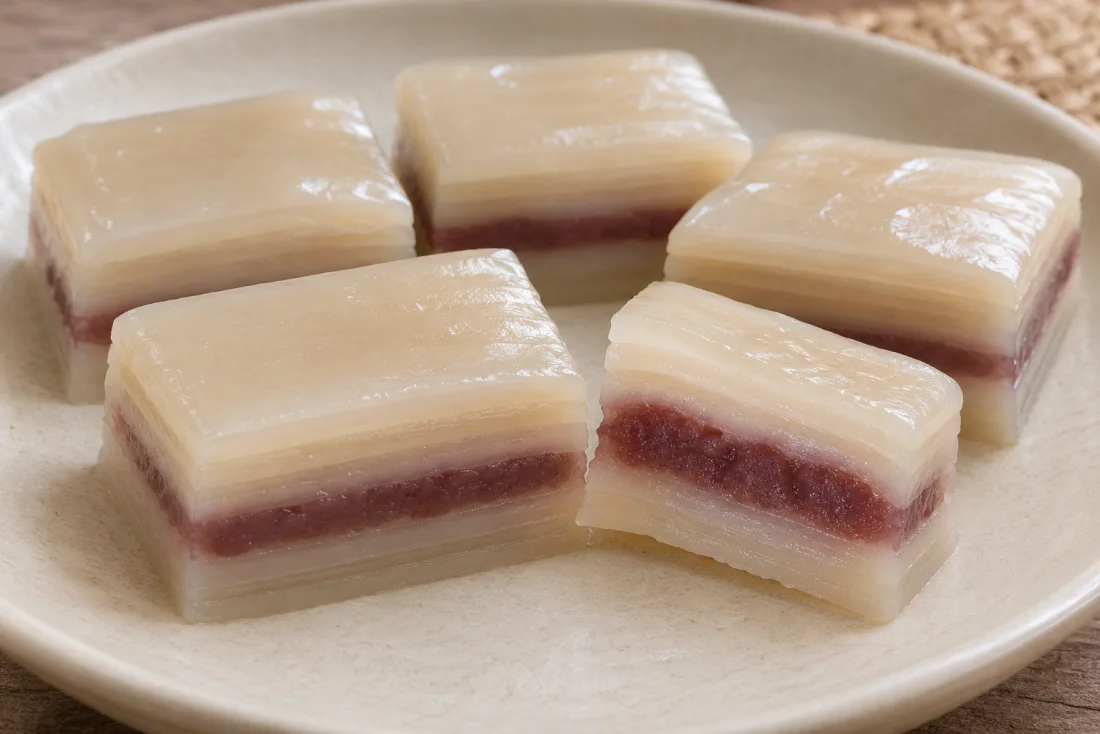
Khanom chan is a steamed layer cake. A filled version encloses a defined red bean centre. Another recipe scatters cooked whole beans in the outer layers and puts a green pandan layer between them. The cut surface distinguishes the styles. The colour alone cannot identify the ingredient.
A Songkhla community example and a regional comparison
A project with sweet makers in Koh Taew, Songkhla, documents red bean, taro and coconut fillings and also names a pandan-filled example. A separate Southeast Asian home recipe adapted from a kuih cookbook records two bean layers divided by a pandan layer. These examples document each approach without making a claim of one origin for both.
Batter, coconut milk and beans
A base Thai layer-cake recipe uses rice flour, tapioca starch and coconut milk. Smooth red bean filling has a different texture from the wrapper. The regional recipe uses rice flour, tapioca, coconut milk and pandan juice. Its whole beans are cooked first, and the author notes using mashed sweet potato in place of taro. The examples do not require glutinous rice flour.
Soft, springy layers and sweetness
Set starch can make the layers smooth, slightly translucent and gently elastic. Coconut gives the batter a rounded aroma. In a filled cake the bean paste is soft and even; in a layered kuih the beans add texture between tender layers. Pandan scents the green layer. Colour cannot establish sweetness.
Serving and identifying a piece
Slightly cool cake can be cut into clean sections. Small squares may reveal the filled centre, and longer slices can show a green layer between two bean layers. An unfilled pandan-layer cake, filled cake and a whole-bean layer cake are distinct products. Match the cut surface to what the shop actually serves.
Allergens, fillings and flour
The examples include coconut and red beans. Some kitchens share equipment with peanuts, wheat, dairy or eggs. A rice-and-tapioca recipe does not establish the full ingredient list for every retail piece. Ask about the individual batter, filling, garnish and shared steamers or cutting utensils where relevant.
If you have a food allergy, tell the restaurant before ordering and ask about ingredients, sauces and shared cooking equipment.