
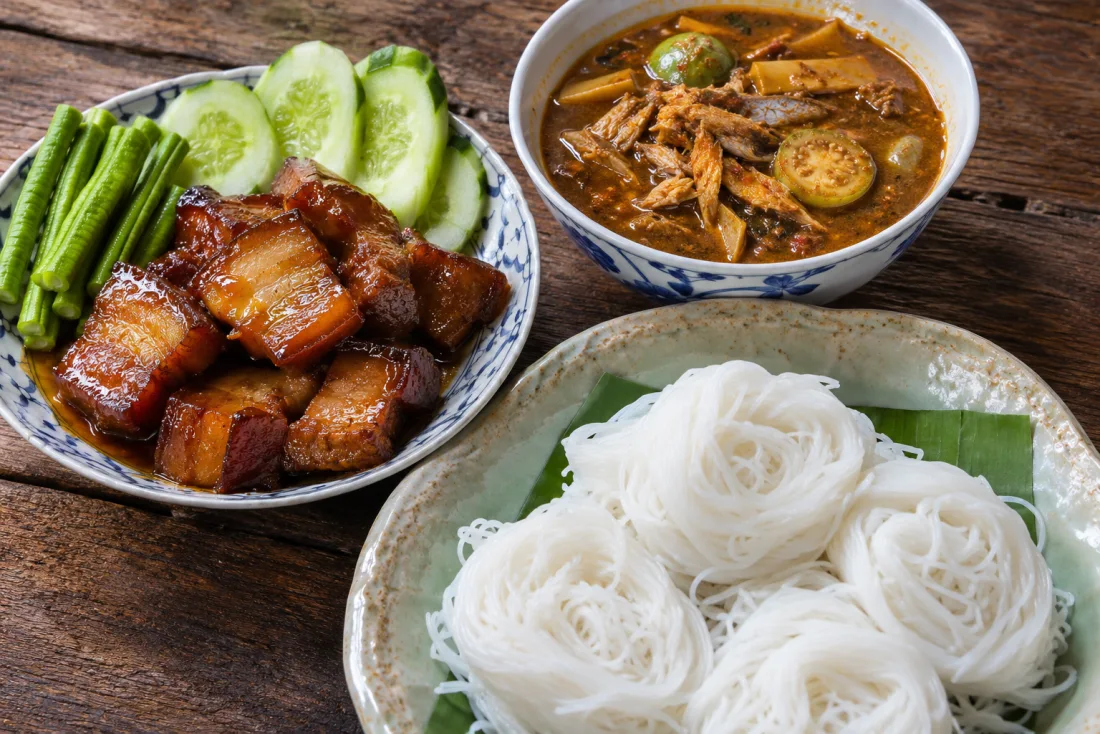

 fermented fish viscera
 pork belly
How the pairing appears
Khanom chin means soft rice noodles, gaeng tai pla is Southern fermented-fish curry and moo wan is sweet pork. A documented home cook makes the pork to accompany the noodle curry. Shops can offer the noodles and curry together and recommend the pork separately.
Rice noodles and fish curry
White, fine rice noodles are often served in nests. The dark curry can be spooned over part of them or served in a bowl. Fermented fish seasoning, cooked fish, herbs and vegetables such as bamboo shoots or eggplants can give it its savoury, spicy flavour.
The sweet pork side
Pork belly or a combination of fattier and leaner cuts can be cooked with soy sauce, sugar and aromatics. It comes out glossy and amber to reddish brown. Some shops cut it into chunks and others use slices. It is served as a separate cooked side.
Alternating the spicy and sweet
A little curry gives the rice noodles a bracing salty heat. A piece of sweet pork brings a softer flavour afterward. Cucumber, greens and long beans can add freshness. Keeping the sauces separate lets diners choose how much to mix.
Ordering the full pairing
Ordinary curry noodles may come with only curry and vegetables, and sweet pork can also be served with steamed rice. Ask whether the noodles, gaeng tai pla and sweet pork come together or need to be ordered separately. The curry may already be quite hot.
Allergens in curry and sweet pork
Fermented fish and cooked fish contain fish. Curry paste may add shrimp, while oyster sauce can add molluscs. Soy sauce can contain soy and wheat. Ask about noodles, shared pots and optional sides, especially when the curry has been poured over the noodles.
If you have a food allergy, tell the restaurant before ordering and ask about ingredients, sauces and shared cooking equipment.