
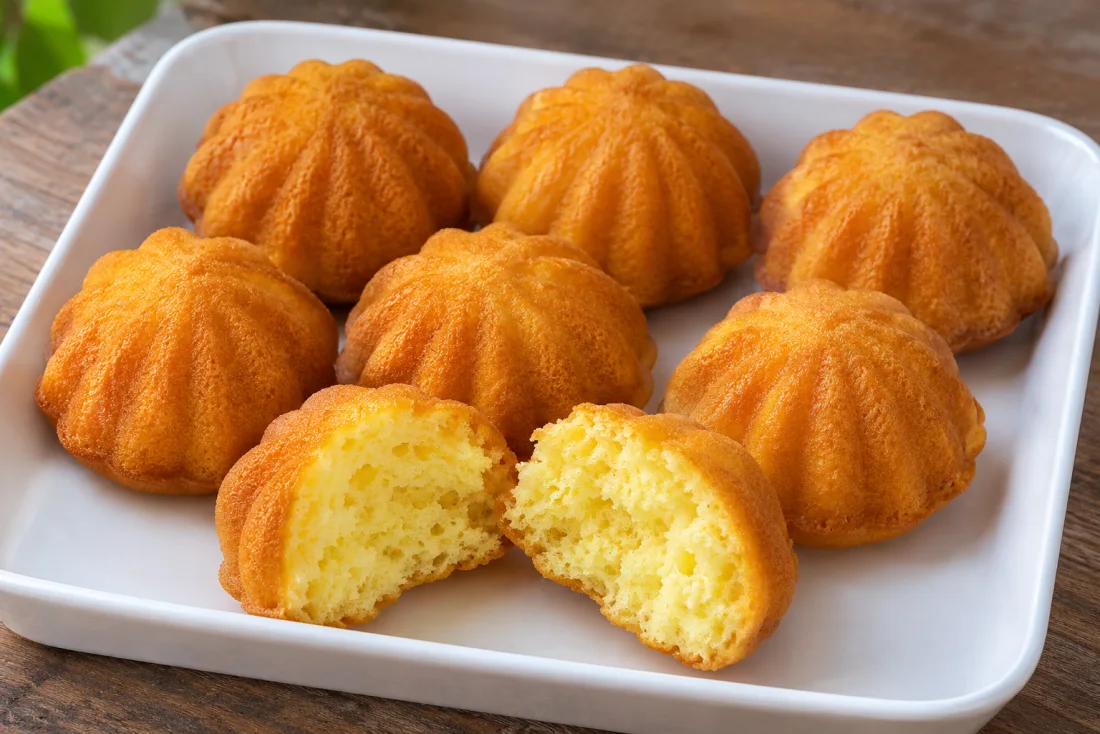

Khanom kai is a molded egg sponge cake
Khanom means a snack or sweet and kai means egg. The batter is baked with flour and eggs until it holds its shape. A cut cake shows fine air pockets rather than a spoonable custard texture. Other treats called egg-shaped can use roots and starch and be fried. This cake has recognizable mold marks, from little flutes to oval forms. The edges can be lightly crisp while the inside stays soft.
Thai market cakes and a Kamphaeng Phet preparation
A local university record describes khanom kai as a familiar sweet in Kamphaeng Phet and documents an electric-mold method. A Thai cooking recipe demonstrates a lidded mold over charcoal. These document regional practice without establishing who first made the cakes. A Thai chef also devised a pandan waffle interpretation. Food stalls can sell the cakes in small bags. Texture at the edges varies by shop and how recently they baked them.
Egg, flour, sugar and optional dairy
One charcoal recipe uses whole duck eggs, white sugar, wheat flour and vanilla, with oil for the mold. A local version uses chicken eggs and mixes fresh milk into its batter. Butter can also be used to grease a mold. Whipped eggs supply aeration, flour provides structure and sugar sweetens and helps the surface color. Vanilla or pandan depends on the recipe. A plain molded cake does not need a filling.
Whip the eggs, fold the flour and bake
Whip the eggs until lighter and expanded, adding sugar in stages. Fold in sifted flour without crushing the foam. Preheat and lightly grease the mold. Measure batter into the small cavities with room for it to rise. A charcoal oven can heat the closed mold from both sides. Electric molds use their own baking time. Remove the cakes when cooked through and golden. Cool on a rack to limit steam softening the edge.
A toasted edge with a soft egg-scented crumb
Warm cakes carry a distinct egg aroma and a little baked grain fragrance. A shallow mold gives a larger proportion of golden crust. A deeper mold holds a bigger fluffy center. Edges can soften as the cakes cool. Sweetness varies, and a plain cup of tea or coffee makes it easier to taste the egg and toasted flour. Keeping steam from collecting in the package preserves a crisper edge.
Allergens in egg, wheat and optional milk ingredients
Both chicken and duck eggs are egg allergens. Cake flour and other wheat flour contain wheat. Fresh milk, powdered milk or butter can add dairy through the batter or the mold. Flavorings, sauces and decorations can have additional ingredients. Ask which egg and flour are used and how the mold is greased. Ask about shared mixers or pans when avoiding an allergen. Color and aroma cannot establish the recipe.
If you have a food allergy, tell the restaurant before ordering and ask about ingredients, sauces and shared cooking equipment.