
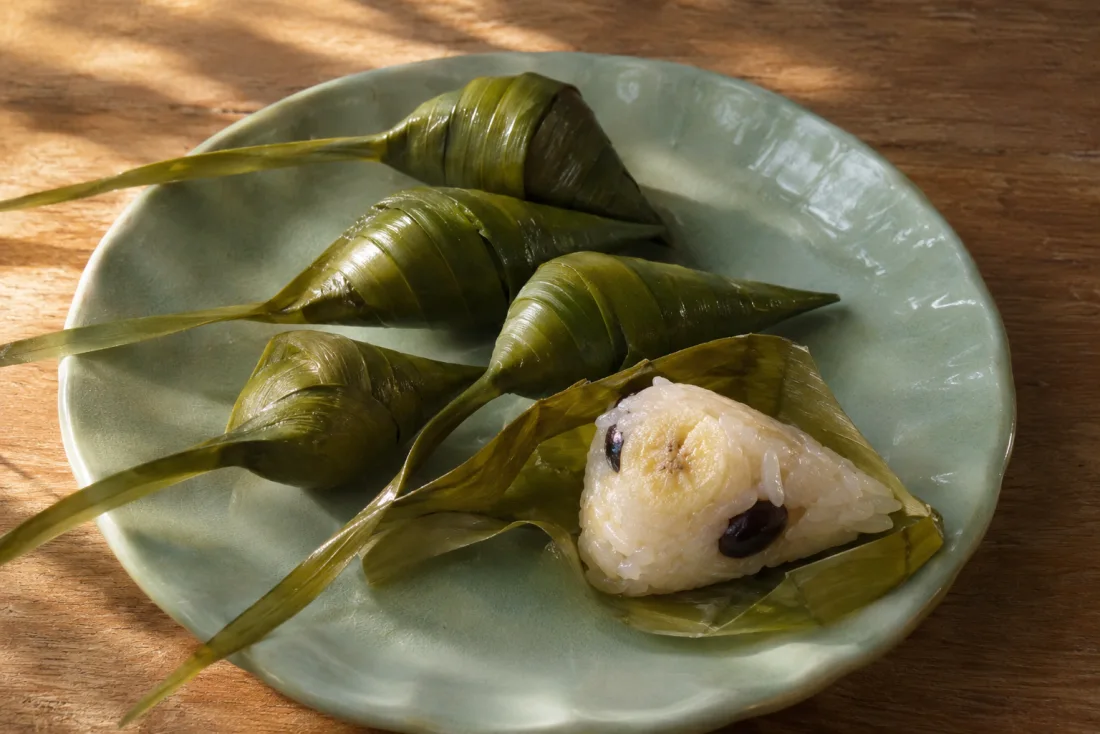

A Sweet With a Long Tail
Khao tom luk yon is prepared for Tak Bat Thewo around Wat Phra Phutthachai in Saraburi. Community records from Kamphaeng Phet also document related traditions in older settlements including Trai Trueng and Nakhon Chum. Stories of the Buddha returning from a heavenly realm form part of the cultural setting for the offerings. The remaining tail makes the small parcel easy to pick up and helps explain the sweet's ceremonial association. The customs document established community practices and do not date an individual invention.
Soft Grains and the Scent of Leaves
Just after peeling, the fragrance of the wrapper meets that of the coconut milk. The soft grains cling to one another yet keep a visible outline. Coconut milk enriches the rice, sugar brings gentle sweetness, and a little salt rounds off the flavor. Cooked black beans offer a slightly mealy center under their skins and an occasional change in texture. Ripe banana, where used, softens and adds its own fruit sweetness. Most of the coconut enrichment is absorbed into the rice, so the sweet is usually presented without a surrounding white sauce.
Whole Rice, Black Beans and the Wrapper
Whole glutinous rice, coconut milk, cooked black beans, sugar and salt make up the documented base. The rice absorbs seasoned coconut milk before portions are packed for final steaming. Some cooks add ripe banana while others keep the filling to rice and beans. A narrow section of leaf becomes a small cone or teardrop and an untrimmed part makes the long handle. Local wrappers include pandan and young coconut leaves. The cones may be secured with a small bamboo pin or a sliver of plant material. Peel them open for eating.
Saraburi and Kamphaeng Phet Versions
The Saraburi temple-event account describes ripe banana and black beans in the coconut rice and a pandan wrapper with a long tail. The Kamphaeng Phet description lists black beans, sugar and salt with coconut rice but no banana, and allows pandan or young coconut leaf. The first version can show a soft piece of banana through the peeled rice. The other can show grains flecked with dark beans without a distinct fruit center. The small tapered shape and a long end distinguish both versions whether they are served on a plate or in a shallow basket.
Festivals, Sharing and Presentation
The community offerings that follow the Buddhist rains retreat are a recognizable occasion for these parcels. Families and local organizers prepare the parcels ahead for offerings and sharing, where the projecting leaf end helps people pick up a single portion. Availability outside these gatherings varies and depends on local traditions. An intact serving can be displayed beside a peeled piece to reveal the rice. Familiar banana sticky-rice parcels often have a broader wrap and are tied in pairs; the small pointed individual parcel and long ribbon end identify khao tom luk yon.
Allergens and Dietary Details
Coconut milk is a core ingredient in the documented examples. Black beans are legumes distinct from peanuts and should be discussed with the maker if there is a specific legume allergy. Banana occurs in some versions and is relevant for anyone who needs to avoid it. Milk, eggs and wheat are not required by these examples, but appearance gives no assurance about substitutes or shared equipment. Ask about the actual beans, wraps or shared steaming and handling equipment. Sugar sweetens the rice and banana can contribute additional sweetness. Serving sizes and added sugar vary by cook.
If you have a food allergy, tell the restaurant before ordering and ask about ingredients, sauces and shared cooking equipment.