
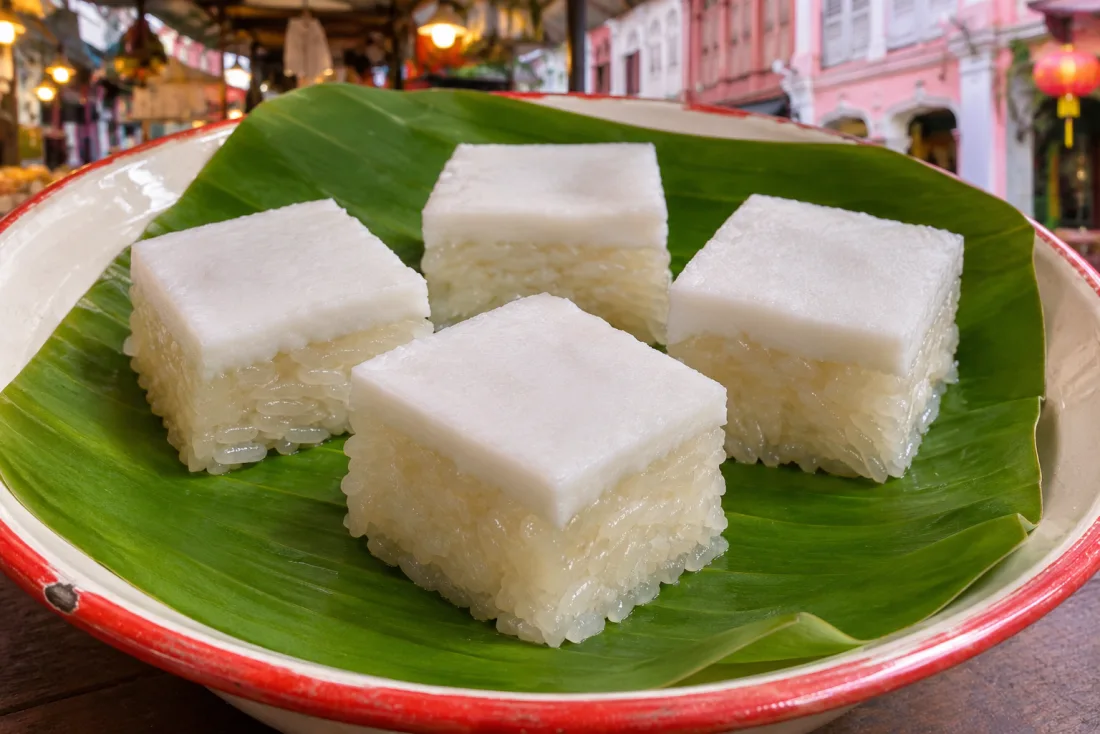

Recognising the two layers
The cut version has a compact, grainy lower layer and a smooth white top. Squares are easy to share. A shallow cup is usually eaten with a spoon to gather both layers, and one Phetchaburi version has cooked black beans on top.
Phuket and Phetchaburi preparations
Phuket Old Town's archive records a cut sticky rice cake topped with coconut cream. Phetchaburi research documents a rice dessert steamed in a shallow round cup, topped with coconut and decorated with black beans. The names and decorations vary by place.
Setting the rice and coconut top
Soaked sticky rice steams with thinner coconut milk, sugar and salt. The thicker top can set in a second steaming. Starch varies by recipe. Cooked black beans decorate one version. Rest the cake before slicing or scooping.
Sweet, softly salty and chewy
The rice remains tender and chewy while the coconut is smooth and lightly salty. The cup can add a mellow bean flavour. The set texture changes as the rice cools. Small portions go well with tea or other Thai sweets.
Ordering and choosing menu photos
Ask how many squares are served, or whether the price is for a cup. A cut square shows the coconut and rice layers. A scooped cup can show its topping and grains. If a kitchen sells egg custard as a separate topping, list its ingredients clearly.
Allergens and kitchen equipment
Both layers can contain coconut. A black-bean topping contains beans. Egg decorations, milk, premixes containing wheat, soy or other ingredients vary by version. Check labels and ask about shared trays, knives, utensils and equipment.
If you have a food allergy, tell the restaurant before ordering and ask about ingredients, sauces and shared cooking equipment.