

Thai dessert culture and a Bangkok example
The Tourism Authority of Thailand introduces mango sticky rice as a representative Thai dessert and lists K. Panich, a long-running shop near Bangkok’s Grand Palace. The shop shows how the dish has been served in Bangkok over time. Its listing does not establish where the dessert first originated. The Thai name identifies the two central ingredients. Khao niao means glutinous rice, and mamuang means mango.
In Thai desserts, coconut-seasoned sticky rice can be paired with different ingredients. Ripe mango is the accompaniment that gives this particular dessert its name. A shop may use the same sweet rice as the base for other desserts. The sweet coconut preparation also differs from the plain sticky rice that Thai diners may eat with grilled meat.
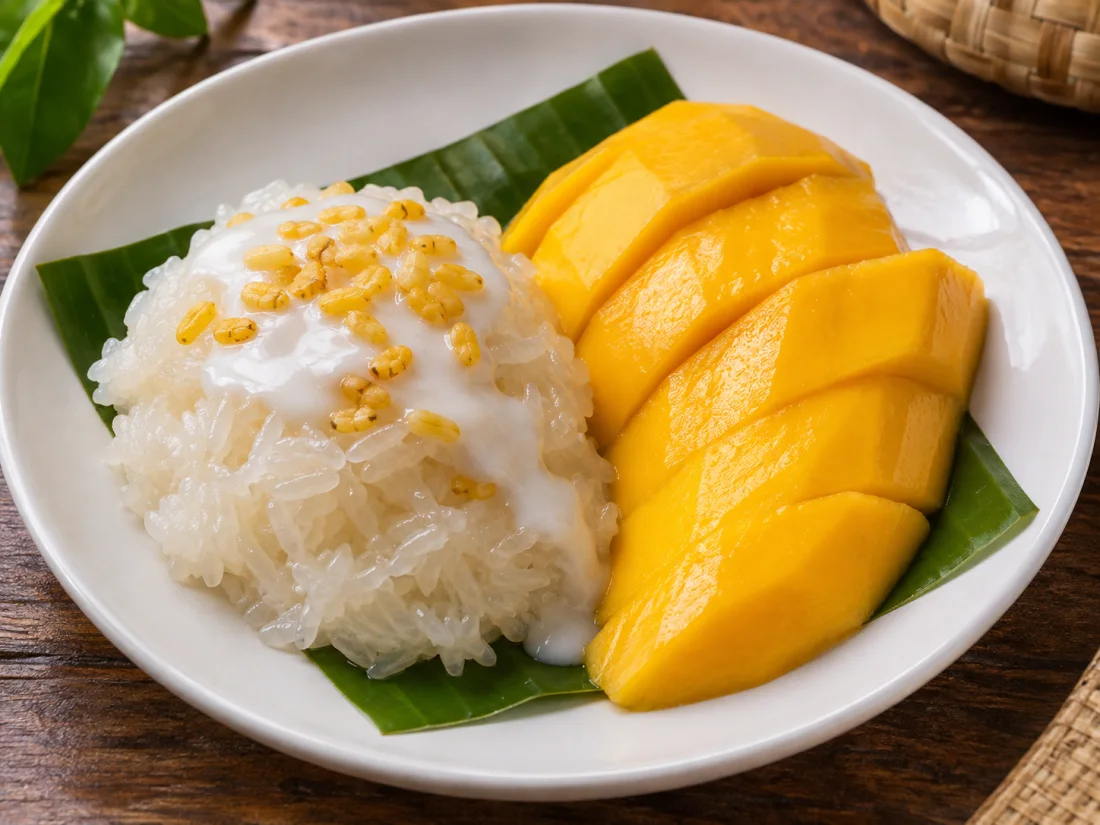
What makes up a serving
The first component is ripe mango. Thailand Foundation mentions Nam Dok Mai and Aok Rong as two familiar choices. Ripe Nam Dok Mai is known for its sweetness, while Aok Rong is often noted for its fragrance. Other varieties can be used when they are ripe, fragrant and hold their shape when sliced or cut into pieces.
The second component is coconut-seasoned sticky rice. A typical method combines coconut milk, sugar and salt, then mixes this into freshly steamed glutinous rice. The grains absorb the seasoning as they rest, so the rice itself carries coconut aroma and flavor. The third component is coconut sauce added at serving for a richer, moister bite. Some recipes also finish the rice with toasted mung beans.
Steaming the rice and seasoning it with coconut
The rice is commonly steamed first and seasoned with hot coconut mixture afterward. The recipe shared by the Smithsonian Folklife Festival uses that sequence. Once seasoned, the grains should cling together and remain chewy, so a spoonful holds together while still having the texture of rice. The mango is sliced separately and placed beside the rice so both can be eaten in the same bite.
The mixture absorbed by the rice and the sauce added at the table have different roles. The first seasons the rice from within, and the second changes the richness and balance of sweetness and salt when served. If the sauce arrives in a cup, try the rice and fruit first, then add a little at a time. Keeping the sauce, rice and mango separate in a takeaway box also lets the diner choose how much to add.
Sweetness, salt, coconut and contrasting textures
Ripe mango often gives a burst of juicy sweetness first, followed by the soft, slightly sticky chew of the rice and the richness of the coconut. A little salt gives shape to the sweet flavors. Toasted mung beans, when used, add a dry crunch. To compare the textures, start by tasting the fruit and rice separately, then try the two in one spoonful before adding more coconut sauce.
The result varies with the type and ripeness of the mango, the seasoning of the rice and the thickness of the topping. Some preparations use white glutinous rice, while others combine black and white glutinous rice for a darker version. Mango may come in long slices or bite-sized pieces. Through these changes, the pairing of mango and seasoned sticky rice remains the defining combination.
Where people encounter it
For a diner exploring Thai sweets, the three parts of mango sticky rice are easy to recognize. It can conclude a meal or be ordered on its own. The Royal Thai Consulate-General in Kolkata included it in a hands-on Thai cooking class for chefs and students. A longstanding Bangkok shop and a cooking event abroad illustrate two settings in which the dessert is presented.
Food allergies and questions to ask
If you are allergic to mango or coconut, consider the fruit, the coconut milk mixed into the rice, and the extra sauce. If you are allergic to mung beans, ask what makes the topping crunchy and whether it is already mixed into the rice. Coconut milk comes from coconut, but sauces, add-ons and pre-prepared products vary by supplier and kitchen. A diner with a milk allergy or another food allergy should ask about the actual ingredients.
Tell staff which foods cause your allergy before ordering. Ask whether the cutting board, knife, serving spoons and containers are shared with other foods. Picking a topping off a completed serving cannot rule out cross-contact that has already occurred. For packaged mango sticky rice, read the ingredient list and allergen information on that particular product.
If you have a food allergy, tell the restaurant before ordering and ask about ingredients, sauces and shared cooking equipment.