
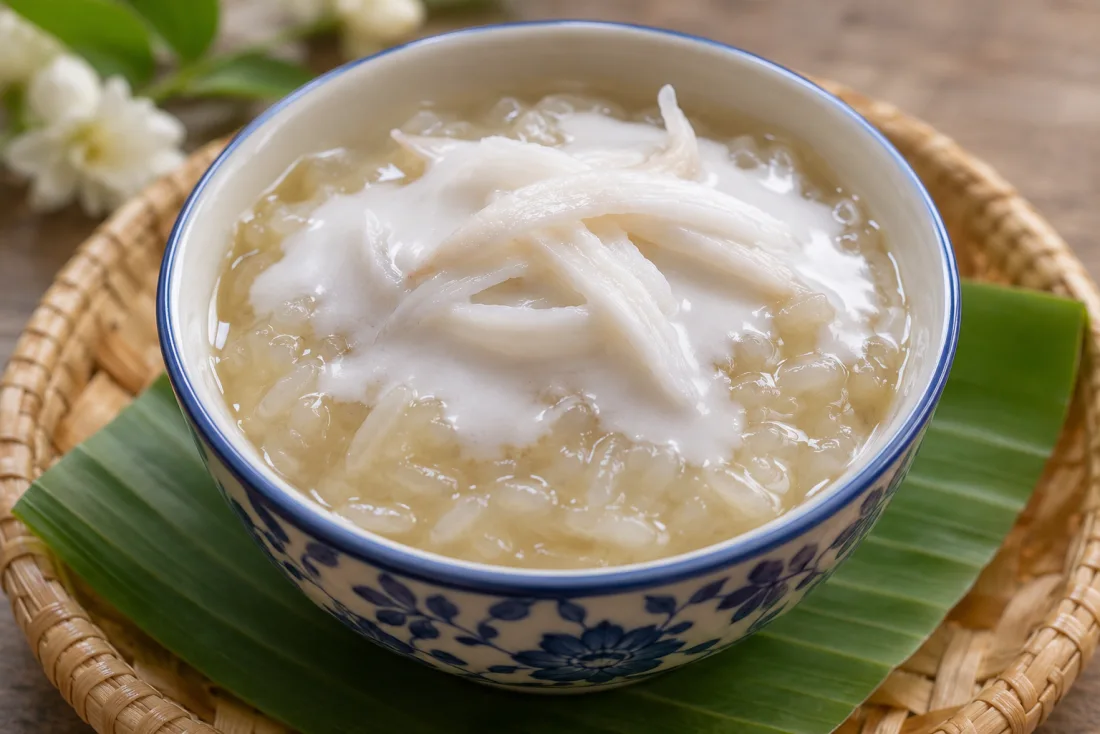

Recognizing rice in a thick liquid
The Thai name describes wet sticky rice. Its grains sit in a glossy, thick sweet liquid. White rice can look translucent, and black rice can make the bowl purple. Coconut cream may be poured on top or served separately.
A Thai dessert with several variations
Thai recipes document white sticky rice with longan, corn or young coconut and black sticky rice with longan or durian. Fruit choices and sweetness vary. The name describes the moist, simmered base.
Rice, water, sugar and coconut cream
Simmer glutinous rice in water until tender and thick, then sweeten it. Lightly salted coconut cream can be prepared separately. Corn and longan add contrasting pieces, and some recipes add a little starch to adjust thickness.
Soft, glossy and lightly salty
The warm grains taste mild and sweet. Coconut cream adds richness and a light salty contrast. Black rice can stay a little chewier. Fruit and corn alter the texture and add sweetness. It thickens as it cools.
Ordering or sharing a bowl
Ask about white or black rice and any fruit mixed in. Add the coconut topping a little at a time if served separately. Divide into small bowls before sharing. The moist rice distinguishes it from steamed coconut sticky rice.
Allergens and toppings
The base can contain coconut. Ask whether dairy, peanuts, soy or other toppings are used, and about shared spoons. Rice itself does not contain gluten. Ask about added starches and contact with wheat equipment if relevant.
If you have a food allergy, tell the restaurant before ordering and ask about ingredients, sauces and shared cooking equipment.