

The Name and a Thai Example
Makham pom is Indian gooseberry, also known as amla. Sam rot means three flavors. A Thai PBS visit to Kanchanaburi documented a product with this name and distinguished it from syrup-preserved fruit and juice. The location is a documented example.
Fruit and Seasonings
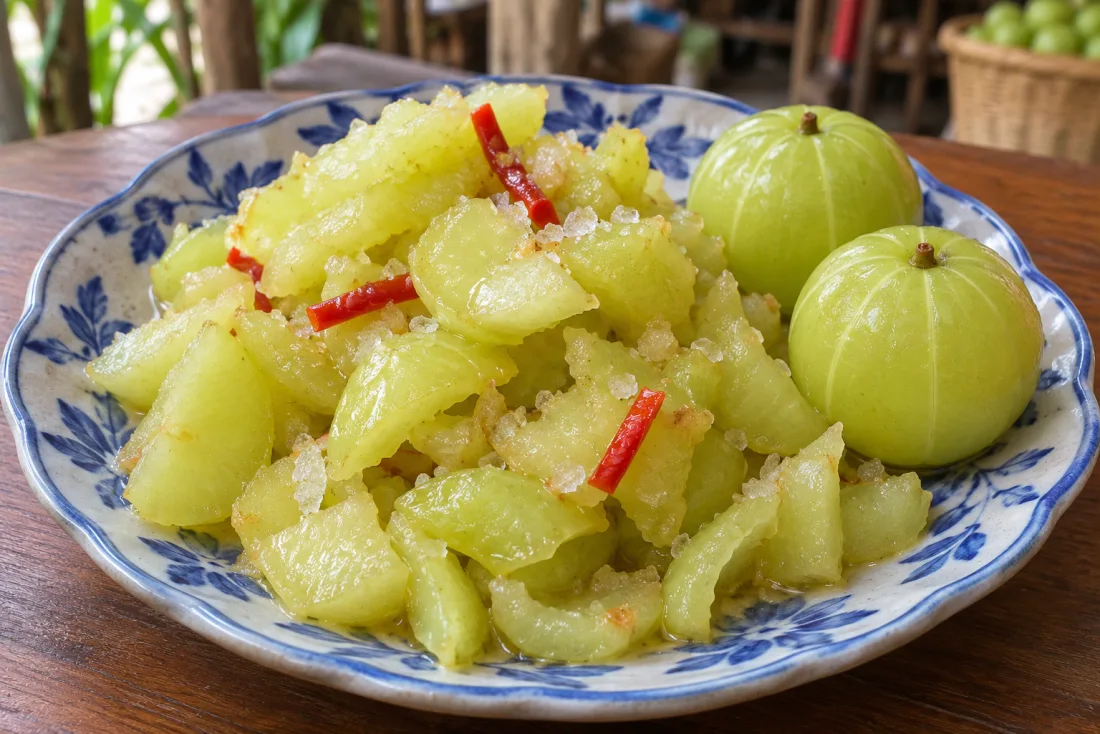
Indian gooseberries are pale green or yellow-green with subtle seams. The flesh is sour and astringent. Use the edible pieces once the hard pit has been removed. A published Thai preparation combines coarsely crushed flesh with chile, salt and sugar.
Fresh and Preserved Formats
A fresh version shows green fruit and visible pieces of chile. Preserved gooseberries are plumper and can look translucent yellow-green. A Thai agricultural record documents preserved fruit made with sugar and salt. It can also be served with chile salt on the side.
Two Plates
The first image illustrates crushed fresh gooseberry with seasonings on top. The second shows pieces of preserved gooseberry and a separate chile-salt serving. Both are ready-to-eat snacks, with different preparations and textures.
Tartness, Astringency and Sweetness
Fresh flesh tastes bright and astringent. Sugar softens the sharpness and salt rounds it out. Chile can add mild or stronger heat. Preserved pieces can taste sweeter and less astringent than fresh fruit.
Allergens and the Fruit Pit
Check packaged produce and chile salts for added ingredients, including sulfites if these matter to you. Markets may use equipment shared with nuts or seafood seasonings. Ask about contact if needed. The hard fruit pit is removed in the prepared examples.
If you have a food allergy, tell the restaurant before ordering and ask about ingredients, sauces and shared cooking equipment.