

Two regional preparations
Fieldwork on Tai Lue foodways records Jinghong’s khao ba khanaet among the sweets of Xishuangbanna. Pineapple was grown locally, and chopped fruit and sweet sticky rice could be steamed together in the fruit. In Trat in eastern Thailand, a local food practitioner developed pineapple coconut sticky rice from a familiar coconut-rice preparation and later taught it in the community. These are distinct documented preparations that both put pineapple into sticky rice. The Thai word mun often points to the coconut-seasoned style.
Rice and chopped pineapple
Glutinous rice stays soft and chewy and its grains cling together after steaming. Chopped pineapple runs through it and adds soft fruit fibres and tartness. The Jinghong recipe records sticky rice, pineapple and granulated sugar, with the pineapple shell used for steaming. In the Trat style, pineapple pieces steam with the rice. The hot rice absorbs coconut milk seasoned with pineapple juice, sugar and salt. Both keep the rice and fruit recognisable.
Colour, chew and acidity
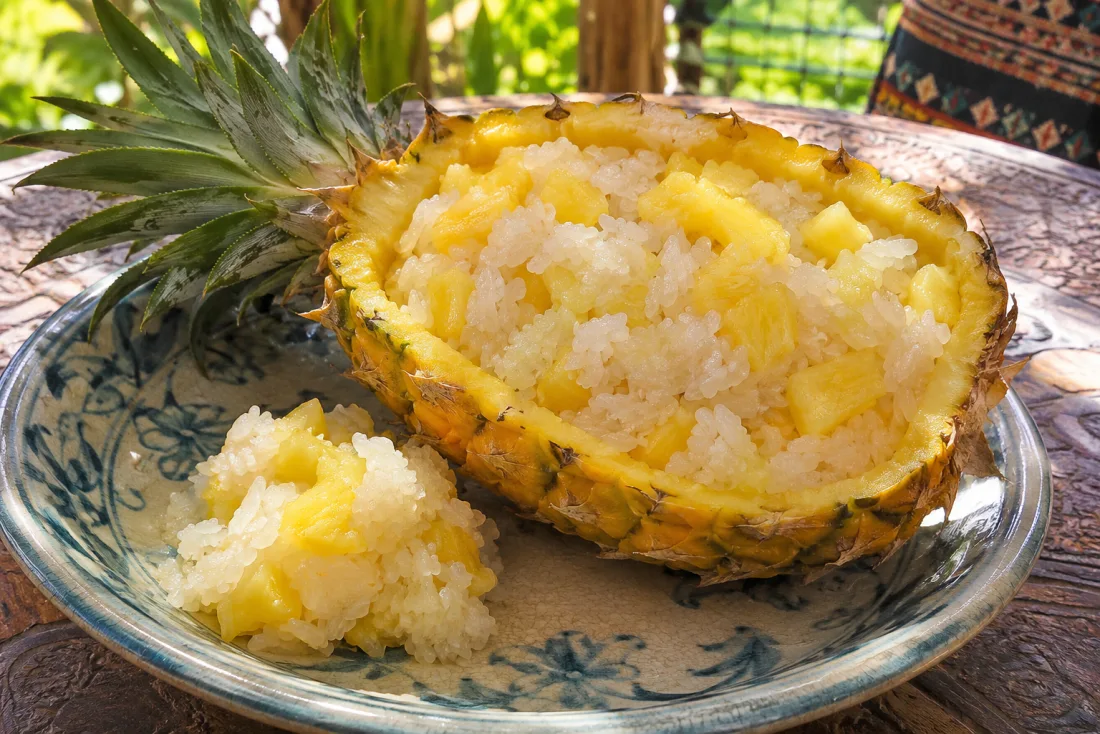
The rice is ivory to pale gold, with brighter yellow pineapple. The warm fruit shell holds the sweet aroma of steamed pineapple. The Trat rice can have a light sheen and gentle coconut richness, balanced by the fruit’s acidity and a little salt. Fruit variety and ripeness influence the balance. The softness and sticky chew remain characteristic as it cools.
Two ways to serve the finished sweet
The Jinghong example can arrive in its opened pineapple, ready to scoop and share. The Trat version can be spooned onto a small plate, the coconut seasoning already absorbed and small pineapple pieces visible. A Thai coconut egg custard is a separate optional accompaniment mentioned in the Trat documentation. The bowl or plate can vary with the maker.
What to ask before ordering
At a Thai sweets shop, ask whether the sticky rice contains coconut milk, whether extra sauce or custard is included and how the pineapple is served. Choose coconut seasoning for a rounder taste or a shell-steamed serving for a more direct fruit aroma. A pineapple shell may also be used for savoury fried rice, so read the dish name and look for the cohesive sticky grains.
Allergens and shared utensils
People who know they are allergic to pineapple should avoid this dish. The Trat version also contains coconut. The surveyed Jinghong recipe does not list coconut milk, but other versions may add it. Separate custard can contain egg and other ingredients depending on the cook. Ask about shared steamers, spoons and plates if you need to avoid egg, milk, nuts or other allergens. Colour and plating cannot confirm these details.
If you have a food allergy, tell the restaurant before ordering and ask about ingredients, sauces and shared cooking equipment.