
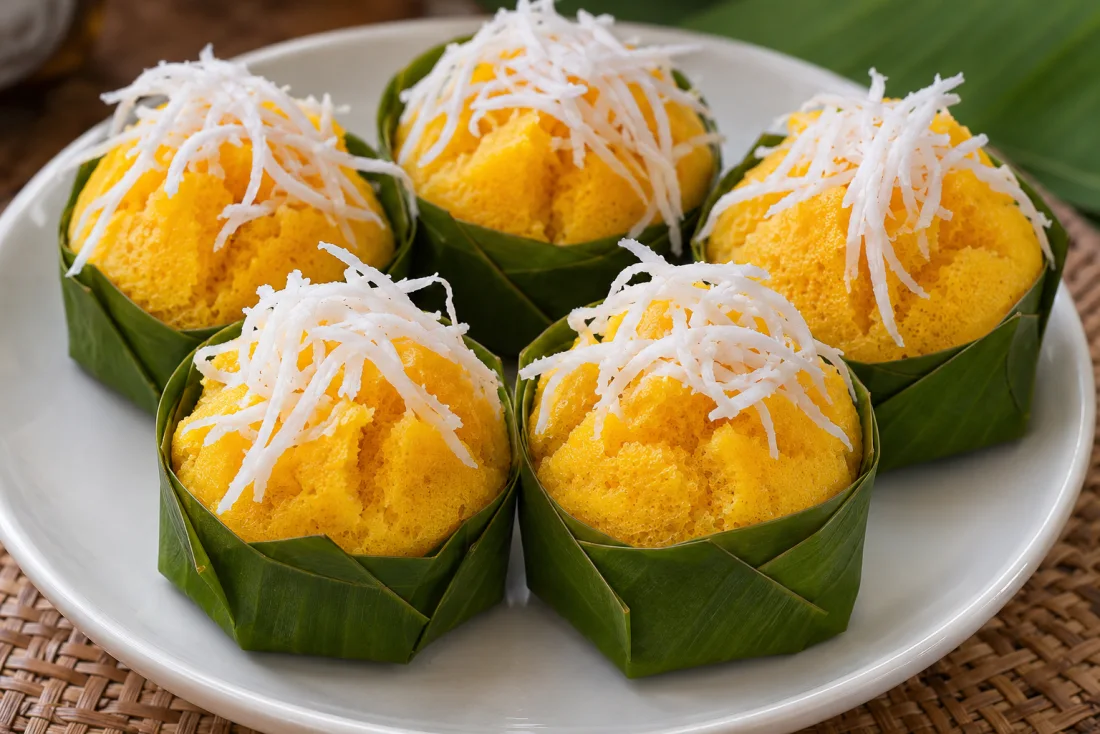

Toddy palm cakes at Thai dessert stalls
Tan refers to the toddy palm. The ripe fruit pulp colours the little cakes yellow to orange. Phetchaburi in central Thailand is associated with toddy palms and traditional sweets. The fruit pulp gives a different result from palm sugar made from sap.
Ripe fruit pulp, rice flour and coconut
Separate the yellow palm pulp from coarse fibres, then mix it into rice flour, coconut milk and sugar. A little salt helps balance the flavour. Some recipes use baking powder and a rest. A Phetchaburi method uses natural leavening. Grated coconut is often added as a finishing layer.
Preparing the batter and steaming it
Strain the pulp and combine it with the batter. Let the flour hydrate, portion into small banana leaf cups or moulds and steam. As the batter sets, its bubbles expand and give the cake an airy crumb. Let it cool slightly before adding coconut.
Soft fruit-scented cake and coconut texture
A warm cake has an aromatic, slightly moist crumb. Salted grated coconut contributes a different texture and a gentle savoury edge. Colour, sweetness and fragrance vary with the ripe fruit pulp. Plain tea can go with a small piece.
Leaf cups, moulds and neighbouring Thai sweets
Cakes may be served in banana leaf cups or unmoulded. Thai moulded coconut starch sweets are drier. Steamed banana cakes can have a similar cup and topping but smell of banana. Ask which fruit is in the batter when several sweets are sold together.
Allergens and shared equipment
A representative recipe contains coconut in the batter and topping. Ask about wheat in blends and about milk, egg, sesame or nuts as relevant. Shared steamers, tongs and moulds can introduce other ingredients. Removing the topping does not remove ingredients mixed into the batter.
If you have a food allergy, tell the restaurant before ordering and ask about ingredients, sauces and shared cooking equipment.