

A ring-shaped Northern snack
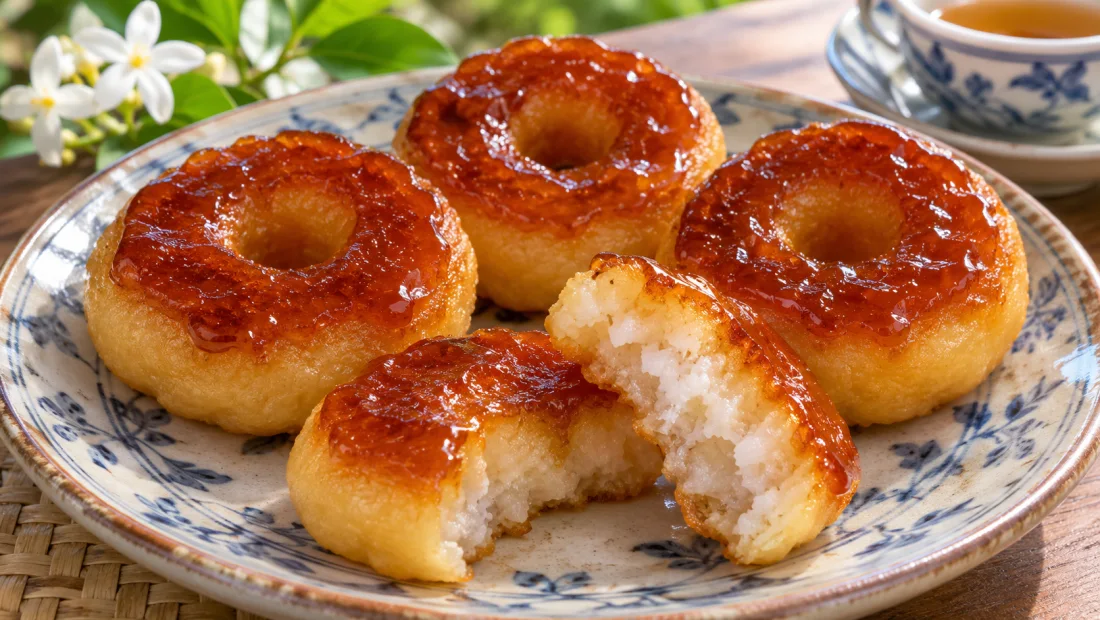
Wong means ring. Thai chefs also use the name khanom thong and associate the sweet with Shan or Tai Yai households and merit-making occasions. A Mae Hong Son community archive records the local name khao moon khoi. Other Northern shops and areas have related ring cakes with different doughs or glazes. The ring with a brown sugar-coated surface is the easiest feature to recognise.
Sticky rice flour, coconut and glaze
Glutinous rice flour gives the rings their tender chew. One version adds grated coconut and coconut milk to the dough and leaves a subtle coconut texture inside. Once fried, a ring may be dipped on one face in thick palmyra palm sugar. Other recipes drizzle cane syrup around the top and sometimes add white sesame. Regional doughs may also include banana or pumpkin.
A crisp edge and chewy centre
A freshly finished ring has golden sides, a darker sugar face and a gently crisp edge. The inside is soft and chewy. Coconut contributes a little texture, while the glaze brings a cooked-sugar fragrance. Toasted sesame adds a light nuttiness in some versions. Humidity or time can soften the sugar surface and make the dough feel firmer.
Two finished examples
One Shan-style ring has a palm-sugar caramel face, with the pale coconut-rice centre visible where a ring is broken. A Mae Hong Son-style example has a narrower cane-syrup line with toasted white sesame along the top. Both can be served in small groups and eaten with tea. A handmade ring need not be perfectly round.
Finding them in Northern Thailand
Ask whether the rings are dipped or drizzled, and whether the dough contains coconut, banana or pumpkin. Shops may sell only a few pieces at a time or bag them to go. A fresh purchase tends to give the clearest crisp-to-chewy contrast. Ceremonies and local markets both appear in regional food records, although a stall’s availability varies. Plain tea or warm water between bites makes the cooked-sugar aroma easier to notice.
Allergens and shared fryers
A sesame-topped ring contains sesame. Ask about coconut milk and grated coconut when avoiding coconut. Even with rice flour as the main ingredient, recipes can vary and a fryer, tray or utensils may be shared with wheat, milk, egg, peanuts or other ingredients. Ask about dough, glaze and topping as well as shared equipment when any of these matters.
If you have a food allergy, tell the restaurant before ordering and ask about ingredients, sauces and shared cooking equipment.