
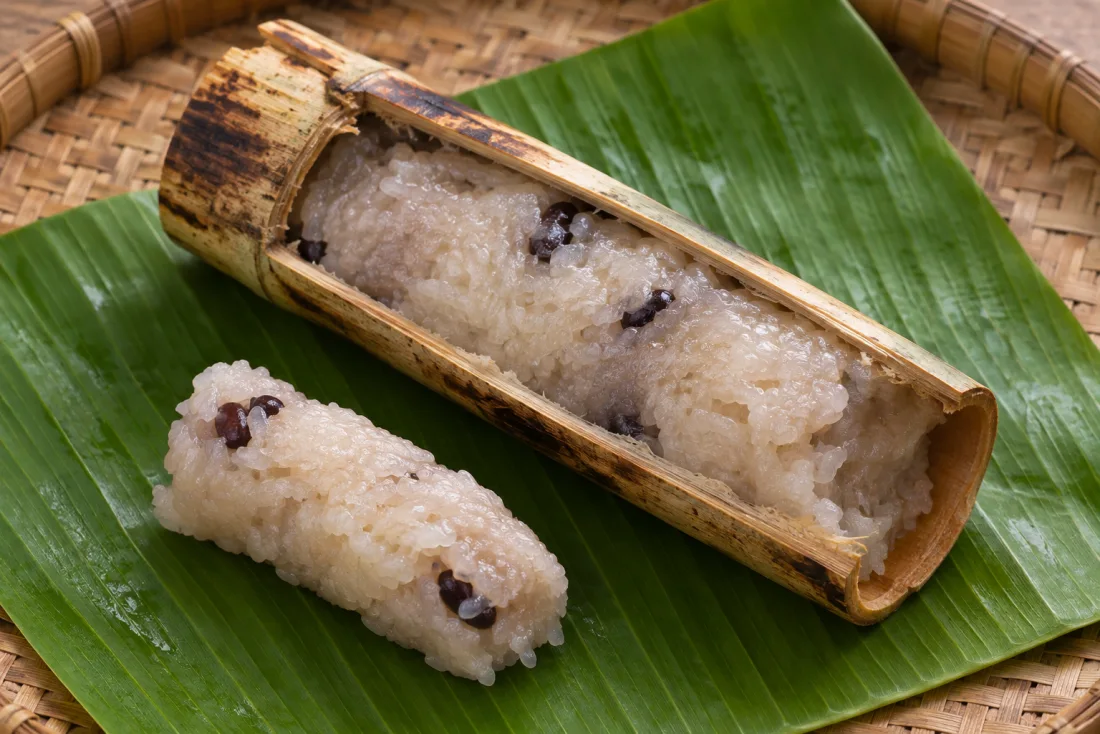

Rice that comes out of bamboo
Lam refers here to cooking inside a bamboo tube. Vendors may shave the hard exterior so it can be peeled along the fibres. A delicate lining from the inside of the bamboo can remain against the rice. The tube holds the rice in shape and serves as the wrapper on the way home.
Nong Mon and Nakhon Chai Si
Thailand’s cultural records describe khao lam in several regions and name Nong Mon Market in Chonburi and Nakhon Chai Si in Nakhon Pathom among familiar producers. In Nong Mon it is sold along the route to the coast as a snack or a gift. The local reputation reflects a tradition of making and selling it. Different bamboo and fillings occur around the country.
Coconut milk, rice and beans
Sweet varieties typically use glutinous rice, coconut milk, sugar and a little salt. Black beans have a soft, floury bite. Pale rice may contain beans, and dark rice may come from black glutinous rice or a blend. Taro and custard-topped versions also exist. The visible cut surface gives a better idea of each filling.
Roasting through a bamboo wall
Soaked rice is loaded into bamboo and moistened with coconut milk. A local record describes closing the opening with leaf and coconut material. The tubes are turned near charcoal so the outside heats on all sides. As the rice absorbs liquid it softens, and a mild roasted scent develops around the outer layer.
What a bite tastes like
The rice is sticky and soft, with gentle coconut sweetness, a little salt and a light toasted finish. Black beans give occasional floury bites, while darker rice can have a firmer bran. Warm khao lam smells strongly of coconut and cool slices stay together more easily. Coconut-rich layers near the opening can taste sweeter and softer.
Allergens and filled varieties
Coconut milk is central. Custard toppings can contain egg and some vendor formulations may include dairy. Ask which beans are used and whether there is peanut or soy contact. A shared knife or board may touch custard or other snacks, and ingredients inside a closed tube are hard to identify by appearance.
If you have a food allergy, tell the restaurant before ordering and ask about ingredients, sauces and shared cooking equipment.