
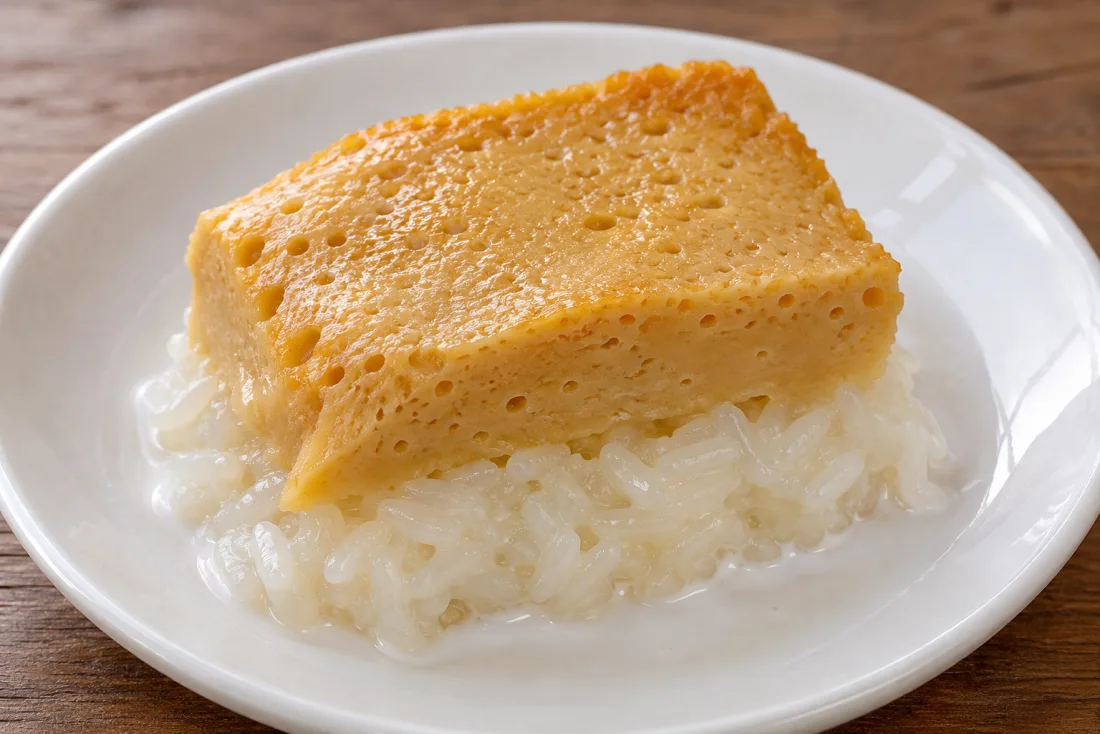

A two-layer sticky rice snack at Thai markets
Khao niao means sticky rice and sangkhaya refers here to coconut egg custard. A stall can place rice in a banana leaf or tray and top it with a soft brown piece of custard. The grain and custard layers are easy to recognise.
Thai cooking programmes and publishers document it as a snack, and restaurant menus list it alongside pumpkin custard and mango sticky rice. Those records show it in use while leaving its first province open.
Coconut milk for the rice and for the custard
The bottom layer has sticky rice, coconut milk, sugar and salt. Warm rice takes up the liquid and becomes glossy, with recognisable grains. Some cooks add pandan to perfume or tint the rice.
The custard uses chicken eggs, duck eggs or a mixture, with coconut cream, palm sugar and pandan. Egg sets the custard and palm sugar changes the aroma and colour. The rice and custard may use different concentrations of coconut milk.
Steaming the rice and custard separately
Soak, drain and steam the rice. Fold it into seasoned coconut milk while hot, cover, and leave it to absorb the liquid. Turning it once helps the milk reach the upper grains.
Mix the custard with eggs, sugar, pandan and coconut milk, strain it, and steam it in a shallow dish. Cool it before cutting and placing a slice on the rice. The portion may vary by stall or restaurant.
Chewy rice, soft custard and sweet coconut
The sticky rice is moist but keeps its grain. There is a little salt behind its sweetness. The custard is softer, with pronounced palm sugar and egg. A bite of both brings out the difference between the textures.
Scoop from the edge of the leaf to get both layers. A larger piece of custard brings more egg flavour. The thickness and sweetness depend on the maker.
How it differs from pumpkin and mango desserts
Pumpkin custard sets inside a hollow pumpkin and is sliced with the flesh. Sticky rice custard uses a separately steamed slice of custard on rice. Mango sticky rice pairs seasoned rice with fresh mango.
Some cooks offer salted egg custard or green pandan rice. Stalls can sell small leaf parcels while restaurants use plates or trays. Ask which rice and topping the shop uses.
Allergens to ask about: egg, coconut and other toppings
Most versions have egg and coconut. Both the rice and custard can contain coconut milk. Removing the top leaves coconut in the rice. Chicken and duck eggs are used in different recipes. Ask separately whether dairy or other ingredients are added.
Stalls can prepare shrimp, fish and custard toppings nearby. Name the ingredient you need to avoid and check the recipe as well as shared knives, spoons and serving trays.
If you have a food allergy, tell the restaurant before ordering and ask about ingredients, sauces and shared cooking equipment.