

Recognizing glossy rice
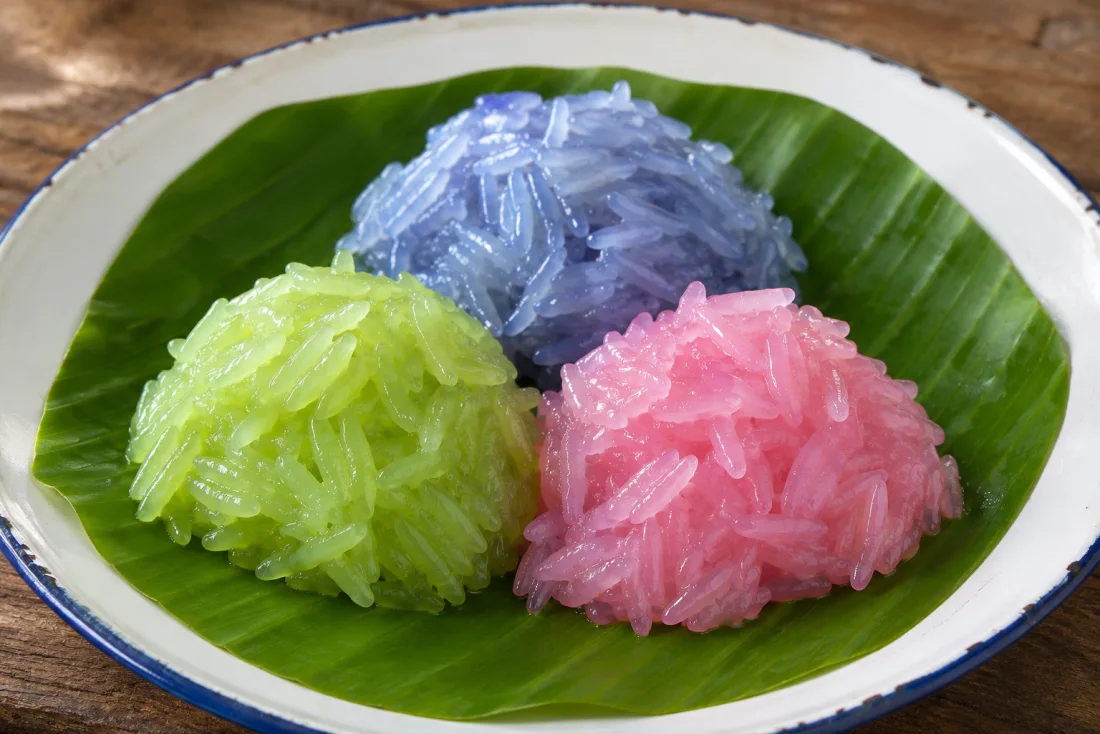
The Thai name suggests a glassy sheen. Individual grains remain visible even where the rice holds together. Green may come from pandan, blue from butterfly pea and pink from the maker's coloring choice.
Rice, coconut and colors
The main ingredients are glutinous rice, coconut milk, sugar and a little salt. The cooked base can be divided and tinted separately. Some versions add sesame.
Cooking and shaping
Hot cooked rice absorbs the coconut mixture. Stirring and reducing it further gives it a sheen and an ability to hold a shape. It can cool in molds, as a slab or in small mounds.
Sweet, coconut-rich and chewy
The first taste is sugar, followed by mild coconut and springy rice. Pandan gives a floral grassy accent. Roasted sesame can add a more nutty taste.
During Songkran and at sweet stalls
Thai cooks include colorful glossy rice in Songkran sweets. Arranging several small pieces makes it easy to share. It can also be sold as a regular market sweet.
Allergens and extras
Check coconut ingredients and any sesame. Different colors or packaged flavorings may have separate ingredients. Confirm whether equipment is shared with milk, egg, wheat or peanut snacks.
If you have a food allergy, tell the restaurant before ordering and ask about ingredients, sauces and shared cooking equipment.