
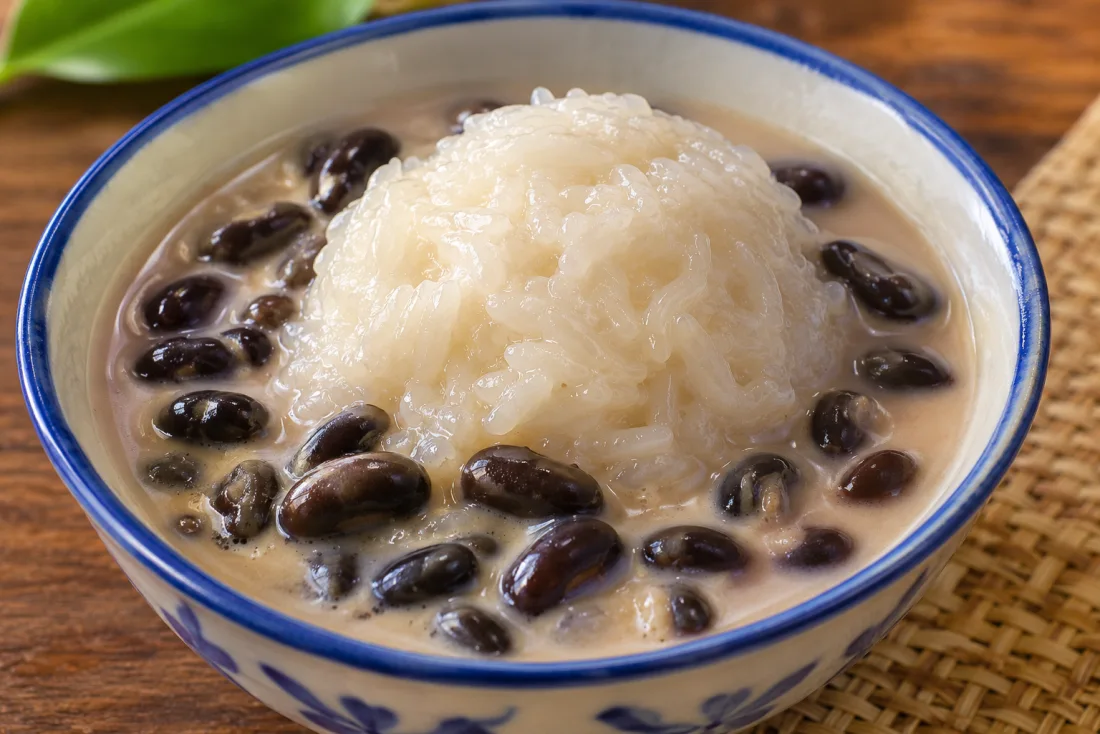

Black beans beside pale sticky rice
Khao niao thua dam refers to black beans with sticky rice. The black beans are distinct from the usually pale grains. Black glutinous rice pudding uses dark rice itself. Here rice is steamed and mixed with coconut, and soft beans and their sauce are spooned beside it or over it.
A Thai coconut sticky rice topping
Thai dessert recipes also pair coconut sticky rice with mango or custard. Black bean recipes cook the beans separately and sometimes serve them warm. Shops may serve a small bowl or pack the rice and bean sauce in a takeaway portion. The documented recipes do not establish a single origin.
Sticky rice, beans, coconut, sugar and salt
A representative recipe uses glutinous rice, black beans, coconut milk, sugar and a little salt. Steamed rice absorbs seasoned coconut milk. Beans cook separately and are then flavoured with sweet coconut milk of their own. Coconut sugar gives a warmer flavour in some recipes.
Soften the beans, then assemble
Cook soaked beans until the centres are tender. Steam the rice and mix it with the seasoned coconut milk. Spoon the beans and enough sauce to moisten the rice into a bowl. Rice can soften further if it sits in the sauce and may firm after it cools.
Soft beans and a sticky rice bite
Black bean skins are slightly firm around floury centres. The rice is sticky and smooth, while coconut milk adds richness and mild salt. Coconut sugar gives warm sweetness. Serving it warm brings out the aroma and a little sauce keeps the grains moist.
Black beans, coconut and other allergens
Ask about the black beans and both coconut preparations. Black beans, soybeans and peanuts are different ingredients. Shared pots and utensils may contact dairy, sesame, peanuts or other nuts. Removing the beans will not remove any ingredients already mixed into the sauce or rice.
If you have a food allergy, tell the restaurant before ordering and ask about ingredients, sauces and shared cooking equipment.