
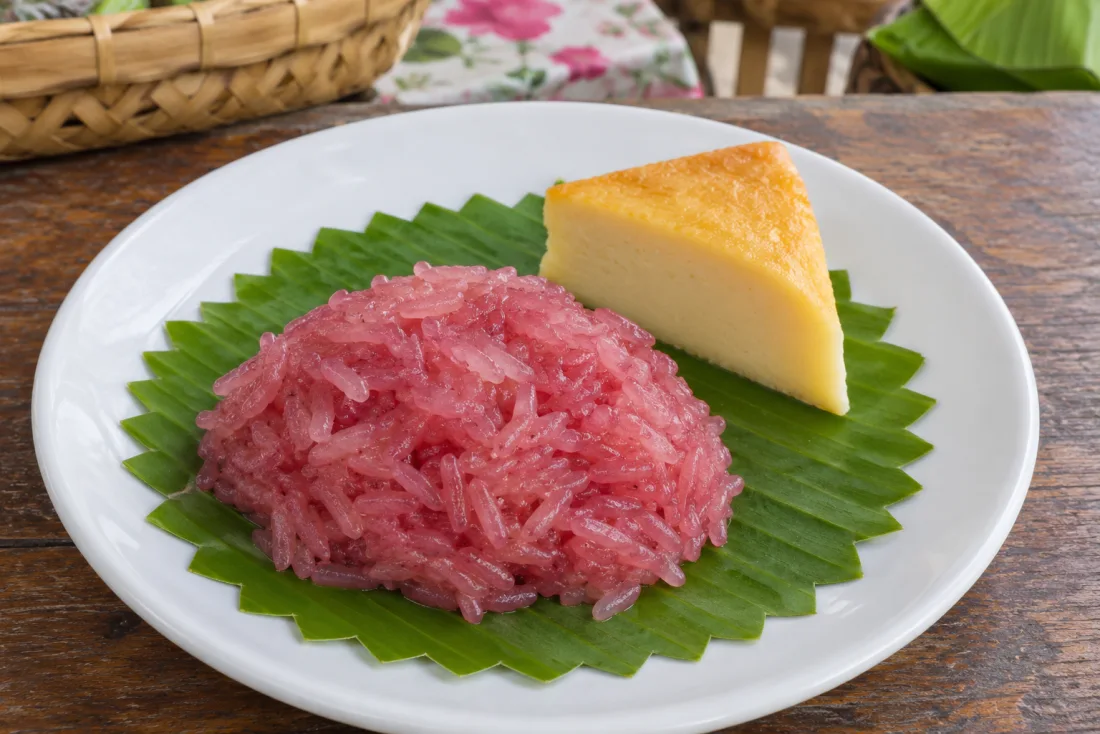

Why the grains remain visible
Khao niao mun uses cooked sticky rice that absorbs seasoned coconut milk. Red plant colour added to the coconut mixture can tint the grains from pink to deep red. The visible grains still indicate the rice dessert, and the colour name does not indicate pomegranate.
Documented Thai methods
One Thai recipe mixes boiled roselle liquid into the coconut mixture and serves the red rice with separate steamed custard. Another records beet or roselle colouring with mango. Thai food research also documents roselle pigments in coconut sticky rice. These show several existing uses and do not establish a specific place of origin or national availability.
Rice, coconut and colour
White glutinous rice is the base. Coconut milk brings richness, sugar sweetens it and salt brings balance. Roselle can add a faint tart fruit note, while beet may contribute a light earthy note. The hue and strength depend on the ingredients and their amounts.
Chew, flavour and sides
The softened grains have a slight chew with coconut sweetness and a little salt. Ripe mango adds fruit sweetness and juiciness. Steamed egg custard adds a smooth egg and coconut note. These accompaniments vary by menu.
Presentation and related sweets
Serve the red rice as a small mound or on a leaf. Mango and coconut cream may accompany a beet-coloured serving, while a roselle version may come with custard. Thai caramel sticky rice can be brown-red from cooked sugar, and red rubies in coconut milk often use crisp coated water chestnuts.
Allergens and additions
Coconut is present in the rice and may be in the sauces. Egg custard contains egg. Ask about mango, roselle, beet, milk, sesame, peanuts, gluten-containing additions and shared tools if relevant. Check the entire serving and its accompaniments.
If you have a food allergy, tell the restaurant before ordering and ask about ingredients, sauces and shared cooking equipment.