
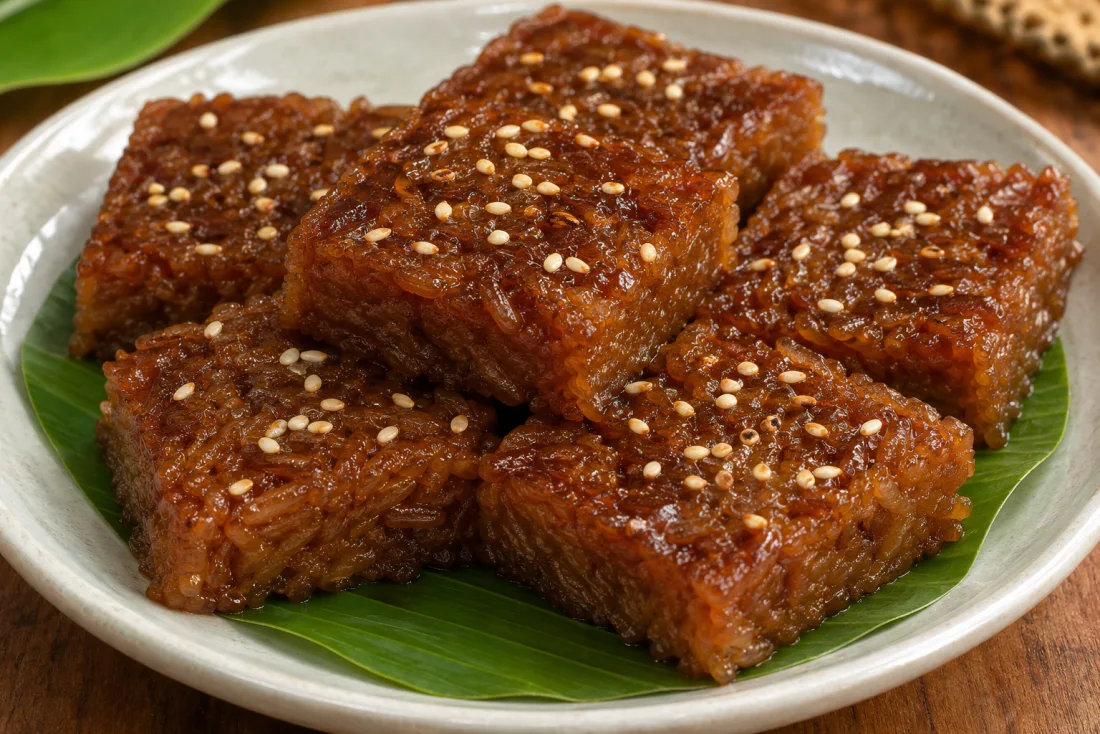

Why the rice is reddish brown
Khao niao daeng means red sticky rice. The cooked sugar syrup gives the rice its colour. Cut pieces retain visible grains with a soft gloss. Pale sesame stands out on the surface. The dessert starts with glutinous rice and has a different preparation from black sticky rice pudding.
A Thai tray-cut sweet
Thai recipes show this sweet cooked in a pan and set in a flat tray. Vendors may cut squares or triangles for takeaway, sometimes on banana leaf. The references describe different Thai versions without establishing a single origin. The firm shape makes it easier to portion than loose coconut sticky rice.
Sticky rice, coconut milk, palm sugar and sesame
A representative recipe uses steamed sticky rice, coconut cream and palmyra palm sugar. Some recipes combine sugars or add glucose syrup. Coconut adds richness. Toasted sesame can be a topping, while young coconut or peanuts occur in other versions.
Stir in the rice and let the tray cool
Steam sticky rice first, and reduce the coconut sugar mixture separately. Stir the rice into the syrup until it holds together. Spread it in a shallow tray and cool before cutting. Toasted sesame can be scattered over the pieces. The grains usually remain visible.
Caramel aroma and a sticky chew
The rice is soft and sticky. Darker syrup may have a deeper caramel note. Sesame gives a little crunch, and young coconut gives a soft strip in some versions. The pieces firm after cooling. A small piece with unsweetened tea shows the aroma more clearly.
Coconut, sesame, peanuts and shared equipment
Coconut is present and sesame is a common topping. Some recipes contain peanuts. Check prepared syrup and flavouring for milk, soy or wheat when relevant. Ask about shared pans, boards and knives. Removing seeds from the top does not remove contact that has already happened.
If you have a food allergy, tell the restaurant before ordering and ask about ingredients, sauces and shared cooking equipment.